New Legislation to Designate Iran’s Revolutionary Guard and State-Linked Groups as National Security Threats
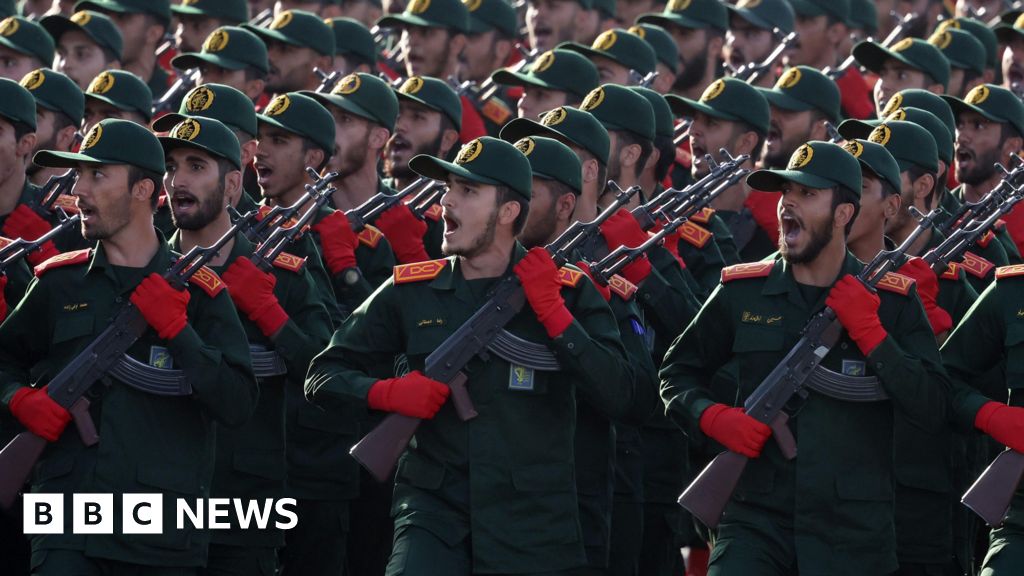
The government introduced the National Security (State Threats) Bill to Parliament on Tuesday, with ministers indicating the legislation could become law within weeks. The bill would empower the Home Secretary to formally designate state-linked organisations — including Iran’s Islamic Revolutionary Guard Corps (IRGC) — as threats to national security.
What the Bill Does
The legislation grants the Home Secretary, Shabana Mahmood, the authority to designate groups engaged in what it terms “foreign power threat activity” — a category encompassing assassination attempts, surveillance operations, and acts of sabotage on British soil.
The bill creates three new criminal offences: supporting a designated state threat organisation; assisting such a group; and accepting material benefit from one. Officials anticipate that no more than ten organisations will be designated in the first year following enactment.
Why Existing Law Falls Short
The bill was prompted by a recommendation from Jonathan Hall KC, the government’s Independent Reviewer of State Threats Legislation, who concluded that state-linked groups such as the IRGC could not easily be proscribed under existing terrorism statutes.
The National Security Act 2023, passed just three years ago, was focused narrowly on foreign intelligence services. It has since been rendered inadequate by a pattern of hostile activity carried out not by intelligence operatives, but by criminal proxies hired through state-linked intermediaries.
Recent convictions illustrate the problem. In the past year alone, individuals have been found guilty of spying on Hong Kong dissidents on behalf of China, conducting an arson attack on a Ukrainian warehouse for Russia’s Wagner Group, and stabbing an opposition journalist in Wimbledon at the behest of Iran. In the latter two cases, the perpetrators were criminals motivated by payment rather than ideology.
An Unprecedented Threat Level
Sir Ken McCallum, Director General of MI5, stated that the security service had tracked “more than 20 potentially lethal Iran-backed plots” within a single year — a figure officials describe as reflecting an unprecedented escalation in foreign state aggression.
Prime Minister Sir Keir Starmer said: “Where foreign states are found to be engaging in activity that threatens lives or undermines our democratic institutions, we must ensure that such actions have consequences. We will not tolerate hostile actors paying petty criminals to do their dirty work.”
Home Secretary Mahmood added: “Foreign states are becoming ever more aggressive — attacking our communities, our way of life, and our institutions — and hiding their tracks behind proxies. We must adapt to keep pace.”
Fast-Tracked After Attacks on Jewish Targets
Ministers accelerated the bill’s introduction following a series of recent attacks on Jewish targets in the United Kingdom, several of which were claimed by a previously unknown group calling itself Harakat Ashab al-Yamin.
The IRGC, established after Iran’s 1979 Islamic Revolution to protect the new theocratic order, has evolved into a formidable instrument of Iranian state power with an extensive reach beyond the country’s borders. Its designation under the new legislation would mark a significant escalation in Britain’s formal response to Iranian-backed activity on home soil.
A Necessary Upgrade
Whitehall officials regard the bill as a vital modernisation of the national security framework. The speed with which the 2023 Act became operationally insufficient underscores the difficulty of legislating against adversaries who continuously adapt their methods to exploit legal gaps.
The government’s impact assessment accompanying the bill projects a modest initial scope — fewer than ten designations in the first year — suggesting a targeted rather than sweeping application of the new powers.