Belarusian leader praises North Korean counterpart as delegations meet in Minsk to expand economic cooperation and explore sanctions workarounds
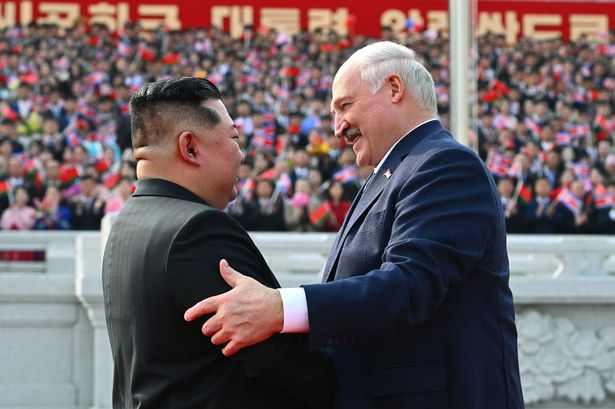
Alexander Lukashenko, who has held power in Belarus since 1994, has publicly defended North Korean leader Kim Jong Un as “not a dictator,” describing him as “a smart, young and promising man” during a meeting with Russian regional governor Oleg Kozhemyako on Monday.
The remarks came as a substantial North Korean government delegation arrived in Minsk for talks covering food security and healthcare cooperation, according to NK News. The visit signals a concerted effort by both governments to formalise and expand bilateral ties.
A Sanctions Workaround Takes Shape
Lukashenko used the meeting with Kozhemyako — governor of Russia’s Primorsky Krai, which borders North Korea — to explore using the region as a conduit for trade with Pyongyang. He explicitly requested “mediation services in trade with the DPRK,” citing Kozhemyako’s existing relationship with the North Korean leadership.
Kozhemyako outlined the logistical infrastructure already under development, including a new road bridge across the Tumen River, a planned ferry service, and new flight routes. He noted that North Korea is keen to import Belarusian machinery and food.
The arrangement, if realised, would allow Belarus and North Korea to conduct commerce through Russian territory, potentially circumventing the international sanctions regime imposed on Pyongyang by the United Nations and Western governments.
Cooperation Pact and Symbolic Gestures
The diplomatic groundwork was laid during a summit earlier this year, when Lukashenko visited Pyongyang and the two sides signed a major cooperation agreement. Lukashenko marked the occasion by presenting Kim with a Belarusian-made rifle, described as a gift “in case enemies turn up.”
The Belarusian leader said Kim “made a very strong impression” on him during the visit and that the two countries had “established good relations.” He described the envisioned arrangement as a three-way partnership between Belarus, North Korea, and Russia’s border region.
Parallel Talks and Medical Exports
Concurrent with the Lukashenko-Kozhemyako meeting, North Korea’s External Economic Relations Minister Yun Jong Ho held separate talks with Belarusian Deputy Prime Minister Yuri Shuleiko at an agricultural expo. Both sides agreed to accelerate trade and economic cooperation.
North Korea’s delegation, which included newly appointed ambassador Ji Kyong Su, toured Belarusian medical facilities and examined X-ray equipment, dental supplies, and pharmaceuticals. Belarusian Health Minister Alexander Khodzhayev indicated that ambulance exports to North Korea were under consideration.
That proposal sits in direct tension with existing UN sanctions, which prohibit the export of vehicles to North Korea. No explanation was offered as to how such a transaction would comply with international law.
Context and Implications
Lukashenko’s effusive defence of Kim Jong Un — delivered without reference to North Korea’s extensively documented human rights abuses or its nuclear weapons programme — underscores the degree to which Belarus has aligned itself with states operating outside the Western-led international order.
The emerging Belarus-Russia-North Korea trade corridor, if operationalised, would represent a further erosion of the sanctions architecture designed to constrain Pyongyang’s access to foreign goods and hard currency. Western policymakers will be watching the development of the Tumen River infrastructure with close attention.