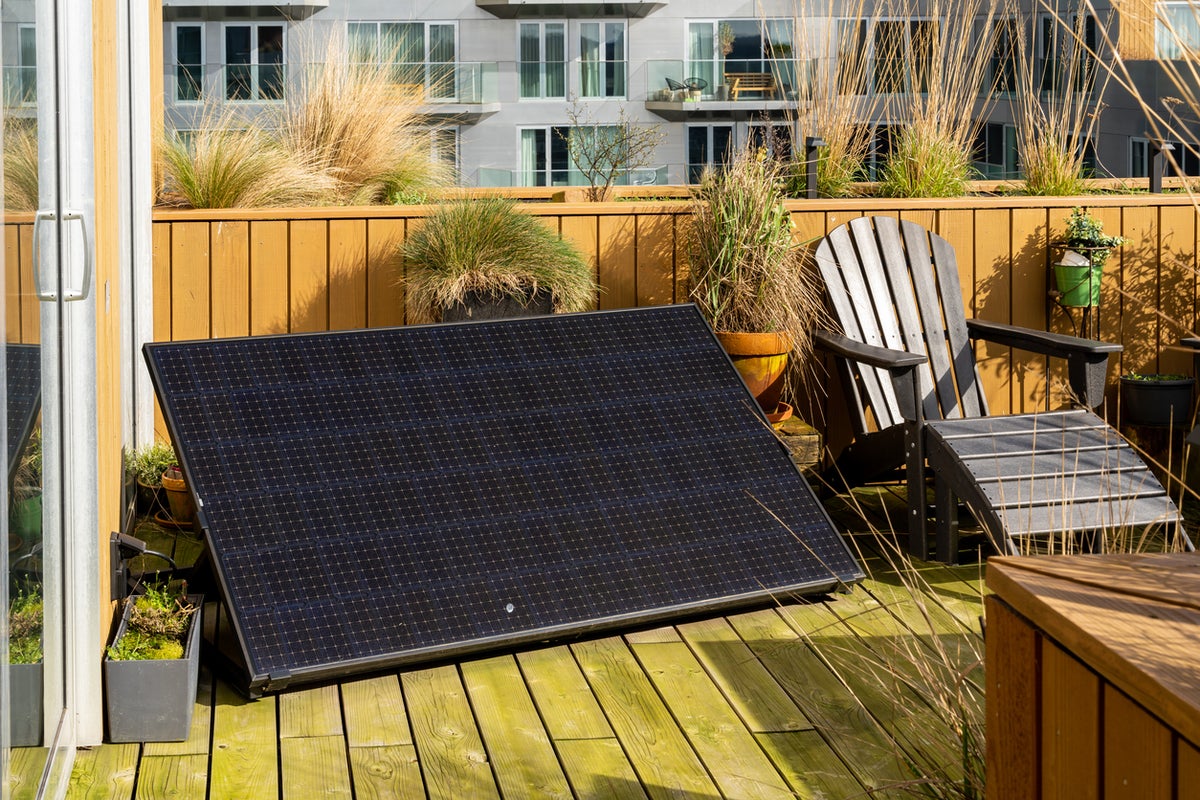
From 27 August, plug-in solar panels will be legal to sell and use in Great Britain. The government has amended existing plug and electricity safety regulations, removing the principal legislative obstacle that had kept these devices out of mainstream British retail.
The technology is already commonplace across much of continental Europe. A typical system comprises one or two compact solar panels connected to a microinverter, which converts the generated electricity into a form compatible with a standard three-pin socket. Retailers including Lidl and Iceland had been in discussions with government about stocking the products; Lidl was reported to be considering a system priced at around £400.
Legality, however, comes with conditions. Only devices compliant with the government’s new Plug-in Solar Device Interim Product Specification will qualify for the regulatory exemption, which sets minimum standards for the panels, inverter, cable, and plug. Compliant systems must carry a maximum rated output of 800W, with no more than one device permitted per electrical circuit. Crucially, the exemption covers solar generation only — plug-in batteries that draw electricity from the home, store it, and discharge it later are explicitly excluded.
The financial case is modest but real. Government analysis estimates that an 800W compliant system could reduce a household’s electricity bill by between £70 and £110 annually. A south-facing installation mounted at a 30-degree angle sits at the upper end of that range; a vertical system facing east or west sits closer to £70. Both figures assume the household consumes a meaningful share of the generated electricity during daylight hours — a condition more easily met by those at home during the day.
The appeal is clearest for renters, flat-dwellers, and households whose roofs are unsuitable or inaccessible for a conventional installation. Full rooftop solar remains more powerful and more cost-effective at scale, but it requires capital, planning consent, and property ownership. Plug-in systems lower all three barriers. Consumers will still need to check planning rules, obtain landlord or freeholder permission where applicable, and confirm their home’s electrical infrastructure is suitable. The government has committed to publishing consumer guidance once the regulations take effect.
One territorial caveat deserves attention. The regulatory change applies in Great Britain only. Northern Ireland operates under separate electricity safety legislation — the Electricity Safety, Quality and Continuity Regulations (Northern Ireland) 2012 — and the government’s own impact assessment is explicit that plug-in solar would only become legally permissible there if the Northern Ireland Executive undertakes its own parallel reforms. That process has not yet begun.