A Loyalty Tested
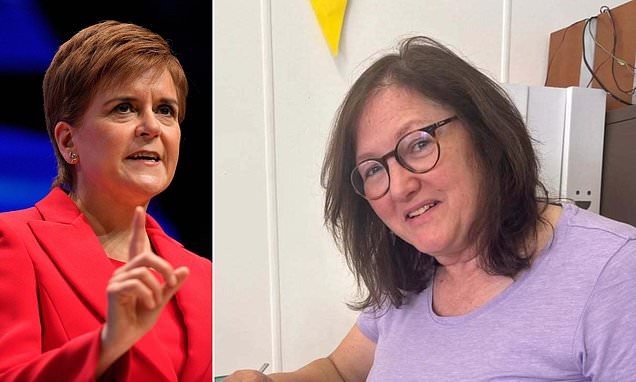
There is something revealing about the moment a former chief of staff breaks ranks. Liz Lloyd served Nicola Sturgeon for years as her closest confidante, exchanging private messages on matters of public policy — correspondence later laid bare before the Covid Inquiry — and had previously defended her employer with consistency and discretion. That loyalty, it seems, has now reached its limit. When Sturgeon used the foreword to the paperback edition of her memoir Frankly to attack her long-serving deputy John Swinney’s Holyrood election campaign as uninspiring and lacking in vision, Lloyd told the BBC that the criticism genuinely surprised her, drawing an uncomfortable parallel: when Alex Salmond had done something similar to Sturgeon herself, she had not liked it one bit.
The episode encapsulates a broader discomfort within the SNP. Sturgeon’s book tour — ostensibly a vehicle for relaunching a memoir — has instead reignited factional tensions that the party had worked hard to suppress since Swinney assumed the leadership. The former First Minister’s decision to lavish praise on the Scottish Greens for injecting hope into the campaign, while dismissing the SNP’s own effort as detached from the concerns of ordinary Scots, has struck many within the movement as gratuitous, poorly timed, and — perhaps most damagingly — self-serving.
The Bewilderment of Former Allies
Former adviser Ms Higgins was more direct still, describing Sturgeon’s intervention as simply bewildering. She questioned what strategic purpose could possibly be served by an ex-leader attacking her successor’s campaign and the party’s recent electoral record, particularly given the circumstances under which Swinney stepped forward. Higgins reminded Sturgeon pointedly that had Swinney not come forward — at considerable personal sacrifice — to lead the party through a period of acute vulnerability, the SNP faced the very real prospect of electoral defeat. The implication was clear: Sturgeon’s criticism risked undermining the very legacy she was ostensibly seeking to burnish.
Higgins went further, also criticising Sturgeon’s public conduct more broadly, including her foul-mouthed commentary on Joanna Cherry’s book — delivered, by Sturgeon’s own admission, while hungover on multiple occasions during her speaking tour. Government ministers Angela Constance and Mairi McAllan offered their own veiled rebukes, though Higgins’ statement was the most substantive and the most pointed. Geoff Aberdein, who previously served as an adviser to Alex Salmond, was characteristically blunt, arguing that Sturgeon had displayed no self-awareness, no loyalty, and no class — and suggesting that Swinney himself would be quietly furious, even as he declined in public to say a single critical word about the woman he served as deputy for nearly a decade.
The Record and Its Costs
Swinney’s public silence on the matter is itself instructive. He has refused to be drawn on Sturgeon’s criticism, maintaining a discipline that stands in pointed contrast to the behaviour of his predecessor. The SNP’s 2024 Holyrood campaign was, by any objective measure, a difficult one — the party suffered its worst performance since 2007, losing seats and falling well short of a majority — and internal debate about its causes is legitimate. What has rankled Sturgeon’s former circle is not the critique itself, but its vehicle and its timing: a commercial book relaunch, conducted in a register that prioritised personal vindication over institutional responsibility.
There is a wider lesson here that goes beyond Scottish politics. Institutions — whether parties, governments, or corporations — depend on a degree of post-tenure discretion from their former leaders. When that norm breaks down, the damage is rarely confined to the individual who breaks it. Sturgeon built a formidable reputation for strategic discipline during her years in office; the question her former allies are now asking, with varying degrees of bewilderment and frustration, is what precisely she imagines she is building now.