
U.S. Forces Destroy Six Iranian Vessels in Hormuz as Trump Launches Commercial Shipping Corridor Operation
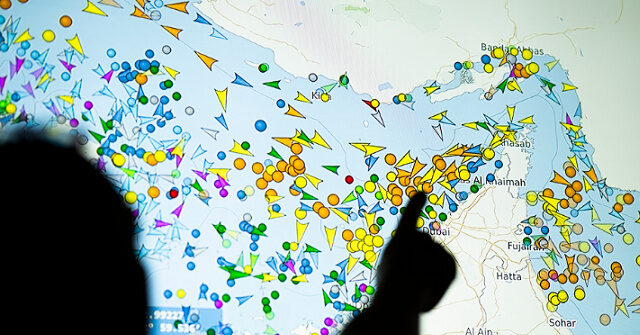
American military forces destroyed six Iranian fast-attack boats and intercepted cruise missiles and drones in the Strait of Hormuz on Monday, as the Trump administration launched Project Freedom — a large-scale operation to escort stranded commercial vessels through the waterway that Iran has effectively blockaded since late February.
Operation Gets Under Way Amid Immediate Iranian Resistance
Project Freedom, announced by the White House on Sunday, aims to move hundreds of commercial ships through the strait under a multi-layered U.S. defensive umbrella comprising warships, aircraft, drones, and electronic warfare systems. Two American-flagged merchant vessels completed the transit on the operation’s first day and are, according to U.S. Central Command, “safely headed on their journey.”
Iranian forces responded almost immediately. According to U.S. officials, Tehran launched cruise missiles and drones against both U.S. naval assets and commercial shipping, while deploying fast-attack boats to intercept vessels attempting to pass through the waterway.
Admiral Brad Cooper, commander of U.S. Central Command, told reporters that American forces neutralised all incoming threats. Apache and Seahawk helicopters engaged and destroyed the six Iranian fast boats before they could reach their targets.
Iran’s Degraded Capabilities on Display
“The cruise missiles were going after both U.S. Navy ships, but mostly after commercial shipping,” Admiral Cooper said, adding that U.S. forces “defended all the commercial ships” in line with the mission’s mandate.
Cooper noted that Iran has historically deployed between 20 and 40 small boats in comparable operations. Monday’s deployment of just six — all of which were swiftly eliminated — was cited by U.S. officials as evidence of the regime’s significantly degraded maritime capabilities following months of conflict.
Iranian state-linked media claimed a U.S. naval vessel had been struck near the strait. Central Command rejected the claim outright. “No U.S. Navy ships have been struck,” the command stated.
Trump Issues Stark Warning to Tehran
Speaking to Fox News earlier on Monday, President Trump issued an unambiguous warning to Iran against attacking vessels participating in the operation.
“They’ll be blown off the face of the earth,” Trump said, adding that U.S. forces retain access to weapons and equipment stockpiled at bases worldwide. “We have the best equipment… We can use all of that stuff, and we will, if we need it.”
Despite the exchange of fire, Trump stopped short of declaring the April ceasefire broken. Speaking to ABC News, he described the day’s events as “not heavy firing” and said the administration was continuing to assess developments.
Iran Strikes the UAE in Major Regional Escalation
Monday’s confrontation in the strait coincided with the first direct Iranian strike on a Gulf state since the ceasefire took effect. The UAE Defence Ministry confirmed that Iran fired 12 ballistic missiles, three cruise missiles, and four drones at the country, resulting in three moderate injuries.
The UAE Foreign Ministry condemned the attack as a “dangerous escalation” and an “unacceptable violation,” warning that it reserves the “full and legitimate right” to respond. Schools across the country were shifted to remote learning for the remainder of the week.
Tehran Issues Warnings, Israel Raises Alert Level
Iranian officials sought to frame the day’s events on their own terms. Foreign Minister Abbas Araghchi dismissed Project Freedom as “Project Deadlock,” writing on X that “there’s no military solution to a political crisis” — even as Iranian forces carried out attacks across the region.
Ebrahim Azizi, chairman of the Iranian parliament’s national security committee, warned that any American interference in the strait would constitute a ceasefire violation. Iranian forces also broadcast warnings over maritime channels, threatening to destroy any vessel attempting to transit the waterway.
Israeli officials signalled heightened readiness, with one describing the standoff as a “game of chicken” that could determine whether Iran opts for further escalation. “If they decide to fight for the passage, it means an attack,” the official said. The IDF is reported to be on high alert.
Strategic Context: Breaking the Stalemate
According to senior U.S. officials cited by Axios, Trump approved the operation after growing frustrated with what one described as a “no deal, no war” stalemate, calculating that reopening the strait would strip Iran of its principal source of leverage over global commerce.
Treasury Secretary Scott Bessent declared that the United States now has “absolute control” over the strait. Monday’s events represent the most serious test yet of the April ceasefire — and of whether Washington’s strategy of economic and military pressure can force a durable resolution without reigniting full-scale conflict.