
A Commitment Under Scrutiny
The White House has made its position unambiguous. President Trump expects Britain and every other NATO ally to honour their defence spending pledges — and the statement lands at a moment of conspicuous awkwardness for the Starmer government, which is struggling to reconcile fiscal constraint with alliance obligations it has publicly endorsed.
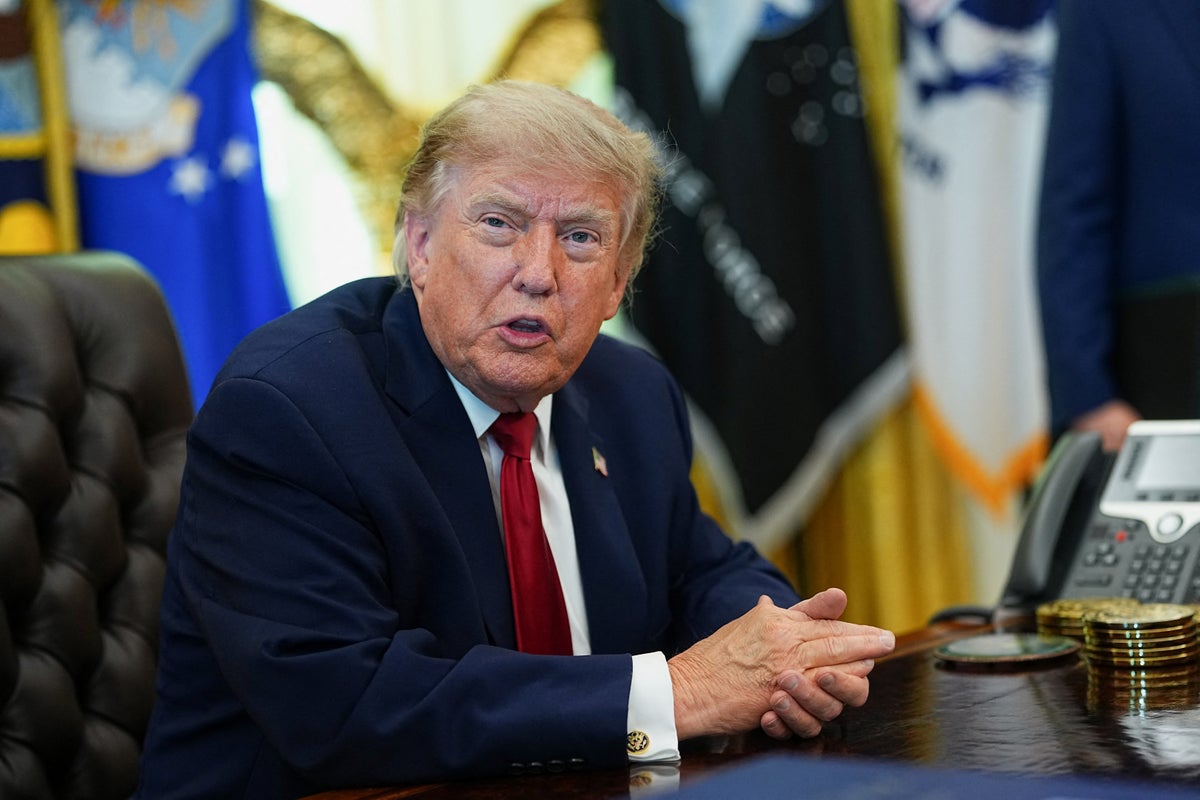
A White House official stated plainly: “President Trump expects NATO allies to abide by their 5% defence spending pledge.” The remark was directed at the alliance broadly, but its timing — coinciding with a ministerial resignation in London and a delayed British defence review — ensures it will be read, in Westminster at least, as pointed commentary on the United Kingdom’s credibility as a defence partner.
The Numbers That Triggered a Resignation
The immediate context is a damaging internal rupture within the British government. John Healey, who recently departed as Defence Secretary, used his resignation letter to deliver a frank assessment of the proposed financial settlement, warning that it “falls well short of what is required for defence and the country at this dangerous time.”
The figures at the heart of the dispute are stark. NATO members are expected to set out a credible path toward spending 5 per cent of economic output on defence by 2035, structured as a 3.5 per cent GDP commitment to core defence and a further 1.5 per cent to broader resilience spending. Healey’s resignation letter suggested the UK is on course to spend only 2.68 per cent of GDP on core defence by 2030 — a trajectory that raises serious questions about whether Britain can meet the 3.5 per cent threshold within any credible timeframe.
His successor, Dan Jarvis, has reportedly secured additional funding, bringing the total allocation to approximately £14.5 billion. That represents an improvement on the £13.5 billion offered to Healey, but it remains a considerable distance from the £28 billion that officials had previously assessed as necessary. The gap between political ambition and fiscal reality is, in other words, not a minor rounding error.
The Ankara Summit and the Alliance Pressure
The dispute is unfolding ahead of a pivotal NATO summit in Ankara, Turkey, where member states are expected to articulate their commitments to the revised spending framework. The summit carries unusual weight this cycle, given the broader questions Trump has raised about American commitment to an alliance he has publicly characterised as “a paper tiger.”
Trump’s scepticism of NATO burden-sharing is well established. He has long argued that the United States has effectively subsidised the defence of allied nations, and his administration has shown little inclination to soften that critique. US Defence Secretary Pete Hegseth reinforced the message earlier this month, announcing a review of American military forces in Europe and remarking that some allies still appear “to think the era of free-riding is here.” The review adds institutional weight to what might otherwise be dismissed as presidential rhetoric.
Complicating the diplomatic picture further are tensions over Greenland — which belongs to Denmark, a fellow NATO member — and disagreements among allies over the appropriate response to the conflict involving Iran, in which the United Kingdom’s position has drawn scrutiny from Washington.
Britain’s Revised Defence Investment Plan
Drones, Autonomy, and a Strategic Pivot
The Jarvis-led “refocused” Defence Investment Plan, known as the DIP, attempts to recast the terms of the debate by emphasising technological adaptation over traditional platform procurement. A £5 billion injection is earmarked for expanding Britain’s use of drones and autonomous weapons systems, drawing explicitly on lessons observed in the Ukraine and Iran conflicts, where unmanned systems have demonstrated their capacity to alter battlefield dynamics at relatively low cost.
The End of the Next-Generation Destroyer Programme
The most structurally significant decision in the revised plan is the cancellation of the proposed next-generation destroyer fleet. In its place, the Royal Navy will receive “hybrid” vessels designed to function as command hubs for drone operations rather than as traditional surface combatants. The shift reflects a broader reassessment of what naval power projection requires in an era of proliferating unmanned systems — though it will inevitably invite scrutiny from those who argue that command-and-control vessels without adequate organic firepower represent a strategic gamble.
The Political Context
Sir Keir Starmer has insisted the plan will keep Britain “safe and secure long into the future,” a formulation that sits uneasily alongside the resignation of his previous Defence Secretary and the White House’s pointed reminder about alliance obligations. The government faces a difficult passage: the fiscal envelope constrains ambition, the alliance demands credible commitment, and the strategic environment — from the eastern flank of NATO to the Middle East — offers no indication that the pressure will ease.
What the Funding Gap Means in Practice
The core difficulty is not merely political embarrassment. A sustained shortfall between pledged and actual defence spending carries concrete consequences for Britain’s standing within the alliance, its influence over NATO strategy, and its bilateral relationship with Washington at a moment when American support for European security is genuinely in question.
The Ankara summit will not resolve these tensions. What it will do is clarify, in public and on the record, which allies have produced credible plans and which have not. For a government already managing a ministerial resignation over the adequacy of its defence settlement, the timing could scarcely be less comfortable.