
For more than two years, the Beijing-brokered Saudi-Iranian agreement of 2023 appeared to signal a meaningful recalibration in Gulf politics. It did not end strategic rivalry — it was never designed to. Its value was more modest but still consequential: it created political space within which competition could be managed without repeatedly spilling into direct escalation. That space is now under serious strain, and the reasons why illuminate a fundamental tension at the heart of Tehran’s regional strategy.
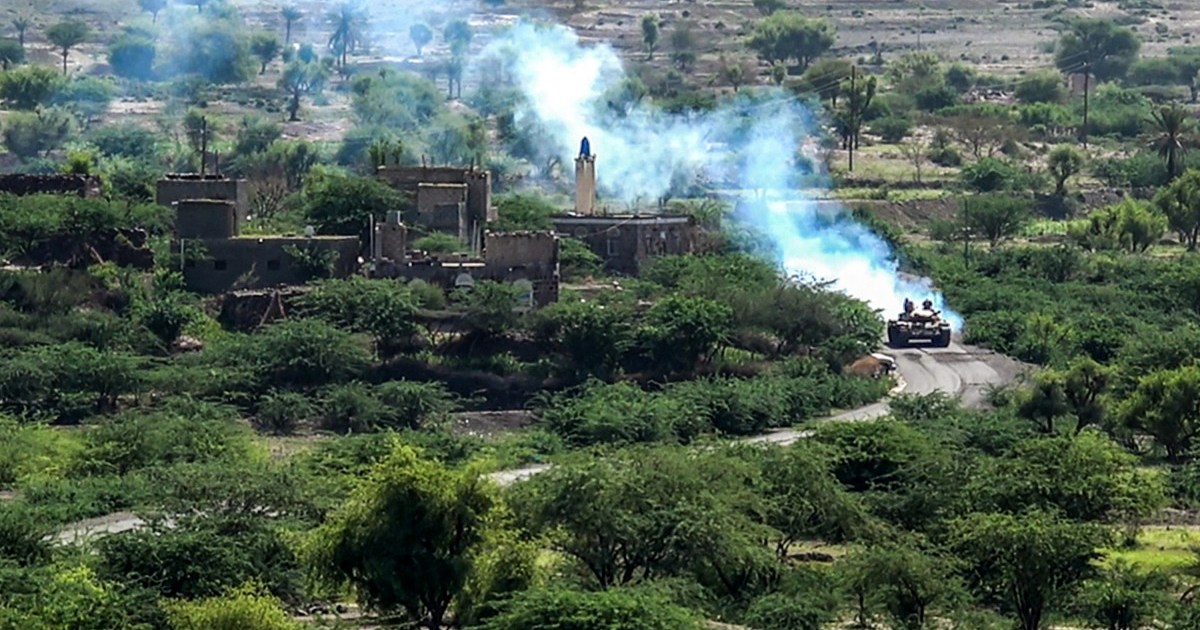
The immediate trigger is military. On 8 September, Houthi forces launched a coordinated wave of drone and ballistic missile strikes against several Saudi cities and strategic sites, including Abha, Khamis Mushait, Jizan, and Najran. The significance of these attacks lies not only in their scale but in their timing and geographic reach. They coincided with renewed Houthi fighting around Bab al-Mandeb, one of the region’s most strategically important maritime chokepoints, and with the Houthi seizure of Mocha and surrounding islands. The conflict has moved beyond a contest for Yemeni territory; it is now a contest over strategic geography and the capacity to project pressure outward.
The timing is not incidental. Since Israel and the United States launched military operations against Iran in February, Tehran has severely restricted shipping through the Strait of Hormuz, which has sharply increased the importance of Saudi Arabia’s western export routes through the Red Sea. That shift in turn elevates the strategic value of Bab al-Mandeb as an alternative energy corridor. Simultaneous pressure around both Hormuz in the east and Bab al-Mandeb in the west creates a broader geography of vulnerability, extending the consequences of confrontation well beyond any single battlefield.
The critical analytical question is not whether Tehran directly controls every Houthi operational decision. What matters strategically is whether developments in Yemen advance or complement Iran’s broader objectives. When pressure around Hormuz coincides with instability around Bab al-Mandeb, two distinct maritime arenas begin to function as interconnected levers. The result is an expansion not merely of the conflict itself, but of the geography through which strategic pressure can be applied — and through which costs can be imposed on neighbouring states.
The diplomatic consequences have followed swiftly. Earlier this year, direct Iranian attacks on Saudi territory led Riyadh to expel Iran’s military attaché and four other embassy staff. More recently, Oman-hosted talks in Salalah — intended to address practical maritime security arrangements around the Strait of Hormuz — were postponed indefinitely. Bahrain had already declined to participate; Oman subsequently concluded that conditions for productive negotiations were no longer in place. Iran acknowledged that regional concerns had contributed to the delay.
The postponement matters beyond the cancellation of a single meeting. It exposes a structural problem for regional diplomacy: negotiations cannot easily be insulated from the security environment in which they occur. For Saudi Arabia, engaging Tehran on maritime security while simultaneously absorbing missile and drone attacks from an Iran-aligned actor created an untenable political contradiction. The question shifted from whether dialogue could continue to whether sufficient strategic confidence remained for that dialogue to yield anything durable.
This brings the central paradox into focus. Iran has long sought to prevent the consolidation of a regional security architecture directed against it, and since 2023 has presented diplomatic engagement as an alternative to permanent confrontation. Yet as the geography of pressure widens, Gulf states face stronger incentives to deepen external security partnerships and coordinate more closely among themselves. An instrument designed to generate strategic depth and bargaining leverage can therefore produce the opposite effect: greater regional cohesion around precisely the security concerns Tehran is seeking to contain.
There is an alternative reading of Tehran’s calculus. Under direct military pressure, Iran may treat multi-front coercion as a wartime instrument of leverage rather than as a template for long-term neighbourhood relations — with the expectation that diplomacy can be resumed once the immediate balance of pressure shifts. On this reading, strategic pressure and diplomatic engagement are not mutually exclusive but sequential phases of the same strategy.
That calculation carries a substantial risk, and it rests on a questionable assumption: that political trust can be suspended during confrontation and reliably rebuilt afterwards. Diplomatic rapprochement involves more than restoring embassies or reopening channels; its durability depends on expectations about future behaviour. Repeated cycles of escalation followed by diplomatic reset erode those expectations incrementally. Each cycle makes the next attempt at reassurance harder to sustain and reduces the confidence on which future agreements depend.
The wider implications extend beyond the bilateral Saudi-Iranian relationship. China’s role in brokering the 2023 agreement gave the rapprochement an international dimension and a degree of reputational weight for Beijing. The collapse of the Oman talks demonstrates how quickly ground-level developments can narrow the space for mediation frameworks more broadly. The damage accumulates not in a single negotiation but across the diplomatic architecture intended to contain regional rivalry.
This is ultimately the cost of leverage. Tactical pressure may expand bargaining options in the short term, but its strategic value becomes harder to sustain when it simultaneously weakens the relationships required for long-term regional stability. For Tehran, the central challenge is not simply how much pressure its regional network can generate. It is whether continuing to draw leverage from that network remains compatible with the regional order Iran says it wants to build — and whether, after repeated cycles of escalation, its neighbours retain any confidence that it does.