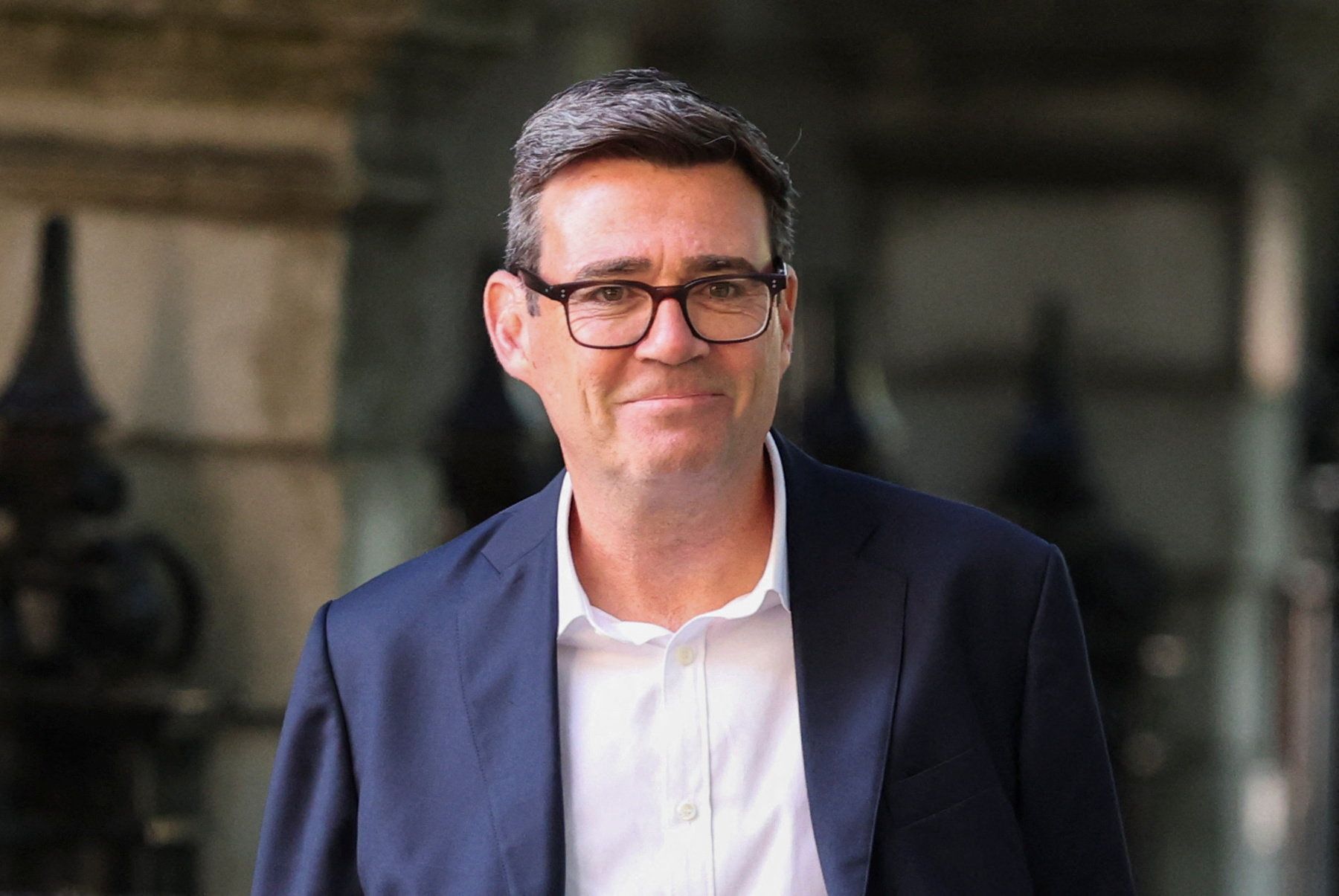
Andy Burnham has pledged to fully fund Britain’s long-term defence investment plan, even as questions persist over where nearly a third of its committed increase will actually come from.
Speaking to LBC’s Tonight with Andrew Marr, the Greater Manchester Mayor — widely expected to succeed Keir Starmer as Prime Minister before the end of the month — acknowledged that he had not been party to all the discussions surrounding the plan, but left little ambiguity about his intentions. “What I can say to you tonight is I will take my responsibilities fully to fund the defence investment plan,” he said, in remarks reported by the Press Association. “If I am in the position to do so, I will take those responsibilities extremely seriously.” The statement is notable precisely because it concedes the problem rather than obscuring it.
The backdrop is a defence budget that Starmer’s government has already committed to expanding substantially. The Prime Minister announced a £15 billion increase over four years, bringing total projected defence spending to nearly £300 billion, as Britain seeks to modernise armed forces widely regarded as having been allowed to atrophy. The urgency behind that ambition is not abstract: NATO planners and senior military figures have raised persistent concerns about Russian aggression against alliance members within the coming years. Yet the source of roughly £4.7 billion of the plan’s committed uplift remains unresolved, a gap that has attracted sharp public scrutiny and which Burnham will inherit should he enter Downing Street.
His broader pitch on domestic policy was equally revealing of the direction he intends to take. On welfare reform — the issue that generated the most damaging internal Labour dissent under Starmer — Burnham signalled a clear departure in method if not in overall fiscal ambition. He ruled out what he called “crude cuts to benefit levels,” arguing that simply reducing payments for those struggling financially tends to deepen poverty and generate a political backlash that is, in his own assessment, understandable. His preferred alternative is structural: expanding council housebuilding and broadening non-university educational pathways for young people, interventions aimed at reducing welfare dependency over the longer term rather than trimming headline entitlement figures.
On tax, Burnham indicated there is room for manoeuvre within the 2024 Labour manifesto, pointing specifically to the possibility of higher business rates on warehouses and large-scale developments, alongside relief for pubs — a politically legible signal that any revenue-raising will be directed at commercial property rather than income or consumption. He was careful to frame this as movement within the manifesto rather than a departure from it, stressing that he would broadly honour the commitments that delivered Labour its 2024 landslide.
The picture that emerges is of a prospective prime minister who is willing to name uncomfortable fiscal realities while offering only the broadest outlines of how he intends to resolve them. Whether that combination of candour and ambiguity will satisfy markets, the Treasury, and NATO allies remains the central question hanging over his expected transition to office.