
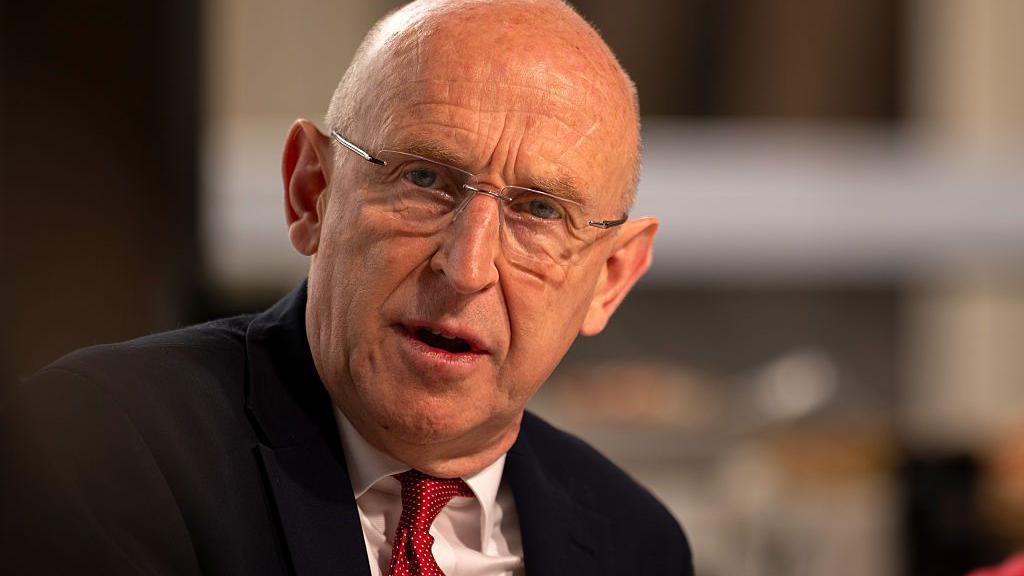
When John Healey resigned as Defence Secretary in June, he did so with a clear and unambiguous demand: Britain must commit to spending 3 per cent of GDP on defence by 2030. It was a principled stand, and his subsequent elevation to Chancellor under new Prime Minister Andy Burnham looked, on the surface, like a vindication. It was not. The 3 per cent target has not been secured, and the episode raises uncomfortable questions about how seriously the Burnham government intends to fund the armed forces.
The sequence of events deserves careful examination. Healey quit under Sir Keir Starmer, arguing that the existing defence investment plan — which projected spending rising to 2.7 per cent of GDP by 2030 — was wholly inadequate to future-proof the armed forces and honour Britain’s obligations to Nato. He was explicit about the gap between ambition and commitment, and his resignation carried the weight of a man who had seen the numbers and found them wanting. His appointment as Chancellor by Burnham was framed by Downing Street as a signal of intent, a gesture to Nato’s secretary-general that the new administration understood the gravity of the moment.
The gesture has not been followed by substance.
When the Prime Minister’s official spokesperson was pressed on the 3 per cent commitment, the answer was conspicuously evasive — the government would honour its obligations to international partners, nothing more. During his interview at the new Number 10 North with Laura Kuenssberg, Burnham went no further than repeating the Starmer-era Nato pledge, declining to endorse the very interim figure whose absence had driven Healey to resignation in the first place. The new Defence Secretary, Wes Streeting, offered mild encouragement — spending could rise faster under this government, he suggested — yet he too stopped well short of the 3 per cent threshold. Streeting’s apparent equanimity with current spending plans stands in pointed contrast to the urgency that defined his predecessor’s tenure.
The fiscal arithmetic is stark. There is already a funding shortfall of nearly £5 billion a year against existing defence commitments. Meeting Healey’s 3 per cent target by 2030 would require a further £8 billion annually on top of that. Closing such a gap demands a serious reordering of public expenditure — almost certainly at the expense of social security — on a scale that Labour backbenchers are unlikely to stomach and that neither the Prime Minister nor the current Defence Secretary appears willing to champion. The option of defence bonds, a borrowing mechanism that Healey himself had indicated he would consider when he was in charge of the armed forces, is understood to be off the table entirely under Burnham.
What emerges is a portrait of institutional inertia defeating individual conviction. Healey now holds one of the most powerful offices in government. He commands the Treasury, controls the fiscal levers, and sits at the centre of every significant spending decision. And yet the single commitment for which he sacrificed his previous role remains undelivered. The promotion, it turns out, has bought him influence without the authority to deploy it on the question that matters most to him.
For those who watch Britain’s defence posture with professional concern — in Whitehall, in Brussels, in the capitals of Nato’s eastern flank — the signal is ambiguous at best and troubling at worst. A Chancellor who resigned over a spending target he cannot now secure is a curious figure to reassure allies. The Burnham government may yet find a path to higher defence investment, but on present evidence it has chosen to inherit the constraints of its predecessor while shedding the urgency that at least one of its most senior ministers once brought to the problem.