There is a certain symmetry to watching an administration that lost at the highest court in the land simply reach for a different legal hook and try again. That, in essence, is what twenty-five Democratic-led states are alleging in a lawsuit filed this week at the US Court of International Trade — that the White House, having seen its flagship “liberation day” tariffs struck down by the Supreme Court in February, has dressed up the same economic intervention in new statutory clothing and imposed it on the country regardless.
The lawsuit targets a fresh round of double-digit tariffs applied to sixty trading partners last month, justified by the administration on the grounds that those countries were failing to prevent the importation of goods produced with forced labour. The legal vehicle this time is Section 301 of the Trade Act of 1974, a provision designed to address discriminatory or unfair foreign trade practices. The states, whose attorneys general and governors are uniformly Democratic, argue that the forced-labour rationale is a pretext — a convenient statutory fig leaf beneath which the administration is attempting to resurrect the very levies the Supreme Court disallowed. “After losing at the Supreme Court,” said New York Attorney General Letitia James, “the administration is once again trying to illegally raise taxes on families and businesses with a new round of tariffs.”
The White House pushed back without hesitation. Spokesman Kush Desai argued that a foreign country’s failure to prohibit goods made with forced labour constitutes an unreasonable burden on American commerce and workers, and that the administration’s response is both appropriate and legally sound. The administration’s position is not without a certain internal logic: Section 301 does grant the executive branch meaningful latitude to respond to foreign trade practices deemed harmful to US interests, and forced labour is a genuine and well-documented problem in global supply chains. The question before the court is whether the breadth of the tariffs — affecting more than ninety-nine percent of US imports — bears any credible proportional relationship to that stated objective, or whether the scale of the measure exposes the underlying intent.
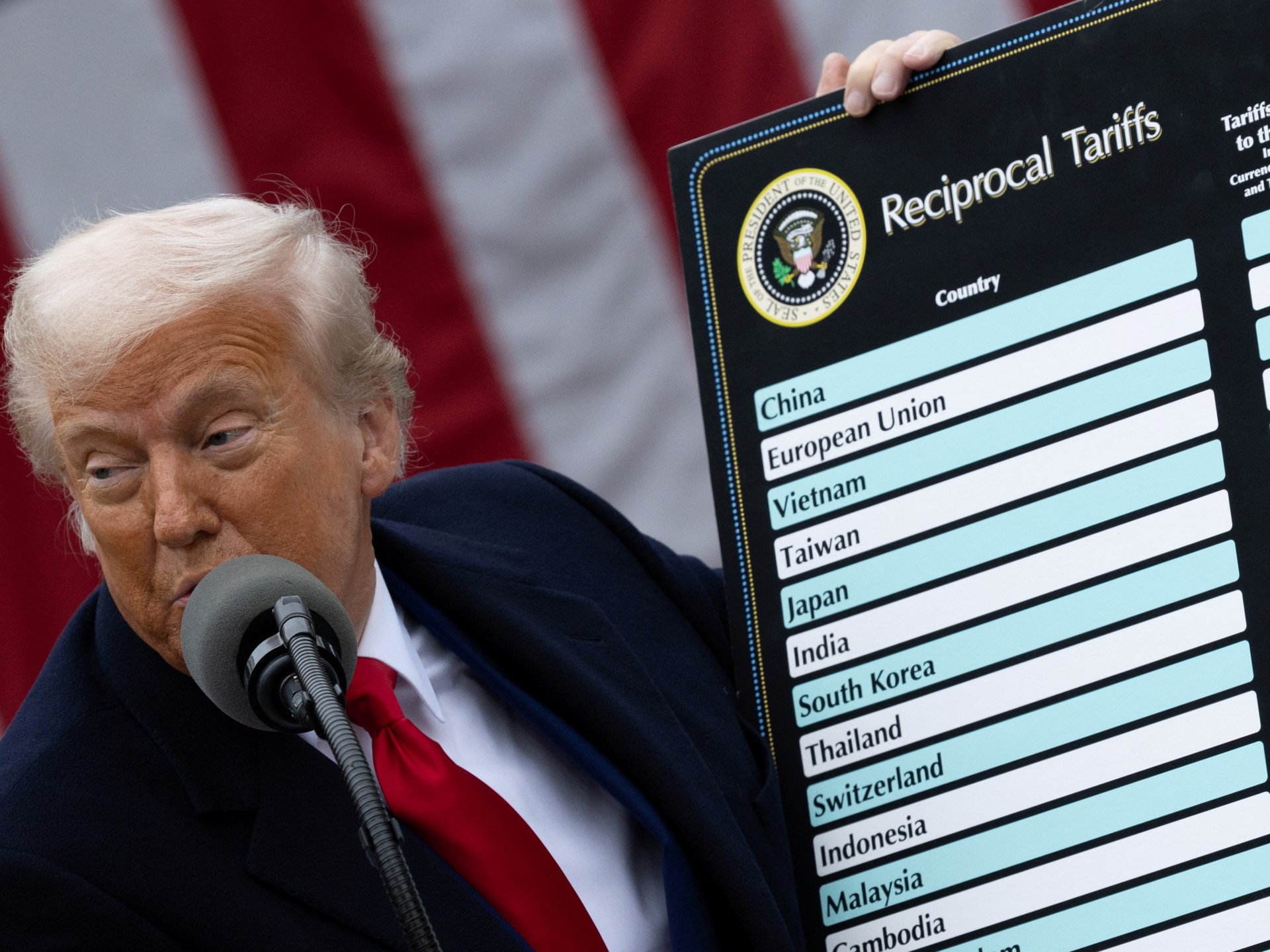
To understand why the legal terrain matters so much here, it helps to recall the sequence of events that brought the administration to this juncture. Last year, invoking the International Emergency Economic Powers Act of 1977, President Trump imposed sweeping tariffs on imports from nearly every country, framing the United States’ longstanding trade deficit as a national emergency warranting emergency powers. The Supreme Court ruled that IEEPA did not, in fact, authorise tariffs — a significant rebuke that required the administration to establish a refund process for importers who had already paid. Scrambling to maintain some form of revenue-generating trade barrier, the White House turned to temporary ten percent worldwide tariffs, but those expired at midnight on 24 July. The new Section 301 tariffs filled the gap almost immediately, arriving just as the temporary measures lapsed.
The states’ complaint echoes arguments already advanced in two earlier lawsuits brought by small businesses. All three cases contend that a blanket tax on the overwhelming majority of American imports is an instrument too blunt and too broad to constitute a genuine response to forced labour, and that its real purpose is to sustain a protectionist regime that the courts have already found wanting. Whether or not one is sympathetic to that characterisation, the legal question it raises is substantive: does the executive branch possess effectively unlimited discretion under Section 301 to impose economy-wide tariffs, provided it can attach a qualifying statutory justification, however tenuously connected to the actual scope of the measure?
Trump’s broader trade philosophy holds that high tariffs will revive American manufacturing and correct what he regards as decades of self-defeating openness to foreign competition. That argument has its adherents, and the concern about supply-chain dependencies exposed during the pandemic years is not frivolous. But the method of pursuing that goal — cycling through statutory authorities after judicial setbacks, applying tariffs at a scale that affects virtually the entire import economy, and doing so with minimal legislative authorisation — raises serious questions about institutional discipline and the proper boundaries of executive power. Markets, businesses, and trading partners all depend on a degree of predictability in the rules governing international commerce; repeated improvisation in response to legal defeats does not supply it. The Court of International Trade will now have to determine whether the administration’s latest manoeuvre holds up to scrutiny, and its answer will carry consequences well beyond the immediate dispute.