The central question raised by Donald Trump’s disclosure that he came within hours of launching what he described as the largest American military strike since the Second World War is not whether the threat was credible, but whether the diplomacy that forestalled it is. The answer, on present evidence, is uncertain at best — and the consequences of failure extend well beyond the Gulf.
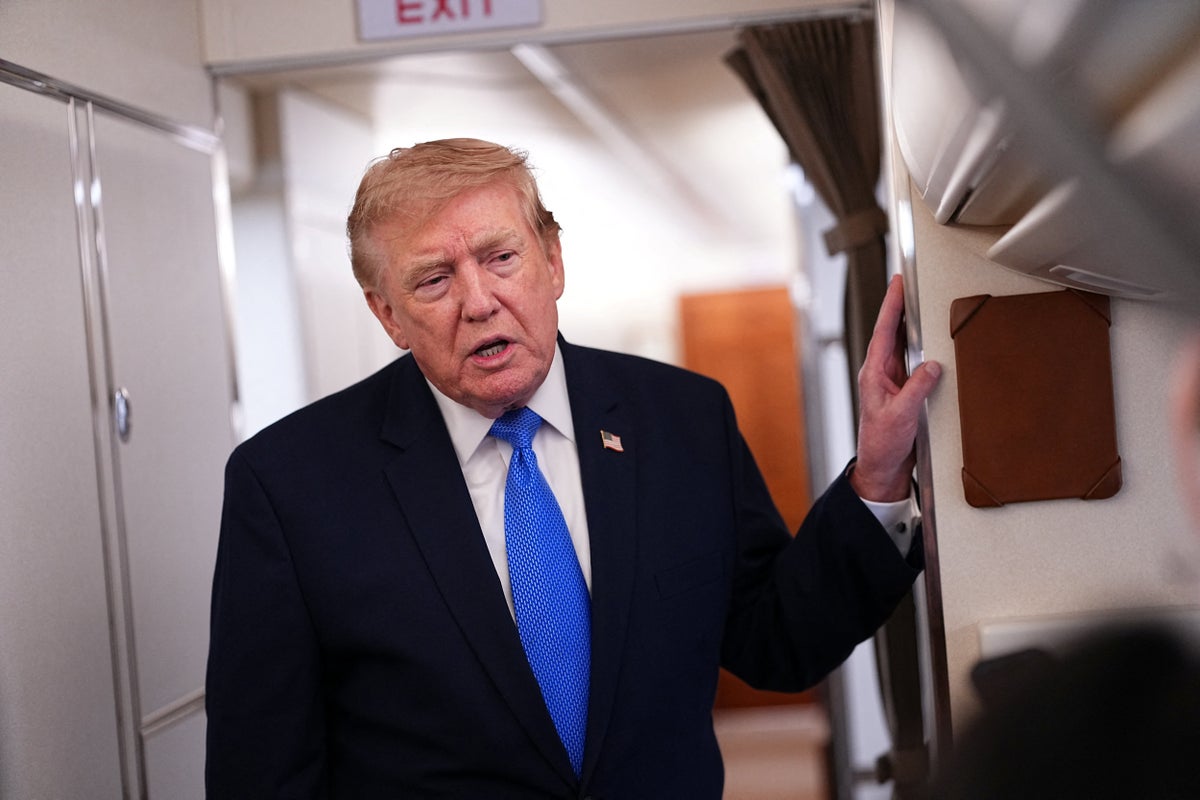
Speaking to reporters aboard Air Force One on Sunday, Trump confirmed that the United States military had been “locked and loaded” for a strike on Iran of extraordinary scale. “It was going to be a massive attack,” he said. “It was going to be an attack that would have been, by far, the biggest attack since World War II.” Defence Secretary Pete Hegseth reinforced the point on X, stating that the Pentagon “was ready to go — and remains ready — at levels not seen since World War 2.” These are not the words of an administration engaged in routine signalling; they describe a genuine decision point, and the fact that the strike did not proceed deserves careful examination.
What pulled the administration back was, by Trump’s own account, a coalition of Gulf allies and, he claimed, Iran itself. Saudi Arabia, the UAE, Qatar, and Tehran all urged restraint, he said, arguing that a negotiated settlement remained within reach. Saudi Crown Prince Mohammed bin Salman reportedly telephoned Trump on Saturday to express particular concern that strikes might target energy infrastructure — a prospect with obvious and severe implications for global oil markets. The Saudis’ intervention was confirmed by Axios, even as Iranian state media denied that Tehran had made any such appeal, with a semi-official news agency dismissing Trump as having “run out of steam.” Iran’s acting defence minister accused Washington of “psychological and cognitive warfare.” The diplomatic picture, in other words, is contested and opaque.
What is not contested is the strategic and economic context in which this drama is unfolding. The conflict, now five months old, has claimed 18 American service members and left hundreds wounded. Iranian casualties, according to Reuters citing the non-profit HRANA, exceeded 3,000 as of March. Traffic through the Strait of Hormuz — through which roughly a fifth of the world’s traded oil passes — has fallen to a trickle, pushing energy prices higher and injecting fresh uncertainty into an already fragile global economy. The Strait’s status has emerged as the central sticking point in negotiations, with Iran’s foreign minister Abbas Araghchi saying on Sunday that talks with Oman over the waterway are in their “final stages.” Trump said any agreement would include reopening the Strait and addressing Iran’s nuclear programme. Those are, to put it mildly, ambitious objectives.
The pattern of this conflict has been consistent: escalatory rhetoric followed by pauses for negotiation, followed by a resumption of hostilities when talks collapse. The latest round of fighting erupted after a memorandum of understanding broke down last month. NBC News reported that Trump himself is “exasperated” by the absence of a clear endgame, with an unnamed ally conceding that “there was not a real strategy for how long or what they should do to get to the endpoint.” The White House pushed back on that characterisation, but it is difficult to square with the public record. Two-thirds of Americans told an AP-NORC poll last month that the conflict has not been worth fighting — a figure that should concentrate minds in Washington even if it does not determine policy.
The implication is uncomfortable but clear. American credibility in the Gulf now rests on a diplomatic process that is fragile, contested by one of its principal parties, and operating under the shadow of a military apparatus that its own leadership describes as primed for unprecedented action. Markets, energy policy, and regional stability all hang on whether the “final stages” of negotiation Araghchi describes are genuine or merely the latest episode in a cycle of brinkmanship that has, so far, produced neither victory nor resolution. The allies who urged restraint on Saturday bought time. Whether anyone uses that time wisely remains entirely open.