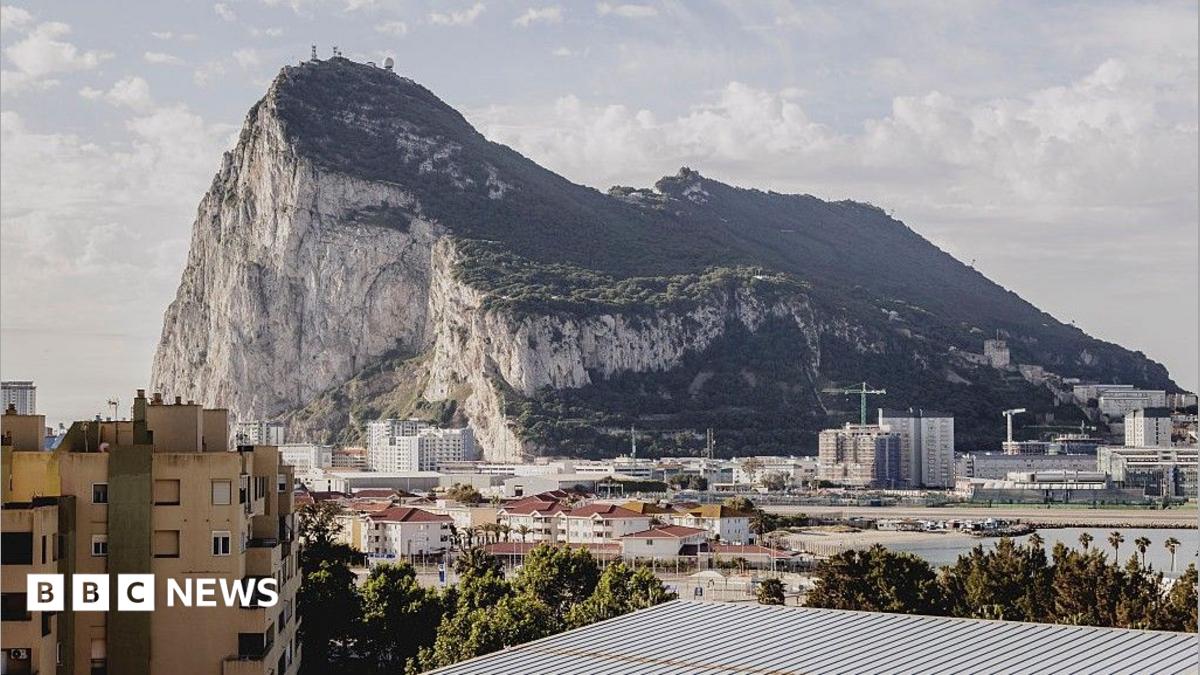
Gibraltar is scheduled to abolish its land border controls with Spain on 15 July, ending a regime of frontier checks that has been in place since 1908, as part of a post-Brexit agreement aligning the British Overseas Territory with the European Union’s customs union and Schengen free-travel zone. The arrangement, negotiated over several years between the UK, Spain, and the EU, will allow the approximately 15,000 Spanish workers who cross into Gibraltar each day to do so without queuing at passport control, while travellers arriving from non-Schengen countries — including the United Kingdom itself — will still be required to present passports at the territory’s airport and port.
The deal represents the most consequential shift in Gibraltar’s relationship with its Spanish neighbour since Francisco Franco lifted his 13-year blockade of the Rock in 1982. Chief Minister Fabian Picardo described the agreement as introducing “complete and utter fluidity of people and goods” between Gibraltar and the EU, and characterised it as “a new dawn” for the territory’s external relations. Spain’s Foreign Minister, José Manuel Albares, used broadly similar language, speaking of “a new era” for the Rock.
Economic Stakes on Both Sides of the Fence
The economic calculus behind the arrangement is stark. Gibraltar enjoys one of the highest per capita incomes in the world, its prosperity built substantially on online gaming, shipping, and financial services — all sectors with deep ties to EU markets. The adjacent Spanish municipality of La Línea de la Concepción, by contrast, carries unemployment approaching 30%, well above even the elevated regional average for Andalusia. Juan Franco, the mayor of La Línea, noted that roughly a third of the average local company’s revenues derive from Gibraltarian clients, making the smooth operation of the border a matter of structural economic importance rather than mere convenience. The removal of frontier queues is expected to accelerate footfall into Gibraltar and deepen commercial integration with the surrounding Spanish economy.
For Gibraltar’s own business community, the picture is more nuanced. John Isola, managing director of the Anglo Hispano Company, which operates several restaurants and bars on the Rock, welcomed the resolution of a prolonged period of post-Brexit uncertainty and described the outcome as “a good compromise.” He was nonetheless candid about the regulatory and fiscal adjustments that accompany the deal. Gibraltar has historically operated without value added tax; under the new framework, a transaction tax will be introduced, beginning at 15% this year and rising eventually to 17%, alongside higher excise duties on certain goods. Compliance with EU product regulations — previously not required — will add further complexity for businesses importing from the UK or other non-EU suppliers. “For anybody importing goods the scenario changes completely in terms of the paperwork,” Isola observed.
The provisional implementation of the arrangements is proceeding ahead of formal ratification by both the UK and European Parliaments. Machinery has been dismantling sections of the border fence each night in recent weeks, a visible signal that the transition is already under way. Whether the agreement’s economic benefits outweigh its regulatory costs will become clearer only once the new regime is fully operational — but after a decade of uncertainty, both Gibraltar and La Línea are preparing, with cautious optimism, for a materially different future.