
Futures Rise Modestly as Geopolitical Risks Mount
U.S. stock futures nudged higher late Tuesday even as a convergence of Middle East tensions, congressional pressure over military authorisation, and a significant shake-up in global oil markets kept investors on edge.
Dow futures rose 107 points, or 0.22%, to 49,404, while S&P 500 futures gained 15.5 points to 7,186.50 and Nasdaq 100 futures advanced 117.5 points, or 0.43%, to 27,286.25, as of 8:27 p.m. EDT.
Oil Hovers Near $100 as Hormuz Standoff Continues
WTI crude slipped 0.74% to $99.19 per barrel, while Brent crude edged down 0.44% to $110.77 — remaining elevated as the Strait of Hormuz dispute showed no sign of resolution.
RBOB gasoline futures rose 0.17% to $3.5665 per gallon. Natural gas futures were unchanged at $2.559 per MMBtu, while ULSD heating oil declined 0.90% to $3.9356 per gallon.
The U.S. dollar index stood at 98.625, up a marginal 0.03%. Asian equity markets were mixed, with Japan’s Nikkei 225 falling 1.02% to 59,917 while South Korea’s KOSPI gained 0.33% to 6,662.
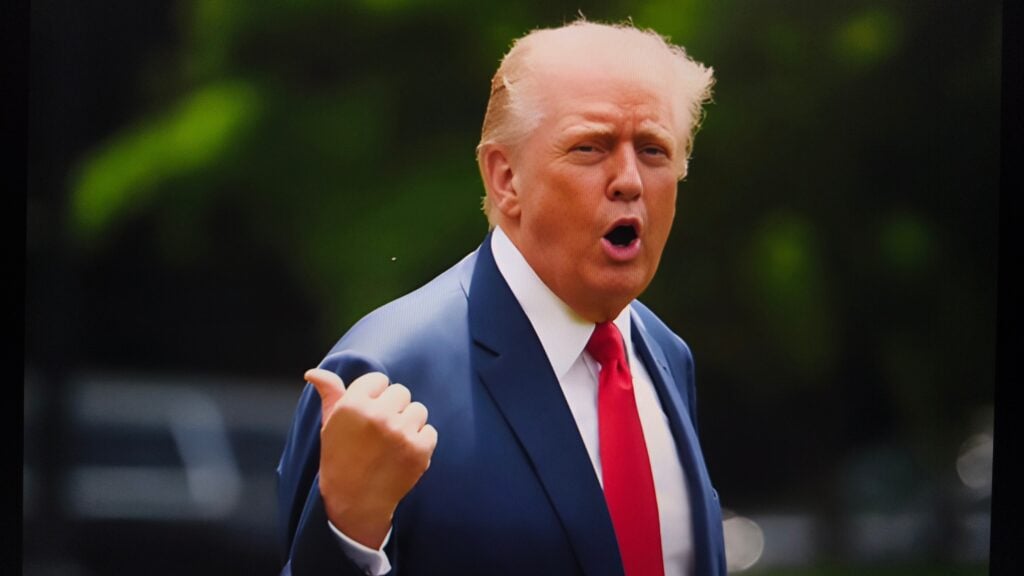
Trump Rejects Iran’s Hormuz Proposal
President Donald Trump has expressed dissatisfaction with Iran’s latest diplomatic offer, which proposed reopening the strategically vital Strait of Hormuz in exchange for the lifting of a U.S. naval blockade, according to the New York Times.
The core obstacle appears to be Iran’s insistence on deferring nuclear programme negotiations to a later stage — a sequencing the White House regards as unacceptable.
Secretary of State Marco Rubio made the administration’s position plain on Monday. Speaking to Fox News, he said: “Those are international waterways. They cannot normalize… a system in which the Iranians decide who gets to use an international waterway.”
Senate Republicans Press White House on War Powers Deadline
Congressional scrutiny of the administration’s military posture is intensifying as the 60-day War Powers Act deadline approaches. Senate Republicans are demanding that the White House either seek formal congressional authorisation for continued military engagement or face the prospect of Congress moving to block it.
Senator Susan Collins (R-Maine) was unambiguous, stating that the president “has to obtain congressional approval or Congress can block it.” Senator Mike Rounds (R-S.D.) indicated that lawmakers expect Defence Secretary Pete Hegseth to provide answers during forthcoming hearings.
The pressure from within the president’s own party signals that constitutional constraints on executive war-making retain bipartisan force, even in a polarised Senate.
UAE Withdrawal Adds New Shock to Energy Markets
Compounding the uncertainty, the United Arab Emirates has announced its departure from both OPEC and the broader OPEC+ alliance, effective 1 May, citing long-term strategic priorities.
OPEC currently comprises 12 major oil-producing nations. Its expanded grouping, OPEC+, was established in 2016 and incorporates a further ten non-OPEC producers. The UAE’s exit raises fresh questions about the cohesion of coordinated production policy at a moment when energy markets are already under considerable strain.
With oil near triple figures, nuclear diplomacy stalled, and Congress asserting its constitutional role, the coming days are likely to test both markets and policymakers in equal measure.