What has actually been agreed between Washington and Tehran?
Following a sharp and dangerous exchange of strikes over several days, the United States and Iran have reached what a senior US official described to CBS News as a mutual agreement to “stand down”. The official indicated that commercial vessels would once again be able to transit the Strait of Hormuz freely, and that diplomatic talks aimed at a more permanent resolution to the conflict would continue. The announcement, made on Sunday, represented an attempt to stabilise a situation that had deteriorated rapidly in the days prior, with both sides trading accusations of violating the terms of an agreement signed barely a fortnight earlier.
That earlier agreement, a 14-point Memorandum of Understanding signed on 17 June, had committed both parties to an “immediate and permanent termination of military operations on all fronts.” Iran had also agreed to use its “best efforts for the safe passage of commercial vessels with no charge for 60 days” — a provision of considerable economic significance given the Strait of Hormuz’s role as the conduit for a substantial share of global oil and gas shipments. The ink had barely dried before the arrangement came under severe pressure.
What caused the ceasefire to unravel so quickly?
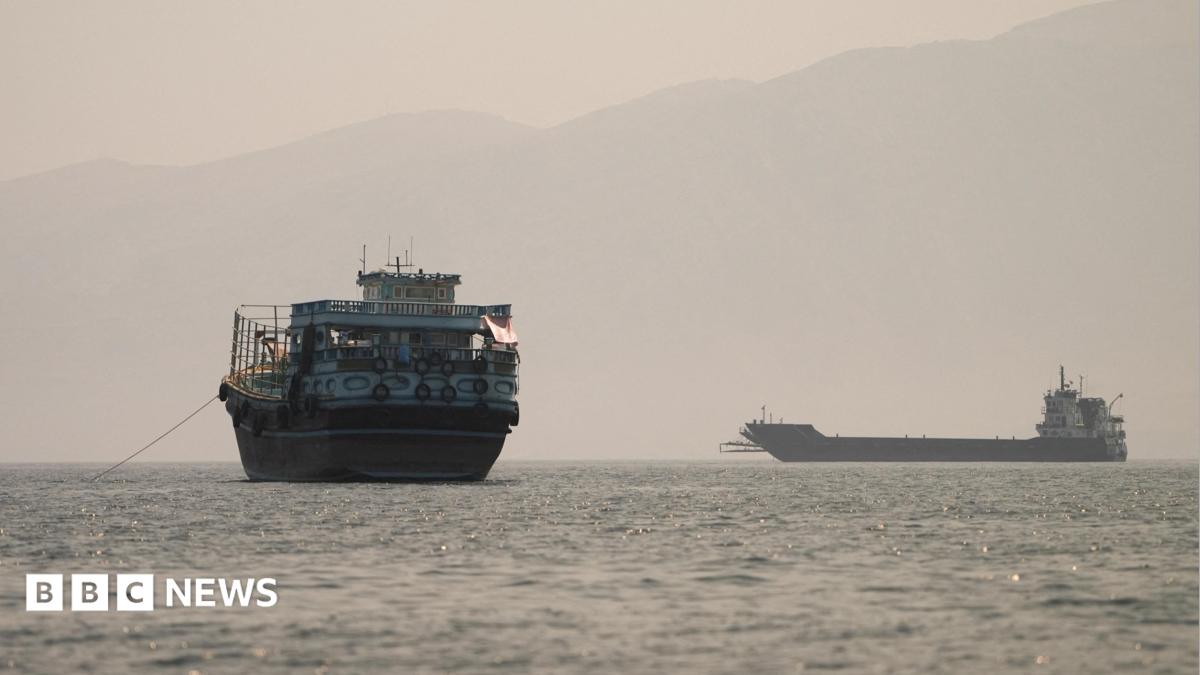
The sequence of events that threatened to undo the MoU began on Thursday, when an Iranian projectile struck a cargo ship in the Strait of Hormuz. The US responded over the weekend with a series of strikes on multiple targets inside Iran, which US Central Command characterised as a direct response to what it termed Iran’s “continued aggression” against commercial shipping. Tehran then launched retaliatory strikes on American bases in Kuwait and Bahrain, though Washington maintained that none of these attacks reached their intended targets and that there were no casualties or material damage. The episode illustrated, with uncomfortable clarity, how fragile the underlying architecture of the ceasefire remained.
It is worth recalling the broader context. The Strait of Hormuz had been effectively closed by Tehran following US and Israeli attacks on Iran at the end of February, a closure that sent immediate tremors through global energy markets. The MoU had been understood, at least in Washington, as the mechanism by which that closure would be reversed and the flow of commerce restored. The renewed hostilities cast doubt on whether either side possessed both the will and the institutional discipline to honour commitments made under considerable duress.
Where do the diplomatic talks stand now?
The picture on the diplomatic front is, characteristically, somewhat muddled. On Monday, Iran’s Deputy Foreign Minister, Kazem Gharibabadi, denied that any technical talks were scheduled for the coming week. President Trump, however, contradicted this directly, writing on Truth Social that Iran had itself requested a meeting and that it would take place “tomorrow in Doha.” White House Press Secretary Karoline Leavitt subsequently confirmed that US special envoy Steve Witkoff and presidential son-in-law Jared Kushner would travel to Doha for “high-level meetings” to continue discussions around the memorandum of understanding. The conflicting signals from Tehran and Washington are not reassuring, but the fact that both parties appear willing to continue talking is, at minimum, a stabilising signal for markets.
Is the wider regional picture any more settled?
Unfortunately, it is not. On Friday, the US also mediated a framework agreement between Israel and Lebanon, intended to pave the way toward a lasting peace between Israeli forces and the Iranian-backed armed group Hezbollah. That arrangement, too, showed immediate signs of fragility. Hezbollah’s leader rejected the agreement outright and accused the Lebanese government of undermining Lebanese sovereignty — a rhetorical posture that suggests the group has little intention of being bound by commitments made by Beirut. Two days after the framework was signed, the Israeli army struck a 200-metre tunnel in southern Lebanon that it said contained hundreds of weapons belonging to Hezbollah, an operation of which Washington was informed in advance by Israeli Prime Minister Benjamin Netanyahu and Defence Minister Israel Katz.
Tehran’s position adds a further complication to the already intricate diplomatic geometry: Iranian officials have stated that hostilities in Lebanon must cease before any wider ceasefire deal can be considered durable. This creates an uncomfortable dependency between two distinct but interlinked theatres of conflict, in which progress in one arena can be held hostage to developments in the other. For policymakers and energy market participants alike, the central question is whether the institutional scaffolding of these agreements — the MoU, the Lebanon framework, the Doha talks — is robust enough to contain the centrifugal forces that have already begun to pull at it. The early evidence is, to put it charitably, mixed.