

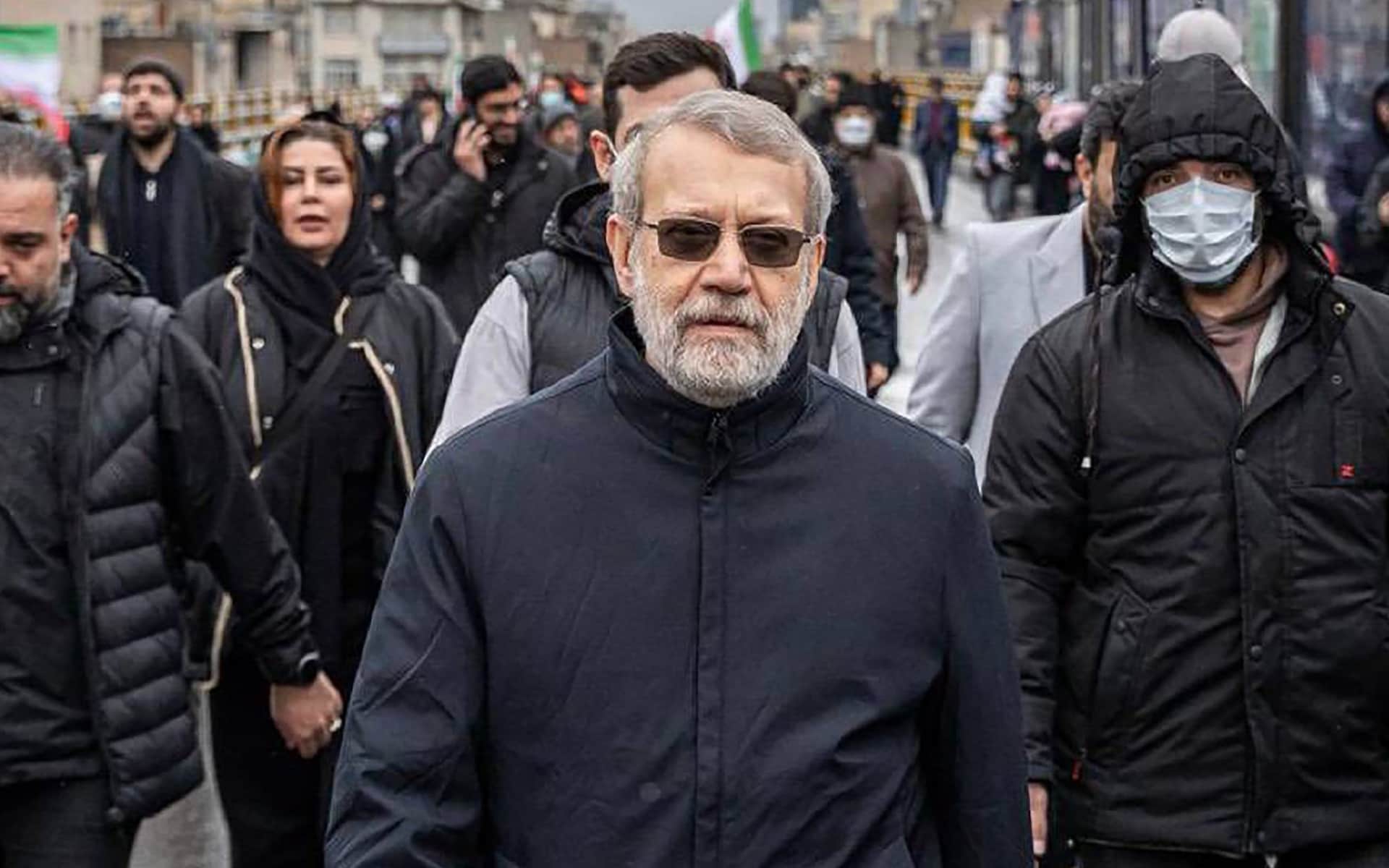
Israel said on Tuesday that Ali Larijani, Iran’s top security official and one of the most powerful figures left in the Islamic Republic, was killed in overnight strikes on Tehran. Iranian authorities had not confirmed his death by Tuesday evening, leaving the claim as a major but still disputed escalation in the war.
Israeli Defence Minister Israel Katz said Larijani and Gholamreza Soleimani, the commander of the Basij paramilitary force, were “eliminated” overnight. The Israel Defense Forces later said Larijani had been struck at security headquarters in Tehran and described him as the regime’s “effective leader” after the death of Ayatollah Ali Khamenei earlier in the conflict.
A claim with no confirmation from Tehran
The key uncertainty is simple: Iran has not publicly confirmed Larijani’s death. Reuters reported earlier in the day that Israeli officials said he had been targeted, but that his fate was still unclear. Later, Israel said he had been killed. That gap matters because Tehran has not issued a matching statement and there has been no independent confirmation from Iranian state media.
Part of the confusion came from activity on Larijani’s social media. A handwritten tribute to Iranian “martyrs” appeared on his X account on Tuesday morning, which some observers treated as a sign he might still be alive. However, such a post does not amount to proof of life, and several news outlets noted that Iran’s silence left the Israeli claim unverified.
Why Larijani matters so much
Larijani’s importance goes well beyond his formal title. He served as secretary of Iran’s Supreme National Security Council, the body that coordinates national security and foreign policy at the top of the state. In recent weeks, Israeli officials and multiple news reports had portrayed him as one of the main figures keeping the system together after Khamenei’s death.
If confirmed, his killing would make him the most senior Iranian official known to have died since Khamenei was killed on the opening day of the war. Associated Press said the loss of both Larijani and Basij chief Gholamreza Soleimani would mark another major blow to Iran’s internal security structure, especially as Tehran tries to maintain order at home while fighting abroad.
Israel presents it as a direct hit on Iran’s command
Israeli officials framed the strike as an attack on the people directing both the war effort and internal repression. Reuters reported that Israeli sources said Larijani had played a central role in ordering attacks after the war began and in helping manage Iran’s military and political response. Israel’s public language also suggested it sees him as more consequential than the nominal chain of succession now in place.
That point is politically important because Iran had already moved to project continuity after Khamenei’s death. Mojtaba Khamenei was presented as successor, but Reuters and other outlets have noted that Larijani was widely seen as one of the most experienced hands in the regime and a key figure in crisis management. His removal, if verified, would deepen questions over who is truly in charge in Tehran.
Tehran now faces another test of control
The reported strike comes as Iran is already under intense military and political pressure. Israel and its allies have expanded attacks on Iranian command centres, while Tehran has tried to maintain public order and preserve a sense of continuity in leadership. In that context, even the uncertainty around Larijani’s fate is significant because it shows how contested and fragile the information environment has become during the war.
For now, the clearest verified position is this: Israel says Ali Larijani was killed in Tehran overnight, but Iran has not confirmed the claim. Until Tehran provides evidence one way or the other, the reported assassination stands as one of the most consequential and unresolved episodes of the conflict so far.