
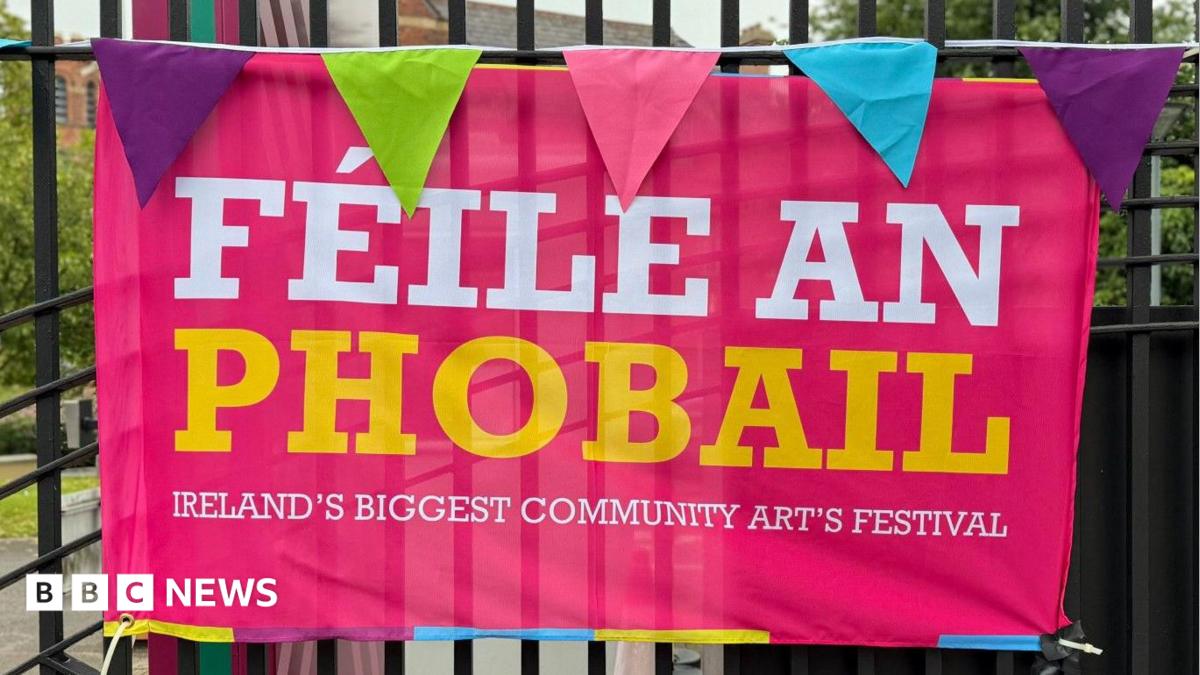
A dispute between a women’s advocacy organisation and one of Ireland’s largest community festivals has ended without a court ruling, after both parties reached a settlement on the morning a High Court hearing was due to begin in Belfast. The Women’s Rights Network Northern Ireland (WRN NI) withdrew its legal challenge against Féile an Phobail on Wednesday, following an agreement that resolves — at least procedurally — a controversy that had drawn considerable public attention over the preceding week.
The episode began when WRN NI, an organisation that describes its mission as “putting the sex-based needs of women and girls first,” was initially accepted as a participant in Féile an Phobail, the West Belfast Festival, which has operated for nearly four decades and bills itself as Ireland’s largest community arts festival. The group had proposed a panel discussion entitled Respect, Rights and Reality, scheduled for 4 August at St Mary’s University College. Féile subsequently withdrew the event, stating that it had been “unaware from the initial submission that this event would promote campaigns against rights for the transgender community.” Talks between the two organisations broke down, and WRN NI initiated legal proceedings seeking a court order on the basis of what it characterised as a binding contractual agreement.
The substantive legal question — whether Féile’s withdrawal constituted a breach of contract — was never adjudicated. That matters, because the settlement leaves the underlying contractual and free-expression questions entirely unresolved as a matter of law.
Under the terms of the agreement, WRN NI withdrew its proceedings in exchange for Féile’s commitment to meet with the organisation to “explore and discuss potential participation in future Féile events.” The panel discussion itself will proceed on 4 August, though at an alternative venue rather than under the festival’s auspices. WRN NI described the outcome as marking “the beginning of constructive engagement and greater opportunities for women’s voices and perspectives to be heard,” and expressed gratitude for the support it had received, both publicly and privately, during the dispute.
Féile’s statement adopted a markedly different register. The festival declared that its “decision to withdraw this event from our programme stands,” and framed the resolution as a vindication of its own position, asserting that the outcome confirmed its role in “standing up for those who are marginalised.” It also took aim at what it characterised as external interference, suggesting that many of those who had engaged with the controversy did so not out of principled concern but in order to “attack Féile” and “damage the West Belfast community.”
The two statements, read side by side, reveal that the settlement produced an agreement on process while leaving the underlying disagreement entirely intact. Each party has claimed, in its own terms, to have emerged with its position affirmed. What the episode does illustrate, with some clarity, is the degree to which disputes over sex-based rights and transgender inclusion are now generating litigation risk for cultural institutions that make programming decisions on contested ideological grounds — a consideration that festival organisers, arts funders, and venue managers across the United Kingdom would be unwise to dismiss.