
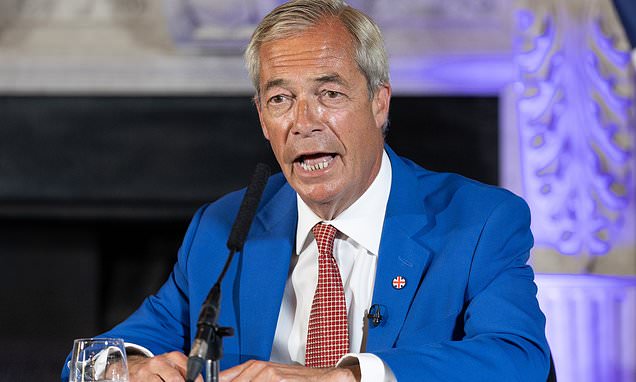
The question of whether the Conservative Party should seek a formal accommodation with Nigel Farage and Reform UK has resurfaced with fresh urgency. Stephen Glover, writing in the Daily Mail, argues that Kemi Badenoch would be mistaken to dismiss Farage as a spent political force — and that the instinct to reject any electoral arrangement on tribal grounds may cost the right dearly.
The argument is straightforward, even if the politics are not. Britain’s first-past-the-post system punishes divided electoral coalitions with brutal efficiency. Where two parties compete for an overlapping voter base, the arithmetic tends to favour whichever opposing force holds together. For the centre-right, that dynamic currently works against both the Conservatives and Reform, splitting votes that, combined, might otherwise defeat Labour in a range of marginal constituencies.
The Electoral Logic the Conservatives Cannot Afford to Ignore
Badenoch’s instinct has been to position the Conservatives as the credible, institutional alternative to Labour — a party of government in waiting, not a protest movement. That distinction has real merit. There is a meaningful difference between a party capable of staffing a Treasury, managing a foreign policy, and sustaining a legislative programme, and one whose primary function has been insurgent disruption. Voters who want competent administration, not merely expressive politics, are right to weigh that difference carefully.
Yet the electoral map does not reward purity. Farage’s by-election performance in Clacton demonstrated that Reform can win seats and hold voters who have entirely abandoned the Conservative brand. Dismissing that reality as a temporary aberration carries considerable risk. The question Glover poses is whether Badenoch can afford to treat Farage as toast when the evidence suggests otherwise.
The Case for Pragmatism Over Principle
A formal pact between the Conservatives and Reform would raise serious difficulties. The two parties differ on tone, on institutional culture, and on a range of policy specifics that matter to donors, MPs, and the broader membership. Any arrangement would require careful management of expectations on both sides, and would expose Badenoch to accusations of legitimising a movement that many in the Conservative mainstream regard with genuine unease. These are not trivial objections.
Nevertheless, Glover’s broader point — that reflexive tribalism is not a strategy — deserves serious engagement. The Conservative Party’s primary obligation is not to its own institutional survival in isolation, but to providing effective centre-right governance. If the arithmetic of a fractured right-of-centre vote delivers Labour repeated majorities, the costs fall not on party strategists but on the country. That is a harder calculation to wave away
The deeper issue is one of political maturity. Britain’s conservative tradition has historically been defined by its pragmatism — its willingness to absorb, adapt, and govern rather than protest. Whether that tradition can accommodate a working relationship with Reform, or whether the cultural distance between the two parties is simply too great, remains genuinely unresolved. What Glover’s argument makes plain is that the Conservatives cannot simply wait for Farage to disappear. The evidence, for now, suggests he will not.