
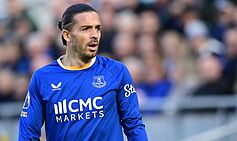
Jack Grealish has been excluded from Everton’s Carabao Cup squad for their fourth-round fixture against Newcastle United at Hill Dickinson Stadium, following what the club described as a breach of club discipline. Everton confirmed the omission was unrelated to injury, issuing a brief statement that read: “Jack Grealish is unavailable for selection due to a breach of club discipline.” The timing is particularly awkward, given that the match represented a straightforward opportunity for the Manchester City loanee to rebuild match fitness after a disrupted spell last season.
The club has not publicly elaborated on the precise nature of the breach. According to the Liverpool Echo, Grealish failed to attend a training session following his absence from Saturday’s 2-0 Premier League defeat at Arsenal, from which he had been excused through illness. Whatever the specifics, the episode lands at an uncomfortable moment — arriving only weeks after manager David Moyes had spoken at length about his expectations of the 31-year-old and the standards he hoped Grealish would set for younger squad members.
Moyes Had Set the Tone Early
Moyes had been notably candid in articulating what he wanted from Grealish beyond mere on-pitch performance. “I also want him to be a senior professional and a role model,” the manager said, pointing specifically to younger wide players Tyrique and Tyler as players who stood to benefit from Grealish’s experience and technical quality. “If ever you are looking at somebody for how to play as a wide player, Jack Grealish would certainly be one of them.” The emphasis Moyes placed on Grealish assuming a mentoring role within the squad makes the disciplinary episode all the more significant in terms of dressing-room optics.
Moyes had also expressed measured optimism about Grealish’s personal development. “I think we’ve got a mature Jack Grealish now as well in terms of understanding the game and what is required, being a team player,” he said. That assessment now sits in rather uncomfortable contrast with the events of this week, and will inevitably prompt questions about whether the player’s well-documented off-field habits remain a managerial concern.
A Second Season Under the Microscope
Grealish’s return to Merseyside this summer came on the back of a loan spell last season that began promisingly before injury intervened. His first three months at Goodison Park contributed meaningfully to Everton’s results, and Moyes acknowledged that the club needed him operating at that level again. “Everybody wants Jack to get back to where he was,” the manager noted, adding that Grealish was someone who historically found his best form through match time rather than training-ground work alone — a characteristic that makes unexplained absences from sessions particularly counterproductive.
In the current campaign, Grealish has made six appearances without registering a goal or assist. The expectation surrounding his second season on loan is considerably higher than the first, and Moyes had framed that pressure as something Grealish was well-equipped to handle. “If there is one person who would be able to carry that, it would be Jack,” he said, citing the player’s character as a natural fit for high-expectation environments. Whether this week’s disciplinary lapse proves a minor aberration or a more telling signal will become clearer as the season progresses.
Key Takeaways
The disciplinary matter will resolve itself in due course, but it introduces an unwelcome distraction into a loan arrangement that both club and player had reason to want functioning smoothly. For Everton, whose managerial culture under Moyes prizes professional standards and collective accountability, the handling of Grealish’s situation in the coming days will say as much about the club’s internal governance as it does about the player himself.