
What is Burnham actually proposing?
Andy Burnham has made reducing Britain’s £333 billion welfare bill a central ambition of his new premiership. The centrepiece of his emerging approach would require young people to engage in training or voluntary work as a condition of receiving benefits — a form of conditionality that governments of both parties have periodically attempted, with mixed results. During his first Downing Street address, Burnham was explicit: the welfare bill must come down, and the savings redirected towards defence. Work and Pensions Secretary Pat McFadden, asked directly on the BBC whether young people should be expected to contribute through training or volunteering in exchange for support, gave a one-word answer. Yes.
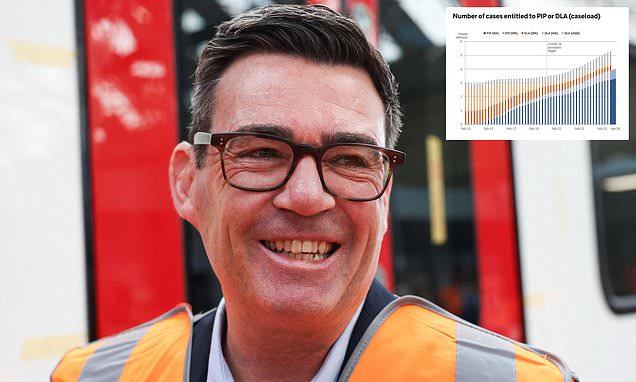
Burnham has been careful to distance himself from what he calls “crude” cuts to disability benefits, a phrase chosen with evident political calculation. The distinction he is drawing — between reforming conditionality for working-age claimants and slashing entitlements for disabled people — is real enough in policy terms, but it may prove difficult to maintain in practice. The welfare budget is large, the fiscal pressure is genuine, and the line between structural reform and punitive reduction has a habit of blurring once the Treasury sets its targets.
Why does this matter so much politically?
The answer lies in what happened to his predecessor. Sir Keir Starmer suffered one of the most damaging parliamentary rebellions in recent Labour history when more than 120 of his own MPs voted against his proposals to tighten disability benefit eligibility and reduce the bill by roughly £5 billion a year. That revolt, which took place in the Commons last July, is now widely regarded as the moment Starmer’s residual authority effectively collapsed. It was not merely a policy defeat — it was a signal that the parliamentary Labour Party contained a substantial bloc unwilling to accept welfare retrenchment on any terms the leadership was likely to offer.
Burnham inherited that fractured parliamentary arithmetic. He also inherited the underlying fiscal problem that drove Starmer to the welfare question in the first place. The challenge is structural: an ageing population, rising rates of long-term sickness, and a benefits system whose costs have grown well beyond what fiscal projections from even a decade ago anticipated. Ignoring that reality is not an option a serious government can entertain.
Who is leading the rebellion, and what are they actually saying?
The most prominent voices on the Labour left warning Burnham against proceeding are Kim Johnson, the MP for Liverpool Riverside, and John McDonnell, who served as shadow chancellor under Jeremy Corbyn and remains an influential figure on the party’s backbenches. Both were prominent opponents of Starmer’s disability benefit cuts, and both have now turned their attention to the new leadership with comparable urgency. Johnson told Bloomberg that if Burnham’s first instinct is to target disabled people and low-income families rather than address wealth inequality, “then nothing has been learnt” — from either Starmer’s political collapse or fourteen years of Conservative austerity. McDonnell has taken a slightly more constructive line, arguing that any welfare reform must be built around positive support rather than punitive sanction, a formulation that leaves some room for engagement but draws a firm line against compulsion.
It would be a mistake to dismiss these warnings as reflexive left-wing posturing. The MPs making them represent a genuine and sizeable parliamentary constituency within Labour. They demonstrated last year that they are willing to inflict real political damage on a Labour prime minister over this issue. Burnham’s promise to manage parliamentary discipline “differently” from his predecessor is about to face its first serious test.
Is the opposition coming only from within Labour?
No. Conservative leader Kemi Badenoch has written to Burnham setting out the conditions under which her party would offer cross-bench support for welfare reform. This matters because the arithmetic of a significant welfare overhaul may require some degree of Conservative backing if Labour rebels peel away in sufficient numbers. Cross-party support would give Burnham political cover and legislative security, but it would also expose him to the charge — already being levelled by Johnson and McDonnell — that he is pursuing Tory austerity by another name. The political geometry is uncomfortable from almost every angle.
What does a credible path forward actually look like?
The empirical record on welfare conditionality is more nuanced than either side of this debate typically acknowledges. There is reasonable evidence that well-designed employment support, combined with clear expectations around engagement, can improve outcomes for working-age claimants who are capable of participating in the labour market. The key variables are the quality of the support on offer, the rigour of the assessment process, and whether sanctions are proportionate and consistently applied. Where these conditions are met, conditionality can function as a genuine pathway rather than a punishment. Where they are not — and the record of successive governments here is not encouraging — it tends to produce hardship without corresponding economic benefit.
Burnham’s stated distinction between conditionality reform and disability benefit cuts is therefore the right place to start analytically, even if it remains politically contested. The harder question is whether his government has the administrative capacity, the fiscal headroom, and the parliamentary patience to design and implement a system that actually delivers on that distinction. McFadden’s blunt public commitment to reducing the benefits bill suggests the Treasury logic is firmly in the driving seat. Whether the policy detail can keep pace with that ambition — and whether Burnham can hold his parliamentary party together long enough to find out — remains genuinely uncertain.