
Farage’s ‘Pure Cold Rage’ Call Over Nowak Murder Sparks Community Division Warning
Nigel Farage’s call for “pure cold rage” following the murder of 18-year-old Henry Nowak has drawn sharp criticism from a leading academic, who warned the Reform UK leader’s rhetoric risks inflaming tensions within minority communities and undermining the case for accountable policing.
The Murder and Its Aftermath
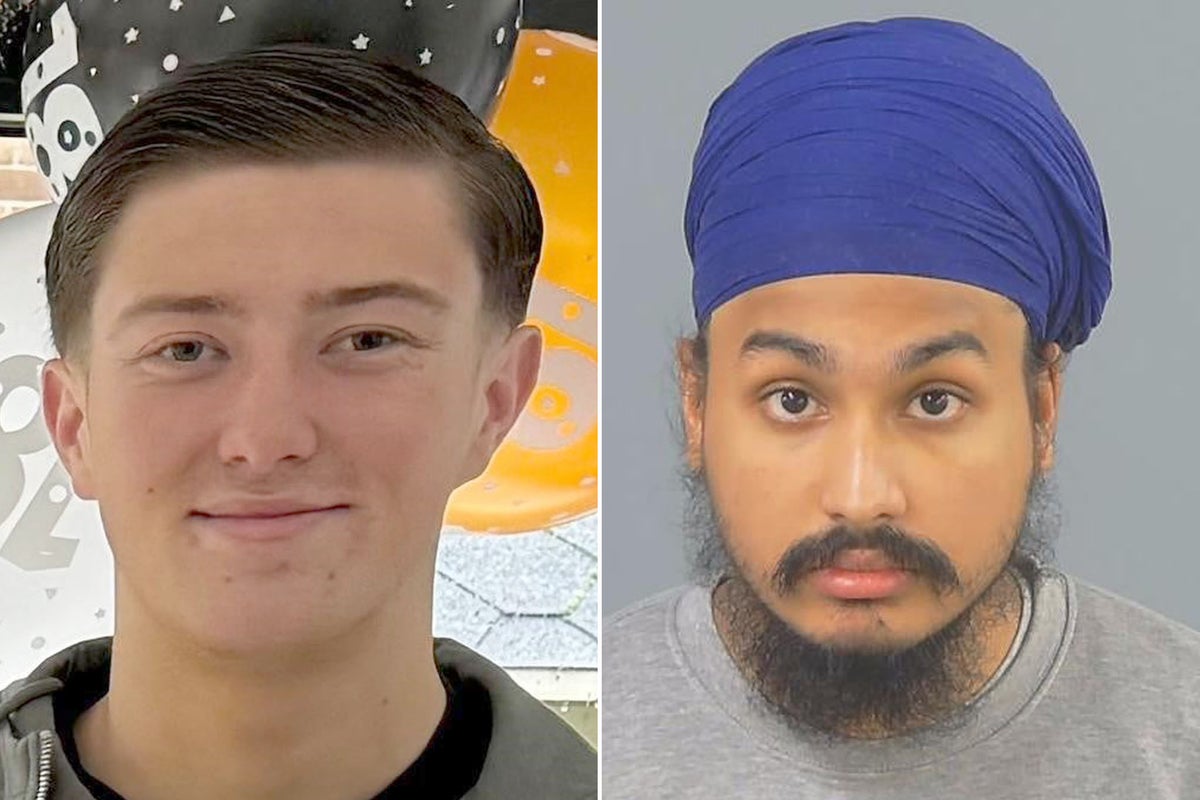
Vickrum Digwa stabbed Henry Nowak before falsely accusing his victim of being drunk and launching a racist attack. Mr Nowak’s family highlighted a troubling disparity in police conduct at the scene: their son was handcuffed and disbelieved as he lay dying, while his killer was, in their words, “afforded decency” and “believed”.
“The contrast is unbearable,” the family said. They have since called for a full investigation into the officers’ conduct and for stronger action on knife crime, but have explicitly stated they “do not want his death to be used to create further division, hatred or tension.”
Farage’s Intervention
In a video statement, Mr Farage praised the Nowak family’s “extraordinarily dignified” response before urging others to react with “pure cold rage.” He argued that Mr Nowak had been treated in a manner suggesting “an accusation of a racial slur was treated more seriously than an act of murder,” and framed the case as “proof” of a “two-tier culture” in which the rights of white people “matter less than those of ethnic minorities.”
The claims have not been substantiated by any formal review of police conduct in the case.
Academic Warning on Divisive Framing
Professor Jagbir Jhutti-Johal, Professor of Sikh Studies at the University of Birmingham, cautioned that invoking systemic bias without clear evidence is both empirically premature and politically dangerous.
“I think Farage’s comments will inspire fear in all minority communities, not just the Sikh community,” she told the Press Association. “Suggesting that communities are being treated differently by the police, without clear evidence, can deepen mistrust and foster division between groups that should be working together.”
Professor Jhutti-Johal also noted that Digwa’s post-assault deception was “un-Sikh,” a view echoed by Digwa’s own relatives, who have apologised to the Nowak family and for bringing the Sikh community into “disrepute.”
The Kirpan Controversy
Reform UK and the Restore Britain group have used the case to call for a ban on the kirpan, a small ceremonial blade carried by observant Sikhs for religious purposes. However, the kirpan was not the murder weapon. While Digwa was wearing a kirpan, the weapon used in the killing was a separate blade, described by the trial judge as “a large Sikh dagger.”
Tanmanjeet Singh Dhesi, the Labour MP for Slough, challenged this framing in the Commons on Tuesday. “The likes of Reform, Restore, and the far-right decided to politicise people’s pain, attacking the Sikh community for wearing the kirpan and wanting it banned, even though the kirpan was not used in this violent attack,” he said.
Mr Dhesi, the first MP to wear a turban in the Commons, also noted that hundreds of thousands of Sikh soldiers had fought alongside British forces in both world wars, many making the ultimate sacrifice while wearing their turban and kirpan.
Parliamentary Response
Home Secretary Shabana Mahmood told the Commons that “religious freedom is a very important principle that this Government respects,” adding plainly: “The responsibility for this murder rests with the murderer.”
A group of Sikh MPs issued a joint statement expressing solidarity with the Nowak family and urging public calm. “At a time when emotions are understandably raw, we urge people not to allow the actions of one murderer to divide communities or fuel hostility towards innocent people,” they wrote. “The Sikh community shares the grief, shock, and anger felt across the country.”
The Liberal Democrats also accused Mr Farage of “using tragedy to divide British communities.”
A Question of Evidence and Responsibility
The legitimate grievances raised by the Nowak family — concerning police conduct at the scene — deserve serious, evidence-based scrutiny. Professor Jhutti-Johal’s call for political leaders to “lead responsibly and avoid language that pits communities against one another” reflects a broader concern that inflammatory framing, however politically expedient, risks obscuring rather than advancing the cause of accountability.
As she put it: “The focus should remain on truth, accountability, and justice for all, rather than on narratives that create fear, resentment, and division.”