
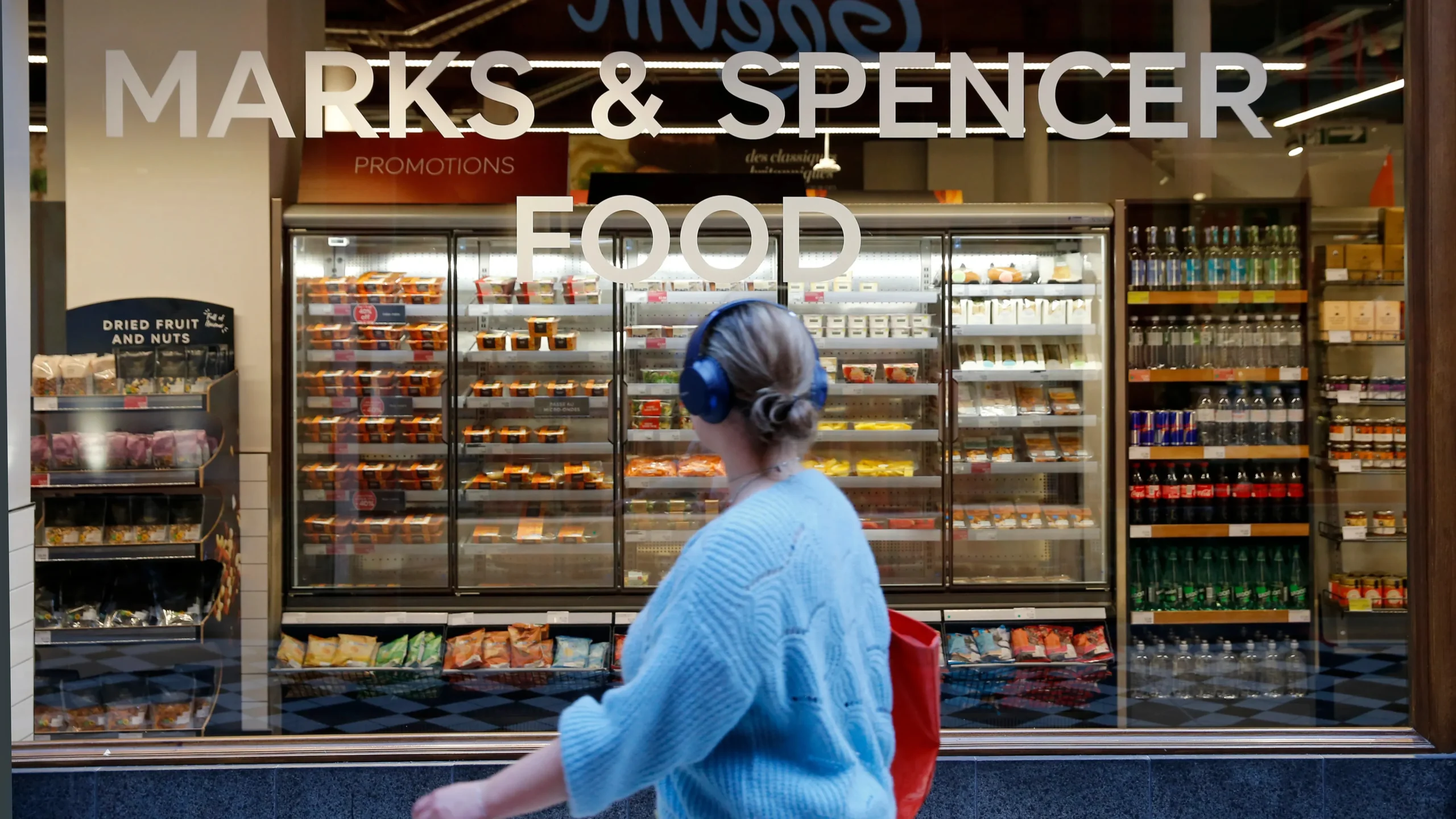
Marks & Spencer’s decision to partner with a food-waste platform marks the latest development in a quiet but growing market where technology mediates between retailers sitting on surplus stock and consumers willing to act quickly for a discount.
The Mechanics of Surplus
The premise is straightforward: food approaching its use-by date represents a genuine cost to retailers — in disposal, in reputational terms, and increasingly in regulatory scrutiny. Apps that connect that surplus with willing buyers offer a market-based resolution to what would otherwise become waste. Three platforms have established themselves as the principal operators in this space, each with a distinct model.
Too Good To Go operates on a surprise-bag basis. Users download the free application, register, and search for participating retailers nearby. The bags contain food nearing its sell-by date but remaining entirely safe to consume; the contents are unknown until collection, which must occur within specified time windows. Marks & Spencer now offers bakery bags through the platform priced at £3.80, against a stated retail value of at least £10.20. Aldi offers bags worth £10 for £3.30, containing a range of products approaching their sell-by date. Greggs, Morrisons, Toby Carvery, and Asda also participate, giving the app reasonable geographic and retail coverage across much of the country.
The model is efficient precisely because it removes consumer choice from the equation. Retailers clear stock in volume; buyers accept uncertainty in exchange for a substantial discount. It is an elegant, if imperfect, mechanism — imperfect because some purchasers will inevitably receive items they cannot use, which rather defeats the purpose.
Transparency Over Surprise
Olio addresses that limitation directly. Tesco, Iceland, the Co-op, and Pret are among the retailers that distribute free or discounted food through the platform, and unlike Too Good To Go, Olio lists individual products rather than opaque bundles. Buyers can browse what is available in their local area and select only what they actually want, which suits those unwilling to gamble on the contents of a sealed bag. The platform also permits private individuals to list surplus food they no longer need, extending the model beyond commercial retail into peer-to-peer redistribution.
Gander takes a different approach again, functioning less as a purchasing platform and more as a real-time intelligence tool. It connects with retailers including Iceland and Food Warehouse to display live information on discounted yellow-sticker items, including available quantities. There is no guarantee that listed products will remain on shelves by the time a buyer arrives — the information is only as current as the retailer’s data feed — but for those who prefer to inspect goods before committing to a purchase, or who wish to judge whether a trip is worth making at all, the application provides a useful layer of market transparency that previously did not exist.
A Market Solution Worth Watching
Taken together, these three platforms represent a market-led response to food waste that requires no subsidy, no regulatory compulsion, and no particularly complex behaviour change from participants. Retailers reduce disposal costs and recover marginal revenue; consumers access meaningful discounts on everyday goods; and the volume of edible food sent to landfill falls as a consequence. The commercial incentives are sufficiently well-aligned that major supermarket chains have chosen to participate without being required to do so.
Whether these platforms scale to the point where they materially alter waste figures at a national level remains to be seen. Their current footprint is substantial but uneven, concentrated in urban areas where user density makes the logistics viable. The expansion of M&S — a retailer not typically associated with discount channels — into the Too Good To Go ecosystem suggests that the reputational calculus has shifted: participation is no longer seen as a signal of desperation but as a straightforward demonstration of operational efficiency. That shift in perception may prove as significant as the technology itself.