
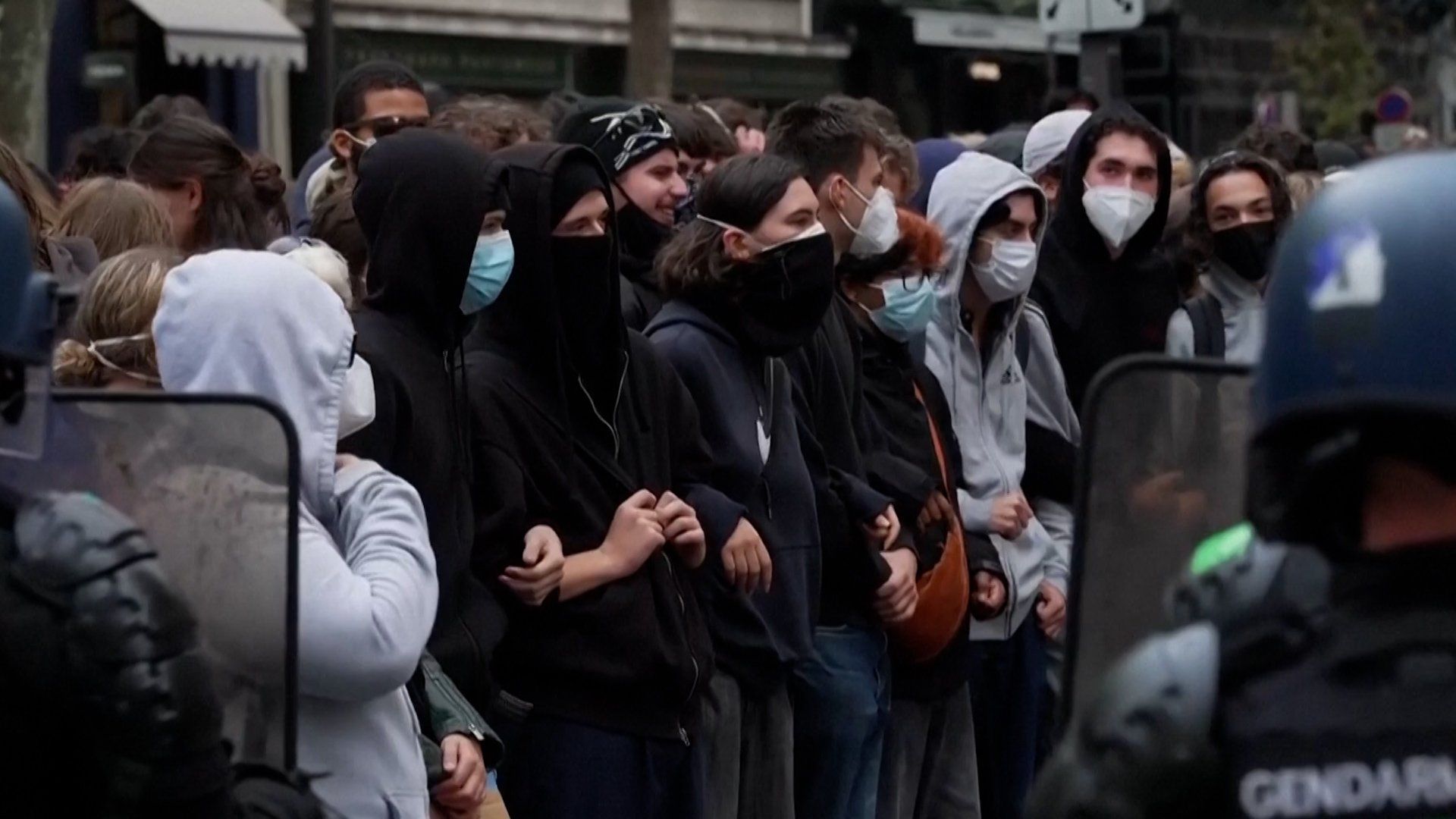
France’s schools have become an unlikely theatre of political pressure, as a wave of student demonstrations has compelled Prime Minister Sébastien Lecornu to acknowledge institutional shortcomings and pledge remedial action before the disruption deepens further.
Hundreds of schools across the country have been forced to close as protests gather momentum, with students demanding tangible improvements to learning conditions and a more adequate supply of qualified teachers. The scale of the closures signals that this is not a localised grievance but a systemic complaint — one that successive governments have deferred at considerable cost to public confidence in French state education.
Lecornu’s response has been to promise change, though the precise contours of any reform package remain to be seen. For a prime minister navigating a delicate political environment, the commitment carries both opportunity and risk: move too slowly, and the protests metastasise; move too hastily, and the concessions appear extorted rather than considered. The credibility of any eventual policy depends heavily on whether the government can demonstrate that its proposals are grounded in a serious assessment of resource allocation rather than a reflexive bid to restore order.
A secondary controversy has emerged alongside the core educational dispute. Criticism of the police response to the demonstrations has grown louder, raising questions about the proportionality of crowd-management tactics deployed against student protesters. How the authorities handle that dimension of the affair will likely prove as consequential for public opinion as the substance of any school reform. France has a long institutional memory when it comes to heavy-handed policing of youthful dissent, and the government would be unwise to allow that narrative to dominate the coverage.
What the episode ultimately underscores is the persistent tension between fiscal constraint and the maintenance of quality public services. Demands for more teachers and better-resourced classrooms are not unreasonable on their face; the harder question is how they are to be funded within a state budget already under considerable strain. Market-oriented observers would note that structural flexibility — in teacher deployment, in school governance, in the use of competitive incentives — might achieve more durable improvements than a simple injection of additional spending. Whether Lecornu’s government has either the political will or the parliamentary arithmetic to pursue that kind of reform is, for now, an open question.