
Friedrich Merz became Chancellor of Germany in May 2025. He has governed since then against a backdrop of declining personal approval ratings and a restless electorate — and on Sunday, two state elections brought that restlessness into sharp relief.
The story begins not on polling day but earlier this month, in Saxony-Anhalt. The hard-right, anti-immigration Alternative for Germany — the AfD — secured a notable election result there, sharpening its momentum and raising expectations ahead of the next contests on the calendar.
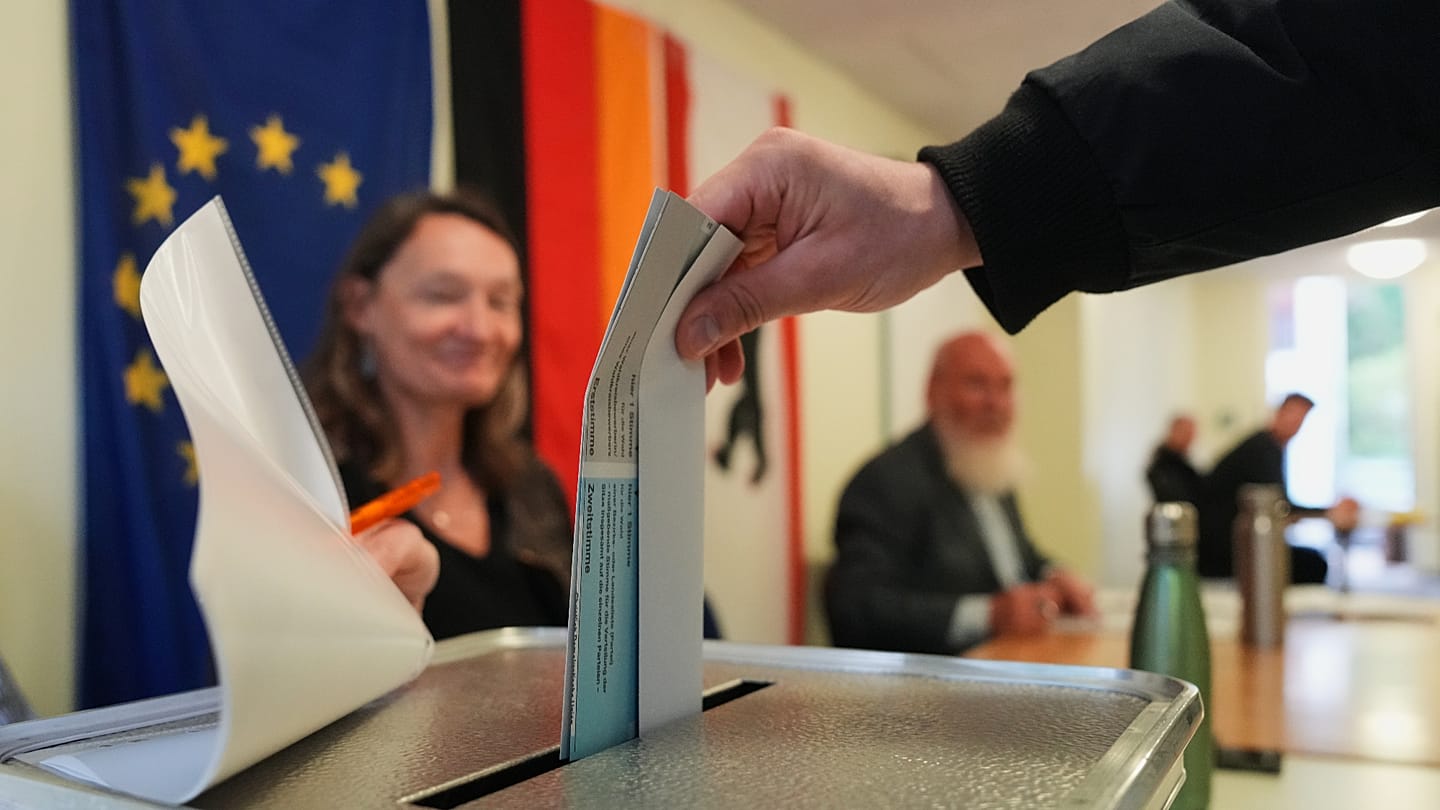
Those contests arrived on Sunday: a vote in Berlin, the city-state, and another in Mecklenburg–Western Pomerania, the coastal northeastern state known colloquially as “MeckPomm.” Two very different political battlegrounds. Two sets of results that carry significant implications for the stability of Merz’s chancellorship.
In Berlin, the contest that emerged was not the one Merz’s Christian Democratic Union had hoped to fight. The CDU found itself in a tight race against Die Linke, the far-left party that has cultivated strong support among younger voters by placing the housing crisis at the centre of its platform. Berlin’s rental market has been under severe strain for years, and Die Linke’s pledges to address it resonated. The latest polling put Die Linke edging ahead — a discomfiting position for a party that governs nationally but struggles to translate federal authority into state-level confidence.
MeckPomm told a different story. There, the principal contest was between the SPD and the AfD. The SPD’s Manuela Schwesig, minister-president since 2017, represented a formidable incumbent — experienced, locally embedded, and difficult to dislodge. The AfD, buoyed by Saxony-Anhalt, pressed hard regardless. Polling showed the AfD leading the SPD in the state, while the CDU — a secondary player here — was flirting dangerously with the five per cent threshold required to retain any seats in the state parliament at all.
The arithmetic of these outcomes matters beyond the states themselves. Gains for either the far-right or the far-left would increase pressure on a chancellor already struggling for traction. Merz has governed for only a few months. His approval numbers have moved in one direction.
Outside a polling station to the south of Berlin, Moritz Lembke-Oezer, 43, articulated the mood with unusual candour when speaking to AFP. He said he feared the vote might benefit the AfD, yet hoped it would see the CDU punished. “Maybe then Friedrich Merz will be gone,” he told the agency — and added that he planned to vote for Die Linke specifically because of its commitments on housing.
In Schwerin, the state capital of Mecklenburg–Western Pomerania, a different kind of voter spoke. Peter Sommer, a pensioner, told AFP he would welcome an AfD victory — not out of uncritical enthusiasm, but as a test. “Either something will happen,” he said, “or it’ll be the last time they get any votes.” A pragmatic wager, perhaps. Or simply the logic of an electorate that has run short of patience.
What Sunday’s results confirm, whatever their precise composition, is that the German political landscape remains deeply unsettled. The AfD’s consolidation of support across multiple states, the CDU’s difficulty holding ground even under a chancellor of its own, and the residual strength of parties on the hard left all point to a fragmented body politic that Merz has yet to find a way to stabilise.