
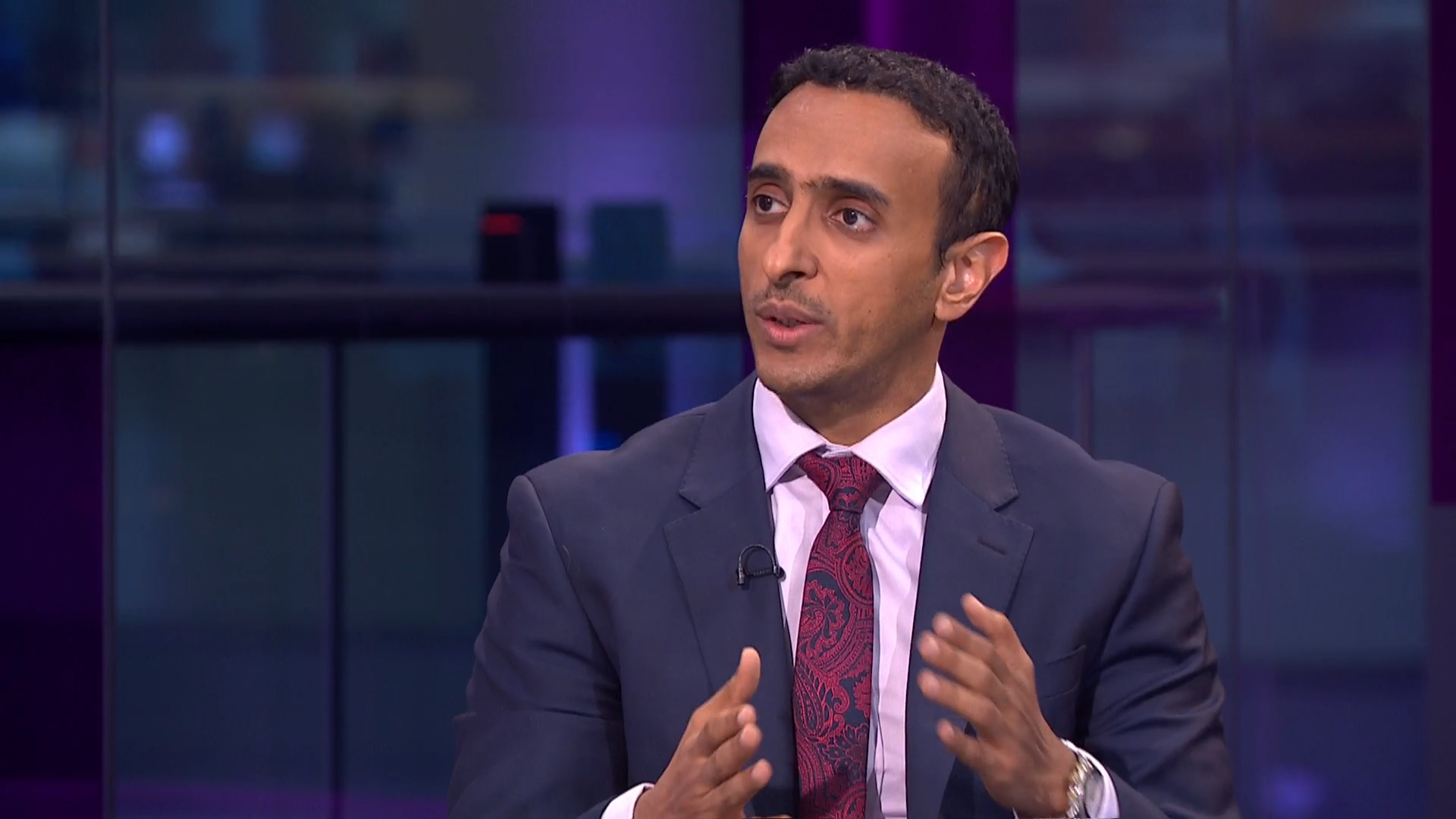
The Houthis are advancing, the Red Sea is growing more dangerous, and the international community is running short of credible responses. That, in essence, is the assessment of Baraa Shiban, Associate Fellow at the Royal United Services Institute and a Yemeni human rights activist, speaking to Channel 4 News.
Recent weeks have seen the Houthis consolidate significant territorial gains in Yemen’s western province of Taiz, including the seizure of the al-Shaqira area — a critical supply route for government forces operating in south Hodeida — and the Red Sea port of Mokha. The strategic weight of these acquisitions is considerable. The mountainous terrain around Taiz affords the Houthis commanding lines of sight over Yemen’s west coast, and with it the potential to threaten commercial shipping in the Red Sea through mine-laying operations, a tactic not unlike that employed by Iran’s Revolutionary Guard in the Strait of Hormuz.
Iran’s Calculated Escalation
Shiban traces the origins of the current upsurge — the most serious breach of stability since the UN-brokered truce of 2022 — to a specific diplomatic moment last July, when a Houthi delegation returned from the state funeral of Iranian Supreme Leader Ayatollah Ali Khamenei. The escalation followed almost immediately, suggesting a deliberate strategic instruction rather than an opportunistic flare-up. Iran, Shiban argues, is determined to secure a firmer foothold on the Red Sea.
The broader logic is one of asymmetric economic warfare. Through its Houthi proxy, Tehran now threatens disruption to roughly a third of global oil trade flows — a leverage point that conventional military power alone could never have delivered. Iran has long understood that it cannot prevail on a traditional battlefield against Western-aligned forces. Proxy pressure on global commerce, however, is a different kind of contest entirely, and one in which the costs to Iran remain comparatively low.
Limited Options, Overstretched Commitments
For Western policymakers, the strategic dilemma is acute. The United States is already deeply engaged with Iran across multiple theatres, and the domestic political appetite for opening yet another front in Yemen is negligible. Shiban is blunt on this point: the last thing Washington can do is return to the American public with a request for further military commitment in the Arabian Peninsula. That constraint is real, and it materially narrows the range of available responses.
The UN-recognised Yemeni government has attempted to compensate by opening new fronts of its own, seeking to stretch Houthi forces beyond their operational capacity. Whether that approach can succeed against a movement that enjoys Iranian logistical and financial backing remains an open question. What is clear is that the combination of Houthi battlefield momentum, Iranian strategic direction, and Western overextension has created a situation in which no actor holds a decisive hand. The Red Sea, already a flashpoint for global trade, may become considerably more so.