
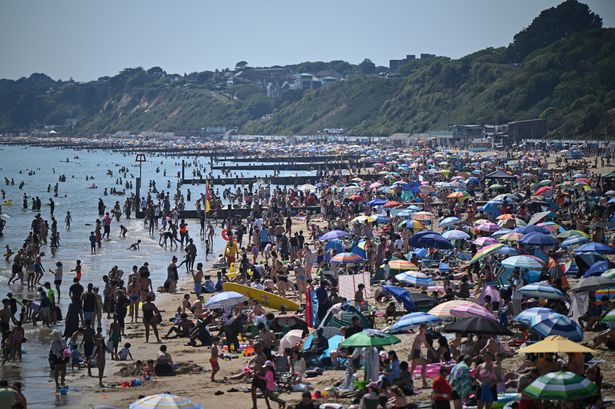
Step outside in London this weekend and the calendar seems almost implausible. The thermometer reads 24°C, a light southerly breeze carries the unmistakable warmth of continental air, and the Turkish city of Istanbul — at a comparatively modest 21°C — is, for once, cooler than Britain. What meteorologists have taken to calling the “French frazzle,” an 800-mile-wide mass of warm air drifting north from France, has turned the opening days of October into something that feels, disconcertingly, like late August.
Forecasters at Netweather have been candid about the strangeness of it. Nick Finnis put it plainly: “It still feels like summer with T-shirt and shorts weather. You have to pinch yourself that it’s early October, not late August.” Temperatures on Sunday reached 24°C before settling at 23°C in the South and 22°C in the North on Monday, figures that sit well above any seasonal norm and have prompted the Met Office to describe October’s opening as a “warm start, with temperatures remaining above average.”
The respite, however, is temporary. From Wednesday, an Atlantic weather system moves in, dragging temperatures down by as much as 8°C and returning conditions to a more familiar 12–16°C range. The weekend brings 50mph gales and rain to western regions, with the Midlands and North also facing persistent showers. The brief autumn arrival will not last long, though. Forecaster Brian Gaze of The Weather Outlook observed that “autumn will finally arrive for a brief time, but it then turns drier again,” with temperatures recovering to a balmy 20°C the following week alongside sunny spells across both South and North.
This warm interlude does not exist in isolation. Provisional Met Office data confirms that September 2026 ranked as the joint-fourth warmest on record since measurements began, with a mean average temperature of 14.6°C across the month. That figure equals the September readings for 2016 and 1949, and falls just short of the 14.7°C recorded in 2021. The all-time September record of 15.2°C, set in both 2023 and 2006, remains intact, though a late surge of heat — peaking at 28.1°C at Kew Gardens in London on 29 September — pushed this year’s ranking considerably higher than mid-month data alone would have suggested.
Mike Kendon, a climate information scientist at the Met Office, offered measured context for the pattern. “Persistent warmth has been the theme of recent months and September is no different,” he said, adding that while the month itself was “unexceptional overall,” it fits a broader trajectory of more frequent above-average temperatures across the United Kingdom. The data, taken on its own terms, reflects a statistically observable shift in seasonal baselines rather than any single dramatic event.
For policymakers and infrastructure planners, the practical implications of such extended warmth are worth noting quietly. Energy demand patterns, agricultural calendars, and public health guidance all carry assumptions about when summer conditions end. An October that outperforms Istanbul complicates those assumptions in ways that are neither catastrophic nor trivial. For now, though, most Britons will simply make the most of the unexpected warmth before Wednesday’s cold front arrives to remind everyone that autumn, however delayed, does eventually come.