Tensions between Washington and Tehran have been building for well over five months, ever since the present conflict began and American naval assets moved to assert dominance over one of the world’s most strategically consequential waterways. The Strait of Hormuz, through which a substantial share of global oil exports passes, had already become a flashpoint long before the latest rhetorical escalation, with both sides trading competing assertions of control over its waters.
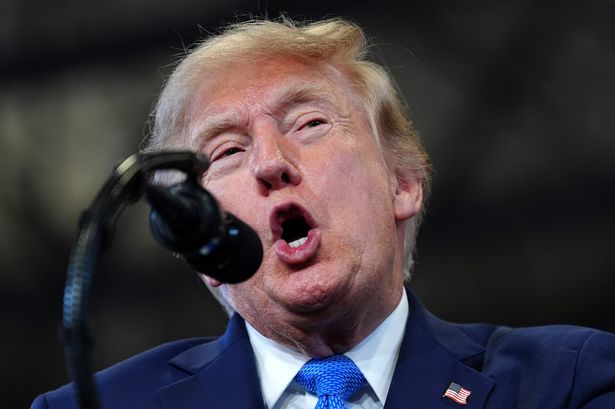
On Friday, speaking to Fox News, President Donald Trump stated that the United States is in “firm control” of the strait, describing a naval blockade he characterised as a “wall of steel.” He asserted that Washington determines which vessels may transit the waterway, claiming the blockade is costing Tehran “hundreds of millions of dollars every single day,” with sweeping sanctions compounding the economic pressure on the Iranian regime.
Later that same day, addressing an audience at a police training centre, Trump went considerably further. “After we finish defeating Iran, which is being very badly defeated, pretty soon I’ll be declaring the Hormuz Strait a territory of the United States,” he said, adding: “Essentially that’s what it is. We have the blockade. No ships get through it unless we want them to.”
Trump acknowledged that he had deployed the military “a little bit more than I wanted to,” but framed the pressure on Tehran as an unavoidable necessity to prevent the Iranian regime from acquiring a nuclear weapon — a goal he described in unambiguous terms: “We cannot let Iran have a nuclear weapon.”
The empirical picture of maritime traffic broadly supports the administration’s claim of effective interdiction. A United Kingdom Maritime Trade Operations voluntary reporting area overview noted that traffic through the strait remains severely depressed, with AIS-detected transits running approximately ninety per cent below pre-conflict baselines and continuing to decline since a brief peak observed between the 24th and 26th of June.
The strategic and legal implications of Trump’s territorial declaration are, however, of an altogether different order of magnitude from the operational facts on the water. The Strait of Hormuz is governed by international maritime law, and any formal claim of sovereignty would represent a profound challenge to the existing framework of freedom of navigation that underpins global trade. Allied governments have offered no endorsement of such a claim.
Canada, for its part, moved on Friday to impose targeted sanctions against five senior Iranian officials, whom Ottawa accused of obstructing navigation rights in and around the strait and of undermining international peace and security. The Canadian government specified that those designated were involved in military, legal, and communications activities connected to threats against the waterway — a measured, institutionally grounded response that stands in marked contrast to Washington’s more expansive posture.
Whether Trump’s declaration amounts to a considered policy position or a characteristically forceful piece of negotiating rhetoric remains to be seen. What is clear is that the administration has, in practical terms, established a significant degree of operational control over the waterway — and that it intends to leverage that control as a central instrument of its campaign to prevent Iranian nuclear ambitions from reaching fruition.