
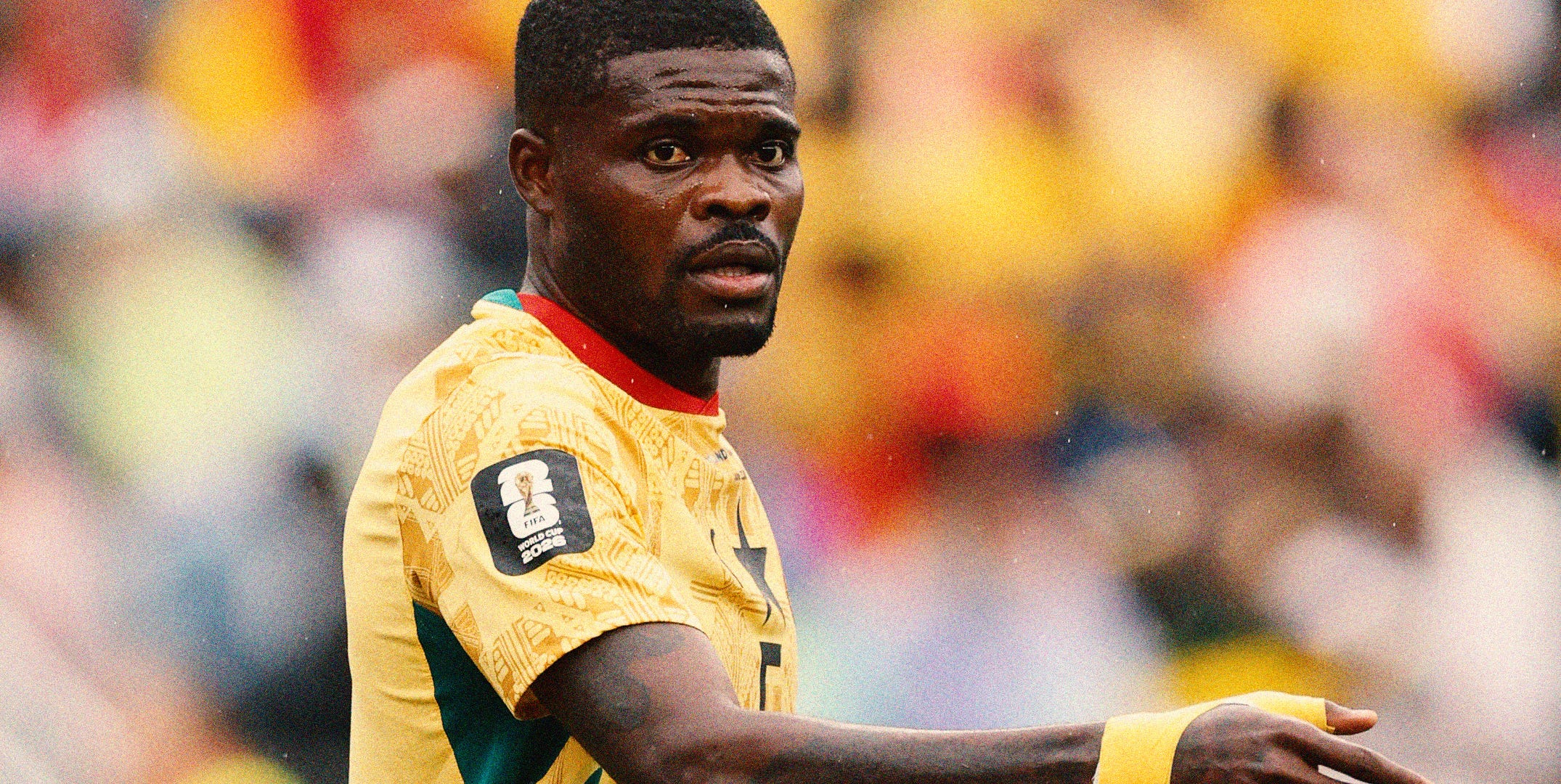
Thomas Partey’s World Cup Appearance Exposes Football’s Hollow Commitments on Sexual Violence
Thomas Partey took to the pitch for Ghana against England at the FIFA World Cup in Boston this week, despite facing trial next year on seven charges of rape and one count of sexual assault — raising serious questions about whether football’s governing bodies mean what they say about protecting women.
Four women have accused the former Arsenal midfielder of offences alleged to have taken place between 2020 and 2022. Partey has pleaded not guilty to all charges. His lawyer has stated he looks forward to his day in court and the opportunity to clear his name.
A Complicated Entry
Partey’s journey to the tournament was itself contentious. He was initially denied entry into Canada and missed Ghana’s opening group game against Panama, having reportedly declared he had never been arrested or charged with a criminal offence. He subsequently entered the United States after being granted a visa.
US Customs and Border Protection confirmed in a statement that it was “aware of the pending court case for Mr Partey,” adding that “at this time, he has not been convicted of a crime and was admitted to the United States after being issued a visa.”
Ghana’s head coach, Carlos Queiroz, defended the selection on the grounds of the presumption of innocence — a legally sound position, but one that sidesteps the broader institutional question of whether a player facing such serious charges should be competing on the world’s largest sporting stage.
Reactions on the Pitch
Some supporters booed Partey upon his appearance and when he received possession of the ball. Video footage circulating on social media appeared to show England full-back Djed Spence declining to shake Partey’s hand before kick-off.
England captain Harry Kane and midfielder Declan Rice — a former Arsenal teammate of Partey’s — both shook his hand. The contrasting responses drew considerable attention online and in broadcast coverage.
FIFA’s Stated Commitments Under Scrutiny
FIFA has publicly backed campaigns aimed at raising awareness of domestic and gender-based violence, presenting itself as committed to making football “a safer, better place for women and girls.” Critics argue that permitting Partey to compete undermines those stated values.
Ciara Bergman, Chief Executive of Rape Crisis England & Wales, acknowledged football’s capacity for social good, but argued that this influence carries institutional responsibility. “Precisely because of this power, football’s governing bodies have a responsibility to ensure that players uphold appropriate standards of behaviour in their public and professional lives,” she said.
Bergman noted that both the FIFA Code of Ethics and the FIFA Disciplinary Code explicitly prohibit all forms of harassment, exploitation, and abuse — on and off the pitch. “For this to have meaning, those alleged to have broken this code must be properly investigated and the consequences of a sportsman continuing to play during that period of time must be carefully considered,” she added.
She further warned that public figures’ conduct shapes wider social norms, influencing “how confident survivors feel in institutions’ willingness to take reports seriously, and to hold perpetrators to account.”
The Broader Pattern
The episode sits within a well-documented wider problem. Research from Lancaster University found that reported cases of domestic abuse rise by 38% when England lose a World Cup match, and by 26% when they win or draw — underscoring the extent to which major football tournaments can coincide with spikes in violence against women.
Women’s Aid has launched a campaign, The Other Kick Off, drawing attention to the links between football culture and violence against women and girls, encompassing physical, verbal, and sexual abuse.
Janaya Walker, Interim Director of the End Violence Against Women Coalition, stressed that a significant portion of football fans do want clubs and governing bodies to act more decisively. “Survivors are met with cultures of disbelief and silence, with legal systems that are stacked against them and few facing meaningful consequences,” she said.
Walker pointed to Spence’s reported gesture as emblematic of the kind of individual accountability that could have broader cultural effects. “Ending violence against women and girls relies on men and boys not only taking responsibility for their own actions, but also holding one another accountable,” she said.
The Institutional Question
The presumption of innocence is a cornerstone of any functioning legal system, and no serious commentator argues it should be discarded. The more pointed question is whether FIFA and national football associations have adequate frameworks for managing players who face serious criminal allegations — and whether those frameworks are being applied consistently.
At present, the answer appears to be no. FIFA had not responded to requests for comment at the time of publication.