
A Structure Gone, a Symbol With It
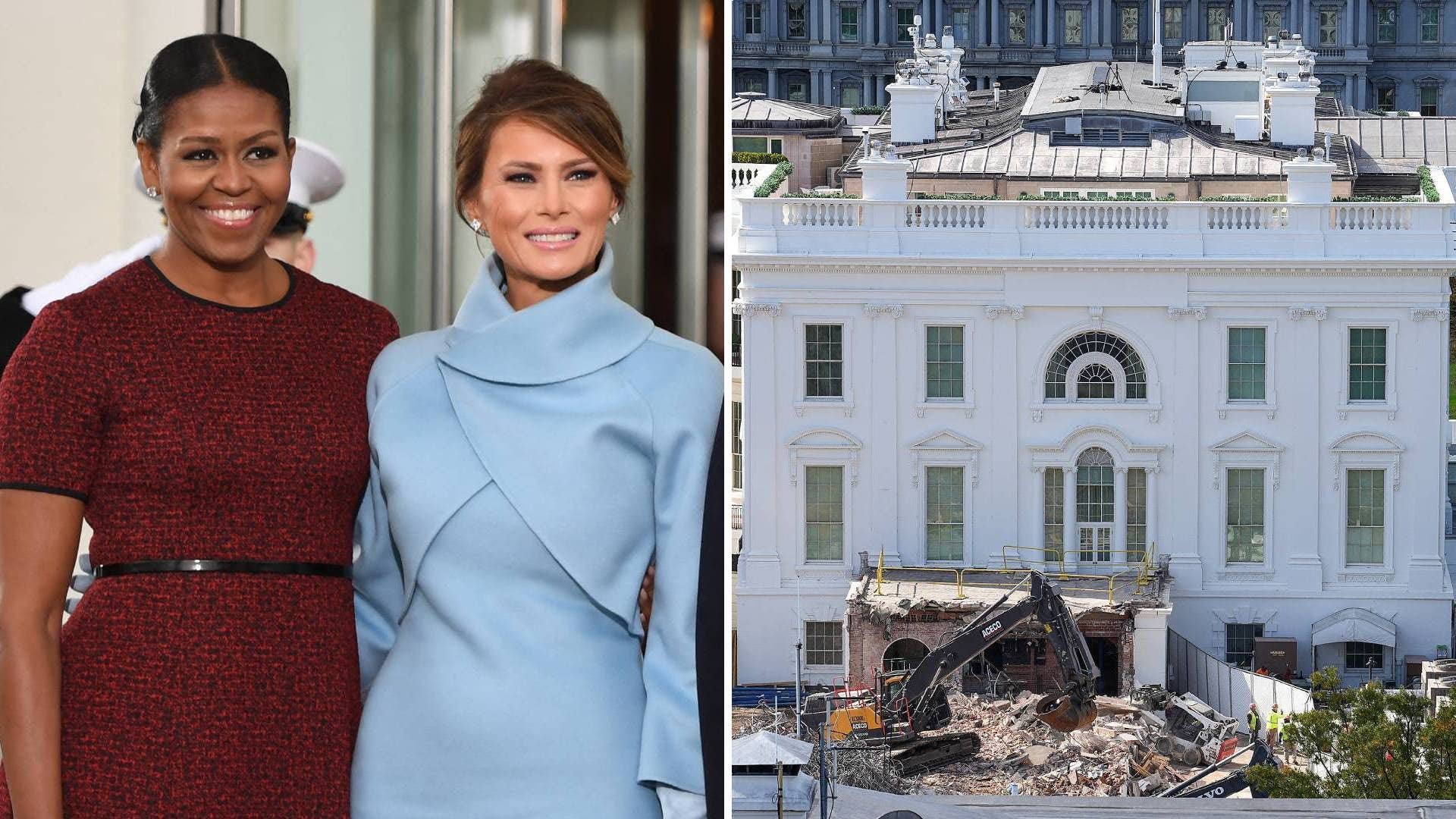
The East Wing of the White House no longer stands. Demolished in the autumn of 2025 on the orders of President Donald Trump, the 123-year-old structure has been cleared to make way for a 90,000-square-foot ballroom, now rising from the same ground at breakneck pace. The loss is architectural, historical, and institutional — and it deserves to be understood on all three levels.
Construction crews are working twenty hours a day, seven days a week. The Supreme Court, ruling on 31 August 2026, cleared the way for that pace to continue, finding that preservationist challengers lacked legal standing to halt the project. What had been a contested legal question is now, for practical purposes, settled.
What the East Wing Was
The wing dated to 1902, built under Theodore Roosevelt as a formal carriage entrance for White House guests. It was rebuilt in the 1940s under Franklin D. Roosevelt — controversially, as it happens, with congressional Republicans at the time accusing the administration of wasteful spending and using wartime construction to bolster presidential prestige. The two-storey neoclassical structure also served, less visibly, to conceal a newly built underground bunker. History, in this building, was layered.
For nearly half a century it housed the Office of the First Lady. The demolition also consumed the Jacqueline Kennedy Garden, the East Colonnade, and the presidential theater. Trump dismissed the wing as “a very small building.” Historians and former White House staff were rather less sanguine.
The Institutional Role It Housed
The East Wing’s significance was not merely aesthetic. Eleanor Roosevelt was the first presidential spouse to professionalise the role of First Lady, holding her inaugural press conference on 6 March 1933 — attended by thirty-five women journalists — and going on to hold nearly 350 such briefings during her tenure. She used the wing as a base for both official functions and her wider public advocacy.
It was Rosalynn Carter, however, who in the 1970s formally established the East Wing as the Office of the First Lady, a working professional operation with a chief of staff paid at parity with other senior White House personnel and a team of eighteen covering press, research, and special projects. Before Carter, first ladies had typically worked from rooms within the residential quarters. The move to a dedicated office was a statement of institutional seriousness.
Subsequent first ladies built on that foundation. Laura Bush ran her literacy campaigns from the East Wing; Michelle Obama coordinated her “Let’s Move” health initiative there; Jill Biden continued her education and military families work from the same offices. The wing became, in effect, the institutional home of a role that had evolved from domestic hostess to senior public figure in its own right.
Melania Trump and the Office Today
Melania Trump’s relationship with the East Wing was, by all accounts, attenuated during her husband’s first term. Reports at the time noted that her office there sat largely empty and was repurposed as a gift-wrapping room. Her “Be Best” campaign — focused on child well-being, cyberbullying, and technology education, launched in 2018 and expanded in the second term — was managed with limited use of the physical space.
Prior to demolition, however, her team was operating out of the East Wing on a daily basis. Since its destruction, the Office of the First Lady has relocated to the ground level of the Executive Mansion, working across the China Room, the Vermeil Room, the Library, and the South Mezzanine. Additional staff operate from the Eisenhower Executive Office Building, where the White House Visitors Office — which falls under the First Lady’s remit — is based.
Kate Andersen Brower, author of First Women: The Grace and Power of America’s Modern First Ladies, told CNN that “watching the demolition is the physical embodiment of watching the First Lady’s role become smaller and smaller.” That is a pointed observation. Whether one reads symbolism into architecture or not, the institutional facts are plain enough.
The Legal Battle and the Supreme Court’s Ruling
The demolition and construction did not go unchallenged. Lower courts had found that the administration exceeded its authority by proceeding with major alterations to the White House campus without congressional approval — a finding grounded in Congress’s established authority over public buildings in the District of Columbia. Those rulings had halted above-ground construction, at least temporarily.
The Supreme Court reversed those decisions on procedural grounds, holding that the preservationist plaintiffs lacked standing because they could not demonstrate direct harm. The administration’s construction schedule resumed unimpeded. But the Court’s majority opinion was not the only voice worth noting.
Chief Justice John Roberts dissented. His opinion quoted both Theodore Roosevelt, who built the East Wing’s first iteration, and Winston Churchill. Roberts wrote that the White House is “an iconic American building whose symbolism and history are wrapped up in its architecture” and that this was “all the more reason to ensure that those responsible follow the rules in deciding what to tear down and what to build up at the People’s House.” He added that the construction was probably illegal given congressional authority over public land in Washington. A dissent carries no legal force. It does, however, carry weight as a statement of constitutional principle.
The Ballroom: Costs and Justifications
Trump announced the ballroom project in July 2025, arguing that the East Room — the White House’s largest interior event space — was inadequate for major functions, and that tented arrangements on the South Lawn were beneath the dignity of a presidential host. The project has since attracted additional justifications: the administration now contends that failing to complete the ballroom would constitute a national security risk, given the simultaneous renovation and expansion of the Presidential Emergency Operations Center beneath it.
The financing has shifted considerably from initial announcements. Trump originally stated that the $250 million cost would be covered by private donors, and Press Secretary Karoline Leavitt said publicly that “nothing will be torn down.” The East Wing was demolished months later. By June 2026, the administration had transferred approximately $350 million in taxpayer funds from the Secret Service budget, designated for “security enhancements,” toward the ballroom and the bunker renovation beneath it. The total cost is now reported at $400 million.
What Remains to Be Assessed
The ballroom will be built. That much appears certain. What is less certain is how the institutional and historical costs of this project will be reckoned with over time. The East Wing was not merely a building — it was the physical address of a role that evolved, over nearly a century, into a serious arm of the executive branch. Its destruction removes that continuity from the record in a way that no relocation of staff to the China Room or the Eisenhower Building can fully substitute for.
The financing questions, the legal dissent from the Chief Justice, and the speed of construction all warrant continued scrutiny. Institutions are easier to dismantle than to rebuild. The rubble of the East Wing is a reminder of that principle, rendered in rather concrete terms.