A Mayor’s Arrest Threat and Its Consequences
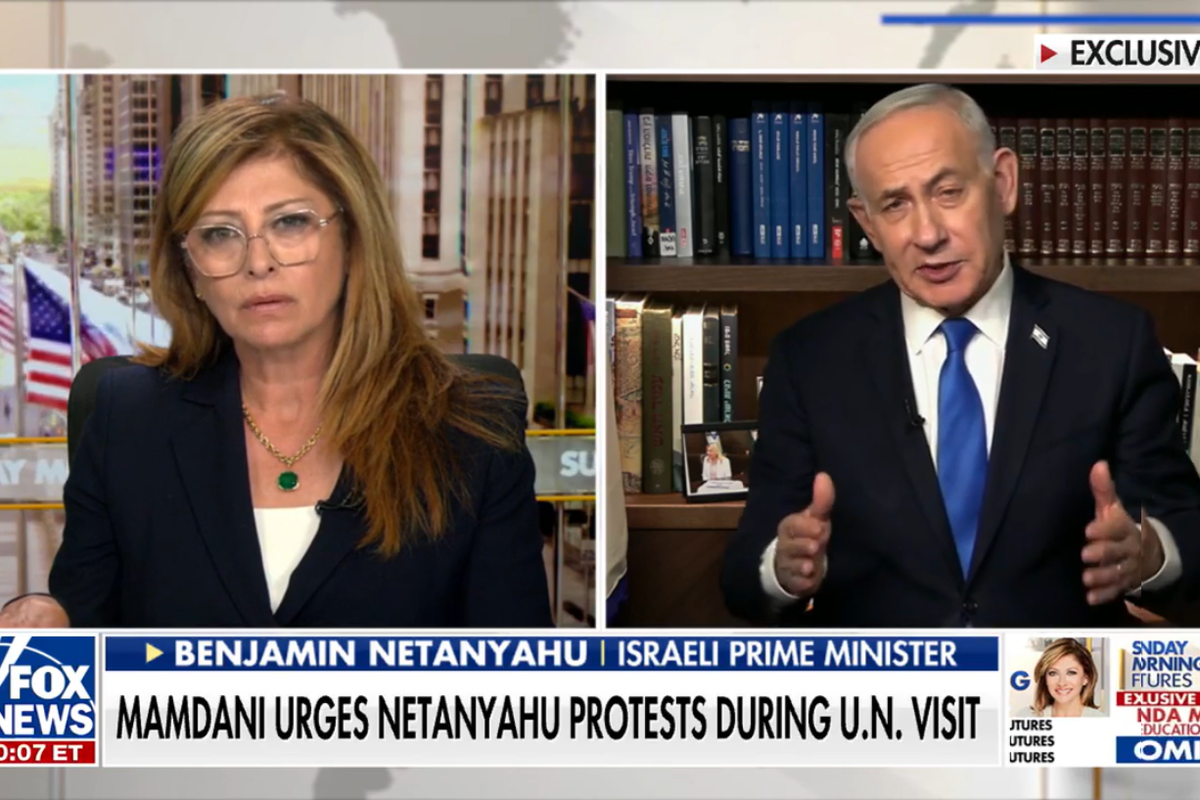
Benjamin Netanyahu has publicly blamed New York City Mayor Zohran Mamdani for stoking the antisemitic climate he believes led to the stabbing of a Jewish man outside a synagogue on the Upper West Side. The Israeli Prime Minister’s accusation, made during a Fox News appearance on Sunday, draws a direct line between Mamdani’s rhetoric and a violent hate crime — a charge that raises serious questions about the responsibilities of elected officials when they wade into charged international disputes.
“He’s fomenting hate,” Netanyahu said. “He’s supposed to be the mayor of all New Yorkers: Jews, Christians, Muslims, everyone. But he’s trying to turn one group against the other, and he’s foisting hate and fear.”
The sequence of events that prompted this exchange is worth examining carefully. Earlier this month, Mamdani told The New York Times that he was consulting city lawyers about the feasibility of arresting Netanyahu on an International Criminal Court warrant, should the Israeli leader travel to New York for the UN General Assembly in September. In a subsequent video statement, Mamdani acknowledged he lacked “the independent legal authority to enforce this warrant” — yet still labelled Netanyahu a “war criminal” and declared him unwelcome in the city.
The Stabbing and the Causal Claim
On Thursday afternoon, Moshe Grunhaus, a 50-year-old Jewish man wearing a yarmulke, was stabbed in the chest with a screwdriver after leaving a religious service in the Upper West Side. The alleged attacker, Raul Morales, 51, reportedly shouted “Allahu Akbar” during the assault. Morales also allegedly stabbed a 57-year-old Asian man, Chok Sung, in a separate but connected incident. Morales was subsequently arrested and charged with attempted murder and assault as hate crimes in both cases.
Netanyahu did not hesitate to connect the attack to Mamdani’s statements. “I don’t think it’s accidental that after he made this hate speech against Israel and against me, the next day a Jew is stabbed coming out of a synagogue,” the Prime Minister said. He added: “I speak to Jewish Americans in New York, and they’re afraid right now.”
Whether a direct causal link can be established between a politician’s rhetoric and an individual’s violent act is, of course, legally and empirically contested. What is less contestable is that public figures who deploy incendiary language about foreign leaders — particularly in the context of a conflict as polarising as Gaza — bear some responsibility for the atmosphere they help to create.
The ICC Warrant and Its Legal Reality
The International Criminal Court issued charges against Netanyahu and his former defence minister, Yoav Gallant, in 2024, alleging war crimes against Palestinians in Gaza following the October 7 Hamas attacks on Israel. The United States is not a signatory to the Rome Statute that established the ICC, and American courts have no obligation to enforce its warrants. New York City, as a municipal authority, has even less standing to do so.
Mamdani’s own lawyers appear to have told him as much. His acknowledgement that he lacked the authority to act on the warrant did not, however, prompt him to moderate his language. He continued to describe Netanyahu as a war criminal and reiterated that the Israeli leader was not welcome in New York — a city that hosts the United Nations and receives heads of state from across the world as a matter of routine diplomatic necessity.
Netanyahu, for his part, indicated he intends to attend the General Assembly regardless. “I intend to come and speak the truth, speak for Israel and for the Israeli-American alliance, from the podium of the United Nations,” he said, adding that he was not concerned about the threat of arrest.
Mamdani’s Record on October 7
Netanyahu went further, accusing Mamdani of having “celebrated” the October 7 attacks — a claim the Prime Minister’s own words qualified as inference rather than documented fact. Shortly after the 2023 attacks, Mamdani condemned “the killing of civilians” and stated that his “support for Palestinian liberation should never be confused for a celebration of the loss of civilian life.” On the second anniversary of the attacks, he described Hamas’s actions as “a horrific war crime” and acknowledged the “atrocities” committed. In the same statement, however, he characterised Israel’s military response as a “genocidal war” and accused the US government of complicity.
Netanyahu’s accusation that Mamdani has been “supporting the Hamas murderers” is not substantiated by those public statements. The more defensible critique is a narrower one: that a sitting mayor of a major American city, responsible for the safety of a large Jewish population, made a calculated decision to publicly brand a foreign head of government a war criminal and question his right to enter New York — and that this decision carries real-world consequences for communal relations.
The Broader Stakes
This episode illustrates a recurring tension in contemporary democratic politics: the temptation for elected officials to perform foreign-policy positions for their electoral base, regardless of their actual competence or legal authority in those domains. Mamdani’s gesture towards arresting Netanyahu was precisely that — a performance. It had no legal substance. What it did have was signal value, directed at a constituency animated by the conflict in Gaza.
The question of whether Mamdani’s rhetoric materially contributed to an environment in which a Jewish man was stabbed outside a synagogue will not be resolved by a Fox News interview. It is, however, a question that serious people — including those who hold no brief for Netanyahu’s conduct in Gaza — should be willing to ask. Political leaders who invoke the language of international criminal law for domestic electoral purposes, without the authority or intention to act on it, are not engaging in principled diplomacy. They are playing with fire in a city that cannot afford to burn.