
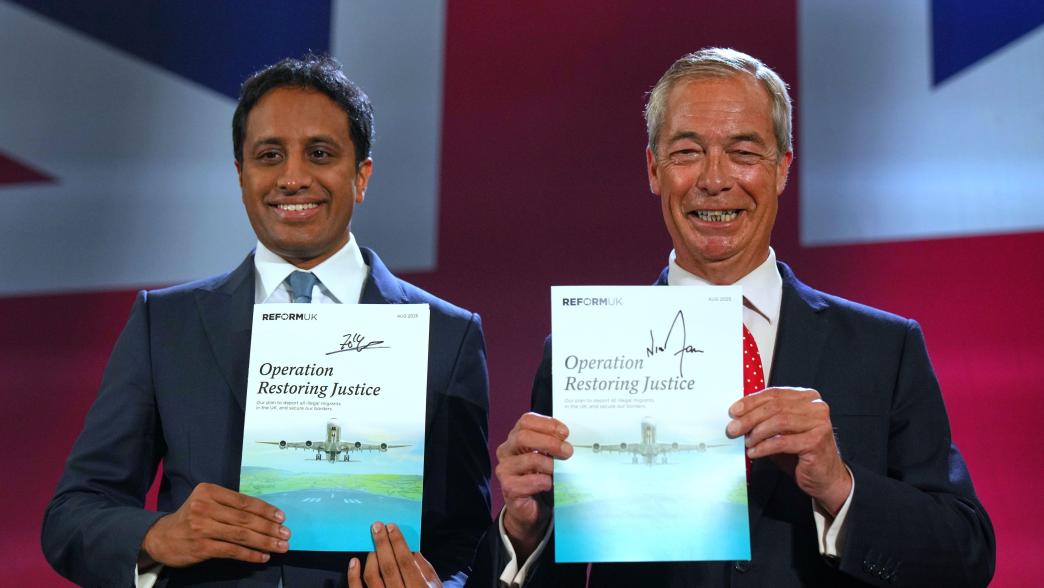
There is a certain candour, however uncomfortable, in admitting that a problem you have spent years promising to solve will, in fact, take five years to address. Reform UK has done precisely that, acknowledging that even under a Nigel Farage-led government, fixing Britain’s borders and halting small boat crossings would require the full duration of a parliamentary term — a concession that sits uneasily alongside the party’s characteristic rhetoric of swift, decisive action.
The centrepiece of Reform’s emerging immigration platform is a pledge to deport up to 600,000 asylum seekers during the first five years of a Reform government, should the party win the next general election, widely expected in 2029. The mechanism is sweeping in its ambition: a comprehensive review of all successful asylum claims granted over the preceding five years, with any individual found to have entered the country illegally or to have overstayed a visa facing revocation of status and removal from the United Kingdom.
To make this legally and logistically possible, Reform proposes withdrawal from the European Convention on Human Rights — a step that would remove the principal judicial barrier to large-scale deportations — alongside a substantial expansion of detention capacity, scaled up to 24,000 places. The party also envisages securing bilateral return agreements with countries including Afghanistan, Eritrea, and Iran, nations from which large numbers of asylum seekers currently originate and to which removals have historically proved difficult to execute.
On the fiscal arithmetic, Reform claims the plan would cost £10 billion to implement over five years, offset by savings of £7 billion currently spent on managing illegal migration — a net cost, in other words, of approximately £3 billion. Independent analysts and critics have already questioned both the costings and the operational feasibility of the proposals, noting that bilateral return agreements with hostile or fragile states are notoriously difficult to negotiate, and that the legal architecture required to strip asylum status at scale would face sustained challenge even outside the ECHR framework.
What the five-year admission does, whether intentionally or not, is inject a degree of realism into a debate that has long suffered from its absence. Border management is not a switch to be flipped; it is a compound institutional problem involving international law, diplomatic relationships, administrative capacity, and judicial oversight. Reform’s willingness to state a timeline, rather than promise an immediate fix, at least acknowledges that complexity — even if the specific remedies proposed remain, in several respects, operationally untested and politically contentious.
The broader question for policymakers and voters alike is whether the package, taken as a whole, constitutes a credible programme of government or an aspirational framework designed primarily to define the terms of the immigration debate ahead of 2029. The distinction matters. Credible policy requires not just stated intentions but demonstrated delivery mechanisms, costed contingencies, and honest engagement with the legal constraints that any British government — Reform or otherwise — would face. On that measure, the scrutiny has only just begun.