
A Market Pricing in Compounding Crises
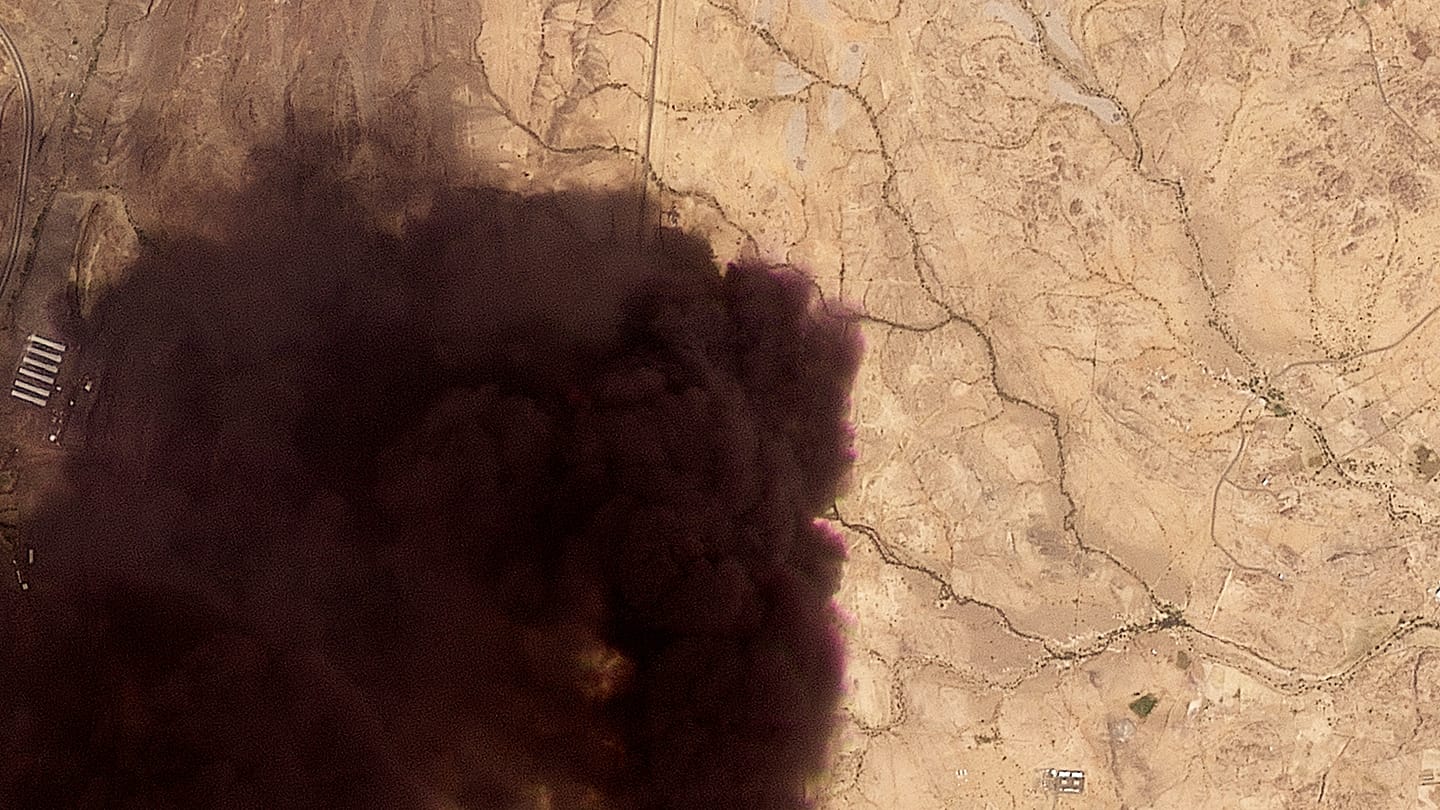
On Monday morning, as traders in London and New York opened their screens, the numbers told a story that had been building across a turbulent weekend. Brent crude for October and November delivery surged more than 3%, crossing $108 a barrel — a level that would have seemed alarming even a year ago but now arrives with a grim sense of inevitability. The US benchmark, WTI for October, climbed in lockstep to around $103, both contracts extending gains made the previous week when each reclaimed the psychologically significant $100 threshold. The proximate causes were two: a merchant vessel struck in the Strait of Hormuz, killing one crew member and injuring three others, and Saudi Arabia’s announcement that its East-West pipeline had been temporarily shut down following drone attacks. Together, they removed both the main artery and its principal alternative in a single weekend.
The Strategic Logic of Two Simultaneous Failures
The significance of the Saudi pipeline closure is difficult to overstate in the current environment. The East-West line carries crude westward across the kingdom to Red Sea export terminals, providing a route specifically designed to bypass the Strait of Hormuz — the 21-mile chokepoint through which a substantial share of the world’s seaborne oil trade must otherwise pass. In normal times, its existence offers markets a measure of reassurance: even if the strait were disrupted, Saudi oil could still reach customers. That reassurance has now evaporated, precisely at the moment when the strait itself has become the most contested waterway on earth.
Passage through Hormuz no longer resembles the relatively routine maritime transit of previous decades. Vessels are now required to obtain Iranian permission before entering the strait, and Tehran is actively developing a mechanism to levy service fees on ships doing so. Those that fail to comply face routine targeting; meanwhile, US forces have periodically struck the Iranian coastline in an effort to contest Tehran’s assertion of effective control over the waterway. The attack on Sunday, in which a merchant vessel was hit and a crew member killed, confirmed that neither diplomatic nor military pressure has yet stabilised the situation. Iranian authorities confirmed the casualties.
Diplomatic channels offer little immediate comfort. Oman, which has historically served as a quiet intermediary between Iran and the Gulf states, has postponed planned talks on the future governance of the strait. The postponement removes the only visible near-term mechanism for reducing tensions through negotiation, leaving markets to price risk with no credible off-ramp in sight. For investors and energy policymakers alike, the combination of physical disruption and diplomatic paralysis is precisely the kind of compounding uncertainty that sustains elevated price expectations over the medium term.
Record Pump Prices and a Contested Diagnosis
The consequences of sustained supply disruption have become impossible to ignore at the retail level in the United States. The national average price of diesel crossed $6 a gallon on Friday — a historic first — having stood at roughly $5.85 the previous week and approximately $3.71 a year ago, representing a year-on-year increase of around 60%. Petrol averaged $4.22 following record prices over the Labor Day weekend. These are not abstract market statistics; they translate directly into higher costs for haulage, agriculture, and every supply chain that depends on road freight, which is to say almost all of them.
President Donald Trump, speaking to reporters in Ireland on Sunday during his attendance at the Irish Open at his Doonbeg golf resort, offered a pointed diagnosis. He argued that Ukrainian President Volodymyr Zelenskyy “has to stop knocking out diesel fuel in Russia,” adding that Ukrainian strikes on Russian refineries were causing a diesel shortage. Trump reiterated the claim on the return flight from his state visit. Ukraine has indeed struck more than 20 Russian refinery targets over the course of the summer, a campaign that prompted Moscow to ban diesel exports entirely. The strikes are a legitimate strategic consideration, and their contribution to global diesel tightness is real.
The supply arithmetic, however, complicates the presidential framing considerably. According to analysis from Lipow Oil Associates, Russia’s export ban accounts for roughly 800,000 barrels per day of lost diesel supply. Disruption linked to the Strait of Hormuz, by contrast, has removed approximately 1.2 million barrels per day — a materially larger figure. The broader crude picture is starker still: flows through the strait have fallen from around 20 million barrels per day before the war to approximately 7 million today, a collapse of more than 60%. Taken together, the two conflicts have also shuttered refining capacity representing around 5 million barrels per day, compressing the global system’s ability to convert whatever crude remains available into finished products.
What the Numbers Imply for Policy
The empirical picture that emerges from these figures is one in which the dominant driver of energy price inflation is the structural degradation of Gulf supply infrastructure, not any single actor’s tactical decisions. That distinction matters enormously for policymakers attempting to design coherent responses. Measures aimed at influencing Ukrainian targeting doctrine address a secondary contributor while leaving the primary disruption — the contested status of the world’s most important maritime chokepoint — entirely unresolved. Restoring even a fraction of the pre-war Hormuz throughput would dwarf the diesel supply effect of any change in Ukrainian military strategy.
For market participants, the immediate question is whether current prices already reflect the full risk premium, or whether further deterioration in the strait’s operational status could push benchmarks meaningfully higher. With diplomatic talks postponed, the pipeline closed, and attacks on shipping continuing, the structural conditions that have driven Brent above $108 show no sign of reversing. The human cost — one crew member dead, three injured, fuel bills rising across the Western world — is the visible face of a supply crisis whose roots run deep into the geopolitics of a region that, despite decades of effort, remains without a durable framework for stability.