
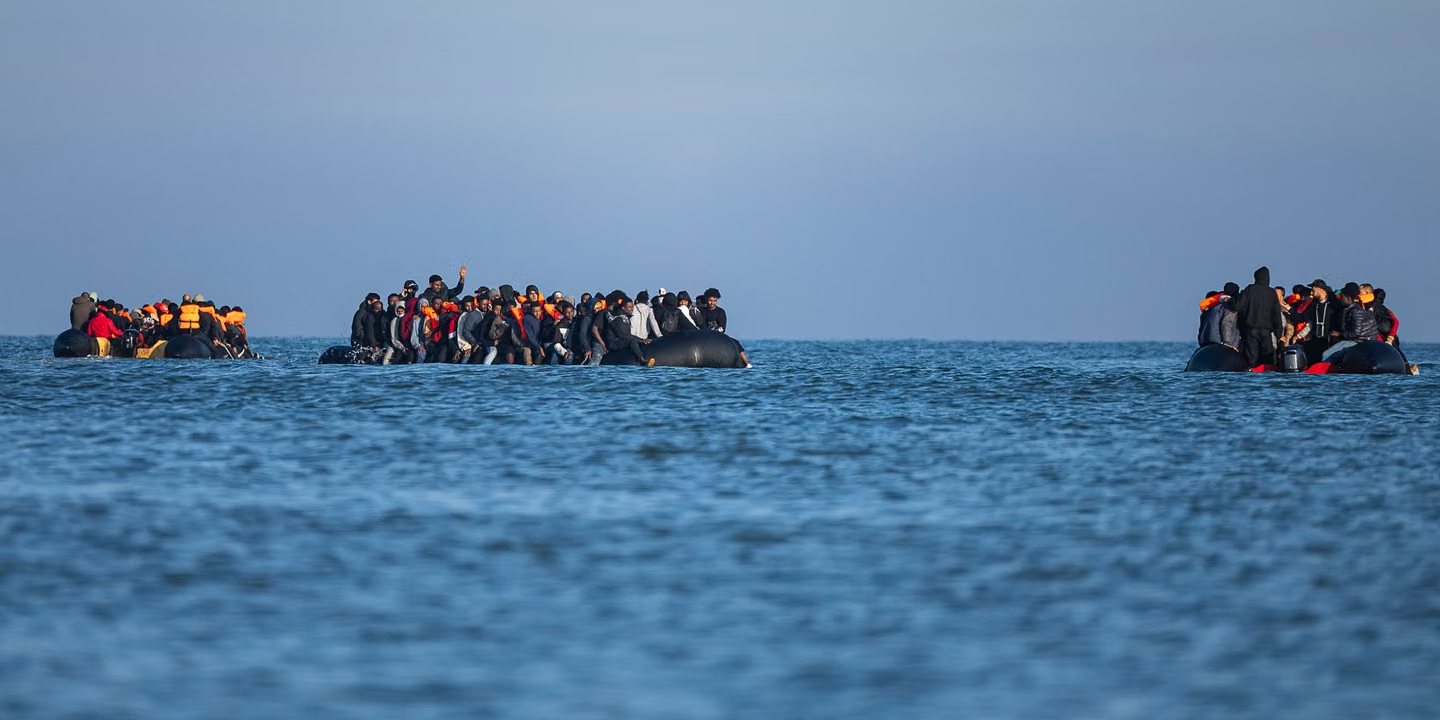
One migrant reached British shores every six minutes during the first week of October, according to Home Office figures — the highest rate ever recorded for that period since small boat crossings began in 2018.
The Scale of the Surge
A total of 1,739 migrants arrived aboard 23 vessels between 1 and 7 October, averaging more than ten arrivals per hour and nearly 250 per day. Monday proved the busiest single day, with 609 people completing the crossing in eight boats. The figure surpasses the previous October record of 1,368 set in the first week of the same month in 2024, and brings the cumulative 2026 total to 20,935 — a figure that is, nonetheless, some 41 per cent below the equivalent point last year.
Conditions played a significant role. Unusually calm seas for the time of year allowed smuggling networks to operate with a frequency more typical of summer months, when crossings tend to peak. That the surge occurred in early October, when deteriorating weather would ordinarily suppress activity, underscores how far organised criminal networks have adapted to enforcement pressure.
Tactical Adaptation by Smuggling Networks
The most consequential operational shift is the move toward larger vessels. Migrants averaged 75 per boat across the week — a figure that reflects the gangs’ deliberate pivot to so-called mega-dinghies, capable of carrying between 100 and 260 people in a single crossing. One such vessel, carrying 114 people, became only the third migrant boat to reach the UK directly from Normandy, making landfall at Gosport in Hampshire.
This shift in vessel size is partly a response to successful interdiction of the gangs’ boat and equipment supply chains, which has made smaller, more numerous craft harder to source and deploy. Faced with constrained supply, the networks have consolidated passenger loads onto fewer but larger vessels, reducing their operational exposure while maintaining throughput. They have also begun launching from further west along the French coastline, into Normandy, both to avoid the increased concentration of police and gendarmes on the beaches of the Pas-de-Calais and to complicate interception by a newly established seaborne police unit operating in the Strait of Dover.
Human Cost and Public Disorder
Two men died on Monday morning during a crossing attempt, a reminder that the operational calculus of the smuggling gangs assigns no meaningful weight to passenger safety. Authorities renewed appeals urging migrants not to risk the journey; the week’s arrivals figures suggest those appeals carried little effect.
The arrival of the Gosport vessel prompted a demonstration by approximately 350 anti-migrant protesters, which turned violent and resulted in twelve arrests — an episode that illustrates the domestic political volatility the crossings continue to generate.
The Political Dimension
The cumulative total since the current administration took office stands at roughly 2,000 crossings within its first fortnight alone. Shadow Home Secretary Chris Philp used the latest figures to accuse Labour of leaving the borders “wide open”, and made the contested claim that illegal migrants “go on to commit horrific crimes.” Greater Manchester Mayor Andy Burnham, speaking ahead of the Labour Party Conference, attributed the government’s limited capacity to halt the crossings to the structural consequences of Brexit, arguing that departure from the EU had damaged bilateral enforcement arrangements.
The week’s data present a genuinely complex picture: the annual trajectory is markedly down on last year, which suggests some policy measures are exerting downward pressure over time, yet the record October weekly total demonstrates that smuggling networks retain both the organisational resilience and the operational flexibility to exploit any window of favourable conditions. For policymakers, the central challenge remains one of sustained disruption rather than episodic response.