
An Act of Desecration and Its Consequences
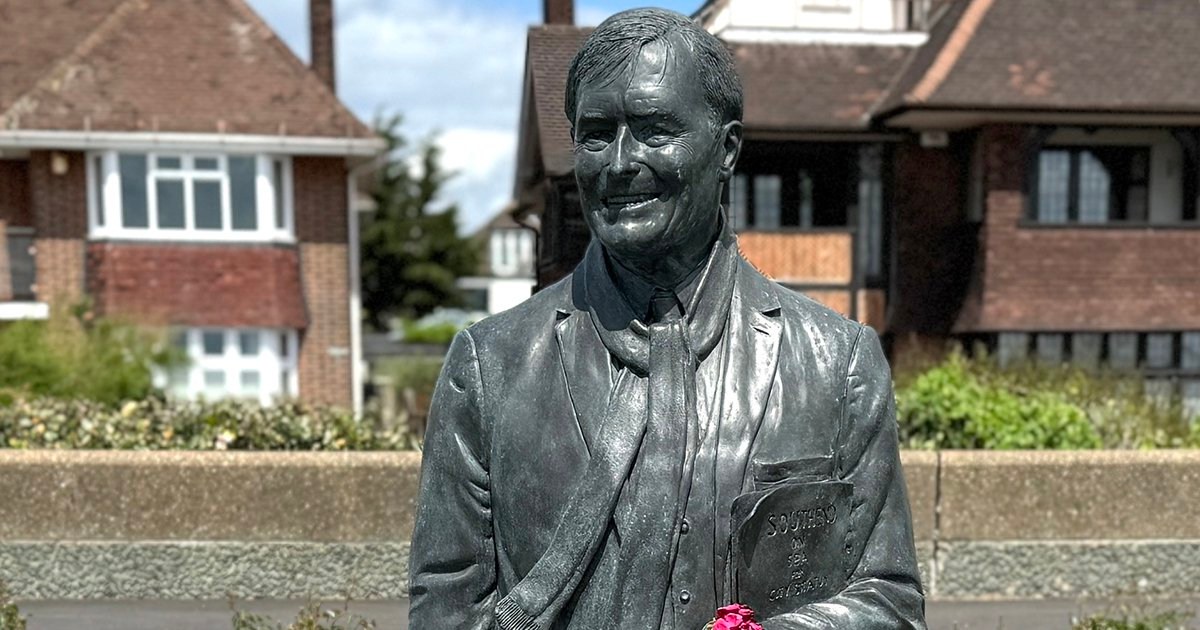
A man in his thirties has been arrested by Essex Police after a video circulated on TikTok appearing to show him spitting repeatedly on a statue of Sir David Amess, the Conservative MP murdered by an Islamist extremist in 2021. The video, since deleted, was filmed on Southend seafront and emerged just days after the fifth anniversary of Sir David’s death. The arrest, on suspicion of a public order offence and criminal damage, is a proportionate response to conduct that goes well beyond political dissent into something considerably more troubling.
The central question this episode raises is not merely legal but civic: what does it reveal about the state of public decency when a memorial to a slain parliamentarian becomes a target for deliberate desecration, broadcast online for an audience? The answer is uncomfortable, and it deserves clear-eyed analysis rather than either hysteria or dismissal.
The Man and His Legacy
Sir David Amess served as a Member of Parliament for nearly four decades, representing constituencies in Essex with a consistency and dedication that commanded respect across party lines. He was stabbed to death on 15 October 2021 at a constituency surgery in Leigh-on-Sea by Ali Harbi Ali, a self-styled Islamic State fanatic who was subsequently sentenced to a whole-life order. Sir David was 69 years old. His murder was not incidental; it was an act of ideologically motivated violence against a democratic institution as much as against an individual.
The statue on Southend seafront stands as a public acknowledgement of that service and that loss. To spit upon it, and to film oneself doing so for social media distribution, is to treat both with contempt — contempt not merely for one man, but for the norms of parliamentary democracy itself.
Decency, Dissent, and the Line Between Them
Sir David’s family responded with notable restraint and moral clarity. A spokesperson acknowledged that Sir David himself believed passionately in freedom of expression and accepted that people hold profoundly different political views. The family’s statement drew the necessary distinction precisely: disagreement does not license the abandonment of basic standards of decency and respect. That formulation is neither censorious nor naïve; it is the kind of principled position that makes civil society function.
Essex Police received the report on Wednesday and moved swiftly. The investigation has the family’s full support. What the law will ultimately determine about criminal liability is a separate matter from what this incident tells us about the cultural environment in which it occurred — one where social media platforms provide both the audience and the incentive for performative offence.
The family’s closing words carry particular weight: five years on, they continue to live with the consequences of an extremist’s act. The man filmed at that statue may not share Ali Harbi Ali’s ideology, but he chose to direct his contempt at the same target. That choice, whatever its motivation, is not without meaning — and the law is right to examine it carefully.