
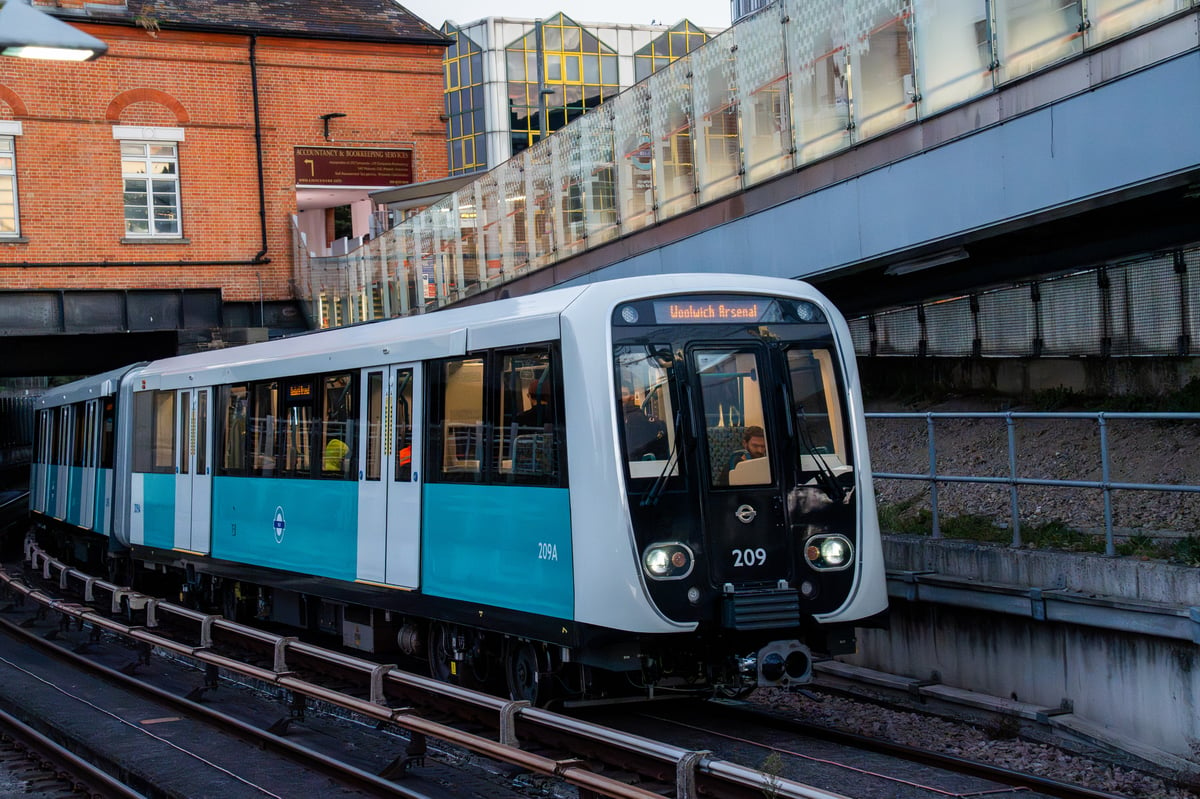
Transport for London has published the results of its public consultation on the proposed Docklands Light Railway extension to Thamesmead, claiming broad support for a scheme that would deliver south-east London’s largest unconnected community its first rail link — though the responses also surfaced persistent concerns about construction disruption, traffic, noise, and environmental impact.
The Proposal in Brief
The £1.5 billion scheme would extend the DLR from Beckton Riverside to Thamesmead via a new bored tunnel beneath the Thames, cutting journey times to central London to approximately 30 minutes. TfL projects that the extension could unlock up to £15.6 billion in economic growth, open around 145 hectares of brownfield land to development, and support a significant tranche of new homes and employment — objectives that align closely with City Hall’s wider regeneration ambitions for east and south-east London.
The project secured government backing last year, with TfL intending to finance construction through a combination of Greater London Authority and TfL borrowing, underpinned by future fare revenue. If planning consent is obtained, construction is expected to begin in 2029.
What the Consultation Found
The consultation, conducted between June and July, drew 553 responses in total — 527 from members of the public and 26 from stakeholder organisations. The key substantive findings are worth setting out clearly.
TfL stated it would continue to address the concerns raised as the scheme advances through the planning process, though the authority offered limited detail on how specific objections — particularly those relating to environmental impact — would be mitigated in practice.
Political and Economic Framing
Deputy Mayor for Transport Seb Dance described the extension as having the potential to “transform travel in a part of the capital that has historically lacked the public transport connections it needs,” adding that the scheme would “unlock thousands of new homes and jobs, and boost economic growth across the capital and beyond.” Anthony Okereke, leader of Greenwich Council, called it a “game changer” for the area’s housing and economic prospects.
The rhetoric is not unreasonable, given the scale of the connectivity deficit Thamesmead has endured. A project of this magnitude, funded through borrowing against future fare revenues rather than direct Exchequer grant, represents a broadly credible financing model — provided ridership projections prove robust and construction costs remain disciplined, neither of which can be taken for granted on a scheme of this complexity.
Assessing the Broader Picture
The consultation response rate is modest by the standards of major infrastructure consultations, and TfL’s characterisation of the results as reflecting “strong support” deserves a degree of scrutiny: 227 supportive comments from a pool of 553 responses is a plurality, not a consensus. That said, the absence of organised opposition and the evident weight of political backing — from City Hall, Greenwich Council, and central government — suggests the scheme’s passage through the planning system is more likely than not.
The more consequential questions concern delivery. London’s infrastructure record on large tunnelling projects is not without blemish, and the 2029 construction start leaves a five-year window in which costs, political priorities, and borrowing conditions could all shift materially. For now, the DLR extension to Thamesmead remains one of the more coherent cases for transport investment in outer London — a market-enabling project grounded in genuine connectivity need rather than political vanity.