
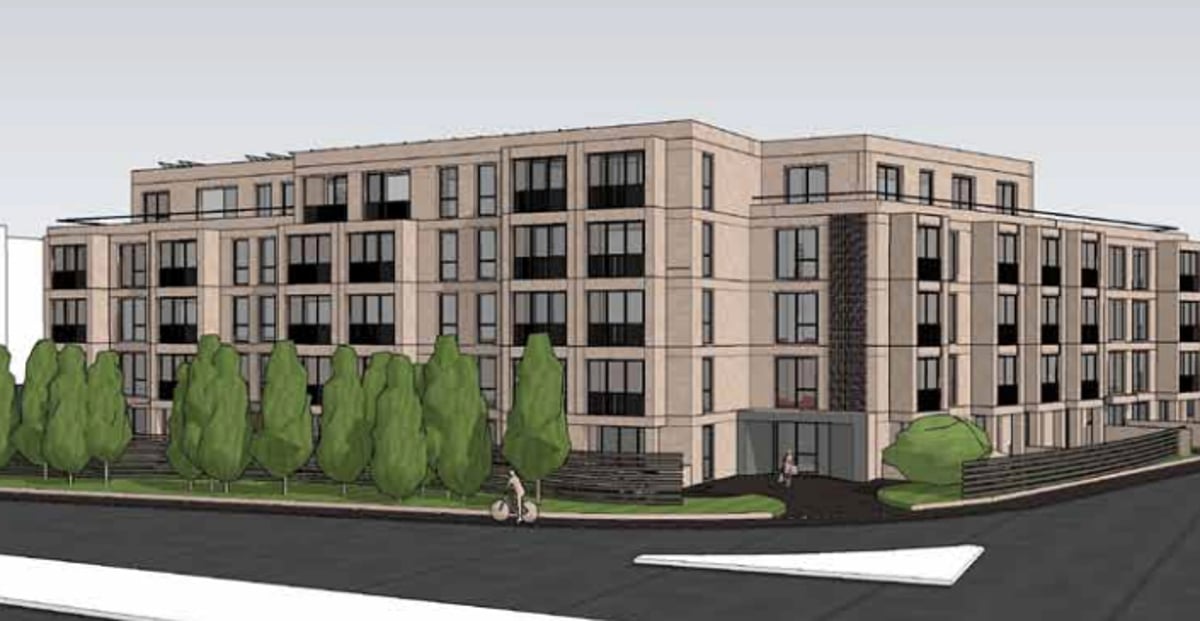
A procedural failure by Hillingdon Council has delayed a decision on a proposed 51-apartment development in Harlington, west London, after officers published a committee report without its accompanying technical appendices. The omission rendered the planning committee unable to reach what its chair described as a “reasonable decision,” forcing the item to be withdrawn from the October 14th hearing entirely. The application itself remains active. No planning merits were assessed.
The scheme, submitted for a site at Status Park on Nobel Drive, proposes a residential building of four to five storeys on an existing car park currently serving three former office buildings — Atlantico House, Peninsula House, and Vista Court — all of which were previously converted into residential use. Council planning officers had recommended approval. The development would deliver 51 net additional homes on brownfield land at a moment when Hillingdon can demonstrate only 2.5 years of deliverable housing land supply against the five-year benchmark required under national planning policy. That shortfall carries real consequences: under current policy, the presumption tilts meaningfully in favour of housing delivery on brownfield sites, and officers concluded that the 51 new units warranted substantial weight in any planning balance.
What does the scheme actually involve?
The proposed building would contain 18 one-bedroom, 20 two-bedroom, and 13 three-bedroom apartments, all earmarked for the private market. None would be classified as affordable housing in the conventional sense. However, the developer has committed a £500,000 contribution towards off-site affordable housing provision, alongside a viability review later in the development process should on-site affordable delivery become financially practicable. The absence of on-site affordable units drew no formal objection from officers, who weighed the contribution against the broader housing supply imperative.
The site’s existing 245 car parking spaces would be reduced to 146 — a 40 per cent cut — with 11 spaces, including five blue badge bays, allocated to the new residential block. To offset the loss of surface hardstanding, the applicant has proposed 5,120 square metres of new landscaped public open space distributed across seven distinct areas, intended to serve both incoming and existing residents. The council received three formal objections, raising concerns about overdevelopment, daylight impact, and pressure on local infrastructure and services. One letter of support was also submitted. Some objectors argued the land would be better used for community facilities or retail, though planning policy assigns considerable weight to residential development in areas of demonstrated housing need.
The council will republish the committee report with its full technical appendices before relisting the application at a future planning committee meeting. The delay is administrative rather than substantive — but it is a reminder that procedural discipline in local government is not merely bureaucratic formality. When documentation is incomplete, committees cannot lawfully deliberate, and schemes that officers are prepared to recommend sit in limbo while housing targets go unmet. Hillingdon’s housing land supply position makes that delay more than a minor inconvenience.