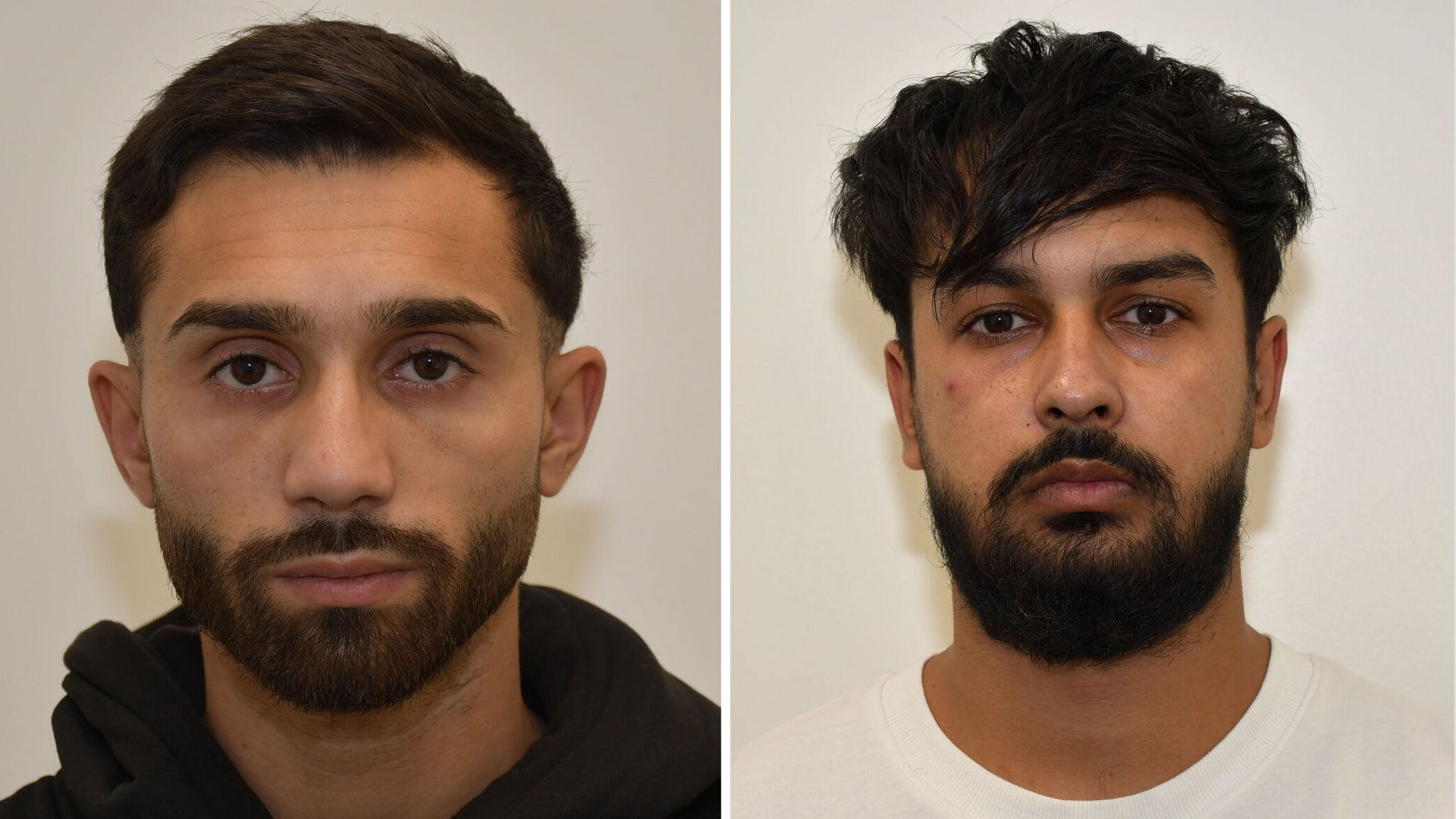
A British court has sentenced two Romanian nationals to prison for the stabbing of a prominent Iranian television journalist outside his London home, in a case that has laid bare the Iranian regime’s use of paid criminal proxies to silence its critics on British soil.
Pouria Zeraati, a journalist for Iran International, was stabbed three times in the leg on 29 March 2024 outside his home in Wimbledon, south London. Nandito Badea, 21, and George Stana, 25, were convicted of wounding with intent to cause grievous bodily harm at Woolwich Crown Court in June and sentenced at the Old Bailey on Friday.
Mrs Justice Cheema-Grubb sentenced Stana to 12 years’ imprisonment, applying the foreign power condition under the National Security Act on the grounds that he knew, or ought to have known, that the attack was conducted on behalf of the Iranian government. Badea, whose involvement in the conspiracy was of shorter duration, received eight years.
The judge was unambiguous in her assessment of the attack’s origins. “I am sure that this was an attack carried out for and for the benefit of a foreign power,” she stated, adding that the evidence “overwhelmingly points” to Iranian state direction. She noted that Zeraati was a well-known critic of the Tehran regime and had previously received threats, as had members of his family.
Prosecutor Duncan Atkinson KC told the court that Badea and Stana were motivated by financial reward, functioning as criminal proxies for the Iranian government rather than acting from any ideological commitment of their own. The distinction matters: it illustrates a deliberate Iranian strategy of outsourcing political violence to deniable, mercenary actors — reducing the regime’s direct exposure while achieving its objectives.
A Broadcaster in the Crosshairs
Iran International, the private Persian-language broadcaster for which Zeraati works, operates from a heavily secured facility in west London. Tehran designated it a terrorist organisation in 2022, alongside the BBC’s Persian-language service — a designation that reflects the regime’s hostility to any independent Persian-language journalism reaching audiences inside Iran.
The outlet has previously reported credible threats against its staff, and the attack on Zeraati was not an isolated incident but part of a documented pattern of Iranian state intimidation directed at journalists and dissidents living abroad.
Chief Superintendent Kris Wright, head of Protective Security Operations for Counter Terrorism Policing London, confirmed after sentencing that the assault was “targeted” and “carried out on behalf of the Iranian regime.” He noted that Stana’s sentence had been extended specifically because of the established link to a foreign state power.
The case raises pointed questions about the adequacy of protective arrangements for individuals known to be at risk from hostile foreign states, and about the legal frameworks available to prosecutors when state-directed violence is laundered through intermediaries. The application of the National Security Act’s foreign power condition to Stana’s sentencing represents a significant use of legislation that was designed precisely for circumstances such as these — and its deployment here signals that British courts are prepared to treat state-sponsored proxy violence with the seriousness it warrants.