
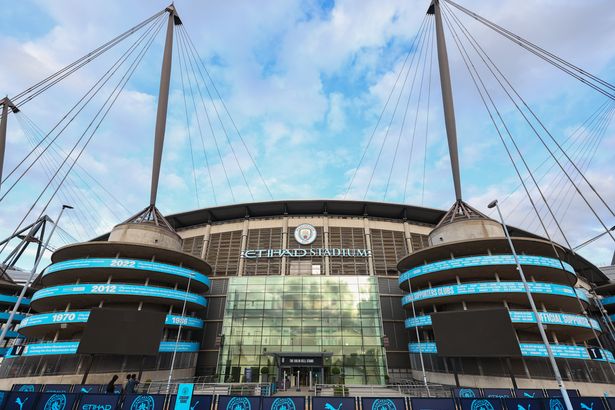
Manchester City’s legal troubles are deepening. Having been found guilty of 114 of the 115 financial charges brought against them by the Premier League, the club now faces the prospect of a parallel investigation by His Majesty’s Revenue and Customs, with Parliament already moving to establish whether the tax authority has been properly informed.
The case, already one of the most consequential financial disputes in the history of English football, is therefore threatening to extend well beyond the Premier League’s own disciplinary framework. What began as a sporting regulatory process could now draw in tax authorities and politicians, substantially increasing both the complexity of the affair and the potential consequences for the club.
The following key developments define where this case now stands.
Manchester City’s immediate focus remains the Premier League proceedings and the appeal process. The scale of the charges means that the dispute concerns far more than an isolated accounting irregularity. At its core are questions about the accuracy of financial information supplied to the league, the treatment of sponsorship and commercial income, and whether the club complied with rules designed to ensure transparency and financial control across the competition.
City have consistently contested the allegations against them and are expected to continue challenging any adverse findings through the available legal and disciplinary mechanisms. The appeal therefore remains critical. A successful challenge could alter or overturn significant parts of the original decision, while an unsuccessful one would strengthen the Premier League’s position and potentially leave the club facing substantial sporting and financial sanctions.
The emergence of a possible HMRC dimension, however, changes the character of the situation. Premier League rules and British tax law operate independently. A finding within football does not automatically establish that a tax offence has occurred, but information uncovered during regulatory proceedings can potentially raise separate questions for the authorities.
If payments, sponsorship arrangements or other financial structures examined by the Premier League also have tax implications, HMRC could decide that further scrutiny is required. Such an inquiry would be conducted according to a different legal framework and would not necessarily depend on the ultimate outcome of City’s sporting appeal.
This distinction is important. Even if Manchester City were to obtain a more favourable result through the football appeals process, that would not in itself prevent another public authority from examining matters falling within its own jurisdiction.
Parliamentary involvement adds another layer. The political question is no longer simply whether football’s internal regulators dealt adequately with the allegations, but whether information relevant to public authorities was shared when appropriate. MPs are seeking clarity over what HMRC knew, when it knew it and whether evidence emerging from the football proceedings should trigger additional action.
That scrutiny also reflects a broader concern over governance in English football. The City case arrives at a time when the relationship between clubs, financial regulations and independent oversight is already under intense examination. Questions surrounding ownership, sponsorship, related-party transactions and the enforcement of financial rules have become central to debates about how the country’s most valuable sporting competition should be regulated.
For the Premier League, the stakes are similarly high. A case of this scale is a test not only of its financial regulations but also of its capacity to enforce them against one of the competition’s most successful and commercially powerful clubs. Any perception that the process is either excessively punitive or insufficiently robust risks damaging confidence in the regulatory system.
There are also implications for the wider league. Rival clubs have operated for years under financial restrictions intended to limit losses and maintain competitive balance. The final resolution of the Manchester City case could therefore influence how clubs interpret their obligations, how aggressively the league pursues future cases and how financial rules are designed in the coming seasons.
The possibility of separate legal or tax proceedings also means that the timetable could become considerably longer. Football disciplinary cases are already complex, particularly when they involve years of financial records, commercial agreements and competing interpretations of accounting practices. Adding potential scrutiny from HMRC and Parliament increases the number of institutions involved and reduces the likelihood of a rapid conclusion.
For Manchester City, the reputational consequences may therefore continue even while the formal appeal is underway. The club has enjoyed an extraordinary period of sporting success, but financial allegations have remained a persistent backdrop to that era. A prolonged series of proceedings would ensure that questions surrounding the club’s financial governance remain part of the public debate.
At the same time, it is important to distinguish between the different processes. Premier League disciplinary findings, a potential tax investigation and parliamentary scrutiny do not operate to the same evidential standards or serve the same purpose. Developments in one arena should not automatically be treated as proof of wrongdoing in another.
Nevertheless, the convergence of Premier League disciplinary proceedings, a potential HMRC inquiry, and active parliamentary scrutiny marks a significant escalation. The dispute is no longer confined to football’s internal regulatory structures.
Whether the appeal succeeds or not, the institutional machinery now engaged around this case suggests that the questions raised about financial governance in elite English football will not be resolved quietly or quickly. The eventual consequences could extend beyond Manchester City itself, shaping how financial transparency, regulatory enforcement and accountability are approached across the Premier League for years to come.