
A Preventable Disease Returns
An adult has died of measles in the United Kingdom. Health officials confirmed the fatality, noting the patient had an underlying immunological problem. The death follows the loss of two children in England to the same disease in June — a grim sequence that underscores how swiftly a once-eliminated threat can reassert itself when vaccination coverage falters.
The UK Health Security Agency (UKHSA) has recorded 883 confirmed measles cases in England between the start of the year and 6 July. Every region of England has reported infections. The scale of the resurgence is not accidental; it is the direct consequence of years of declining immunisation rates.
The Geography of the Outbreak
The case distribution is uneven but telling. London accounts for 52% of confirmed cases, the West Midlands for 17%, and the North West for 10%. These are densely populated urban centres where vaccine hesitancy has historically been more pronounced and where population churn complicates systematic immunisation programmes.
The majority of cases involve children aged ten and under. That demographic concentration reflects a straightforward epidemiological reality: younger cohorts are most exposed when herd immunity breaks down, and parents who declined or delayed vaccination in recent years have left their children directly in the path of a resurgent pathogen.
How Coverage Collapsed
The numbers are stark. Only 84.1% of five-year-olds had received both doses of the MMR vaccine in the first quarter of this year. The threshold required to sustain herd immunity against measles is 95%. That eleven-percentage-point gap is not a rounding error — it is the difference between containment and community transmission.
The World Health Organisation had recognised the UK as having eliminated measles between 2021 and 2023. That status was revoked. From 2024, the WHO formally re-established measles as endemic in the UK, a designation that carries reputational and practical consequences for a health system that had once served as a model of immunisation delivery.
The Catch-Up Campaign
NHS leaders have launched a structured catch-up programme targeting parents of children aged two to eleven who missed one or both doses of the vaccine. The campaign aims to reach approximately one million families. It is operationally ambitious and logistically necessary.
The outreach mechanism varies by age group. GPs will directly contact parents of children under six. For children aged six to eleven, the NHS will deploy the NHS app, text messages, emails, and letters. The vaccine itself has been updated: the MMR jab now also covers chickenpox and is designated the MMR/V vaccine.
Earlier this year, policymakers also considered whether unvaccinated children could be sent home from school during a local outbreak — a measure that would concentrate minds among hesitant parents rather more sharply than a letter.
Why Measles Demands Serious Attention
Measles is not a mild childhood inconvenience. It is an airborne pathogen transmitted through respiratory droplets — breathed, coughed, or sneezed by infected individuals. Sufferers remain infectious from the appearance of first symptoms until four days after the rash emerges, a window wide enough to seed transmission across households, schools, and public spaces.
Recognising Measles: Clinical Presentation
Early Symptoms
Measles typically begins with symptoms indistinguishable from a common cold: high temperature, runny or blocked nose, sneezing, persistent cough, and red or watery eyes. This prodromal phase is precisely when the patient is most infectious, which is why delayed diagnosis accelerates community spread.
Progression
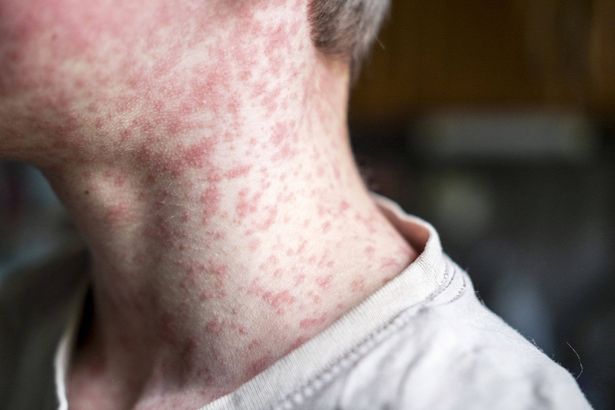
Within a few days, small white spots — known as Koplik’s spots — may appear on the inner cheeks and the back of the lips. These are a clinically useful early indicator, often preceding the rash by a day or two. The characteristic rash then develops on the face and behind the ears before spreading across the body, typically three to five days after initial symptoms appear.
The Policy Imperative
Three deaths, 883 confirmed cases, and the loss of eliminated status from the WHO: the evidence is unambiguous. England faces a public health failure rooted in declining vaccine uptake, and the consequences are now measurable in human lives. The catch-up campaign is a necessary corrective. Whether it proves sufficient depends on how effectively health authorities can convert one million outreach contacts into completed immunisation courses — and how quickly.