
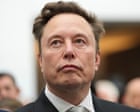
It was, on the surface, a routine address to an Organisation for Economic Cooperation and Development conference in Paris. But when Jean-Noël Barrot, France’s foreign minister, took the podium on Tuesday, his remarks cut well beyond the usual diplomatic register. He named Elon Musk — the world’s richest man and proprietor of the social media platform X — as the orchestrator of what he described as “massive online harassment campaigns” against European leaders, deployed to skew political debate by exploiting the viral mechanics of his own platform. The accusation was direct, pointed, and conspicuously unhedged.
Barrot’s intervention sits within a broader French anxiety about the integrity of its political landscape ahead of the 2027 presidential election, in which Marine Le Pen, leader of the far-right Rassemblement National, currently leads in polling. The foreign minister framed the threat in sweeping terms, arguing that “the forces seeking to undermine democracy now dominate the information landscape, where they employ tactics designed to polarise public debate.” The language was measured, the implication less so: France believes it is under sustained, coordinated external pressure, and it intends to say so plainly.
The minister catalogued a series of alleged interference efforts with some specificity. An unnamed Israeli company stands accused of fabricating French social media accounts to shape domestic perceptions of the Israel-Gaza conflict. Azerbaijan, he claimed, deliberately inflamed tensions surrounding the deadly unrest that convulsed the French Pacific territory of New Caledonia. Russia, China, and Iran were identified as amplifying “hostile narratives” during the recent wave of protests in which schoolchildren, students, and trade unionists blockaded schools and marched through French cities. Even the American MAGA movement was drawn into the indictment, alongside last week’s interventions by Donald Trump and Musk, who sought to reframe those protests as a symptom of mass migration rather than a response to deteriorating school conditions.
Barrot was unsparing in his characterisation of the strategic logic underlying these efforts. “The Kremlin’s goal is explicitly stated,” he said, “to put an end to our liberal democracies in favour of a new authoritarianism.” He went further, describing a convergence of actors — not all of them state-sponsored — who seek to dictate to Europe which of its democracies deserve the label and which do not, measured against the narrowly self-interested criteria of external powers. The implication is that ideological alignment, rather than institutional quality, has become the currency of foreign judgement about European governance.
What makes Barrot’s remarks notable is not merely their content but their timing and their target. Musk did not respond to a request for comment. His platform, X, has become a recurring source of friction between American tech power and European regulatory authority, and the French government’s willingness to name him personally — rather than gesturing vaguely at “foreign platforms” — reflects a calculation that diplomatic euphemism no longer serves. The minister’s comments arrived only days after the British Prime Minister, Andy Burnham, stated publicly that Russian interference in the Brexit referendum was, in his view, clear. A pattern of assertion is forming across European capitals, even if the evidentiary record remains, in most cases, contested.
France’s response, as Barrot described it, will centre on countering paid and commissioned influencers who exploit the reach of digital platforms, and on treating foreign interference as a direct challenge to national sovereignty. “We are uncompromising,” he said, “because it is clear to us that they undermine the nation’s fundamental interests. We do not tolerate any foreign interference, from wherever it may come.” The final clause — “from wherever it may come” — was presumably not accidental. It signals that Paris is not restricting its concern to Russia alone, but is prepared to extend its scrutiny to allies and their citizens when the evidence, as the French government sees it, warrants it. Whether that posture translates into concrete legal or regulatory action against X or its owner remains to be seen, but the political intent behind Barrot’s address was unmistakable.