
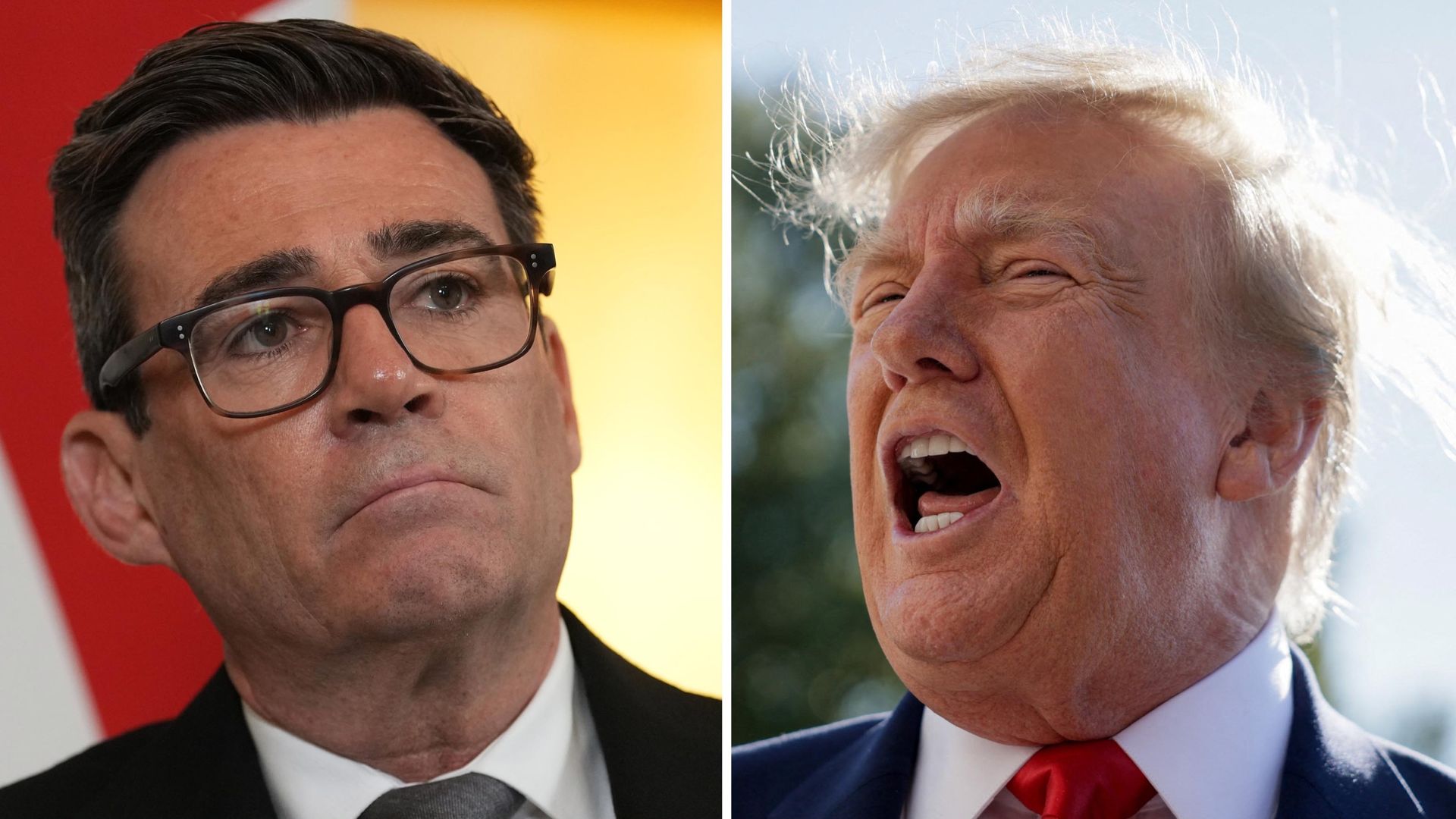
When Donald Trump left the White House for a campaign rally in Florida on Friday, he paused to tell reporters something he had apparently already told the British Prime Minister directly: that the United Kingdom was on course to become “a very rich country.” The reason, in Trump’s telling, was straightforward — London had finally decided to open up the North Sea.
The US President confirmed he had spoken with Prime Minister Andy Burnham earlier that day, and that their conversation had turned to the Cabinet’s decision this week to approve gas drilling in the Jackdaw field. “We discussed the fact that they’re opening up the North Sea oil,” Trump told reporters, “and that’s going to make the UK a very rich country.” It was a characteristically emphatic endorsement, delivered with the confidence of a man who believes he had been right all along.
A Longstanding Pressure, Finally Answered
Trump was not shy about claiming some credit for the shift in British energy policy. He said he had “been after them to do that for two years,” and drew a pointed contrast between Burnham and his predecessor, Sir Keir Starmer, who “never got it done.” Burnham, by contrast, “knows what’s right,” Trump said — even if, as he acknowledged, the decision runs against what he called “the liberal principle.”
It was not the first time Trump has appeared to conflate different North Sea projects. His references to “North Sea oil” sit somewhat awkwardly with the Jackdaw field, which is primarily a gas development. Observers noted he may have had in mind the Rosebank field, located west of Shetland in Scotland’s north, where both oil and gas reserves remain untapped. Ministers have not yet announced a decision on Rosebank, though Burnham has said any ruling on it will be handled carefully, in anticipation of the near-certain legal challenges that approval would trigger.
The Economic Logic Behind the Decision
The Jackdaw approval represents a meaningful, if incremental, step in British energy policy. Gas from the field is expected to begin supplying homes and businesses before the end of the month, providing a modest but tangible boost to domestic production at a time when energy security remains a pressing concern for households and industry alike.
Ministers have framed the decision in terms of pragmatic economics rather than ideological retreat. The argument is a familiar one in energy policy circles: so long as the United Kingdom continues to consume gas — and it will, for years to come — producing it domestically generates fewer emissions than importing liquefied natural gas shipped from distant markets. It is a position that prioritises empirical outcomes over symbolic gestures, and one that has attracted predictable hostility from environmental campaigners who regard any new fossil fuel extraction as incompatible with climate commitments.
Opposition and the Road Ahead
The criticism from environmental groups has been vocal and, in some quarters, fierce. Yet the government’s counter-argument retains a certain logical coherence that is difficult to dismiss entirely: the relevant comparison is not between domestic gas and a hypothetical zero-carbon alternative, but between domestic gas and imported gas, with all the additional carbon costs that shipping entails.
The broader picture remains unresolved. The Rosebank decision looms as the more consequential test of the government’s appetite for North Sea development, carrying both greater resource potential and greater political risk. Burnham’s pledge that it will be handled “properly” suggests ministers are acutely aware of the legal exposure. Whether Trump’s enthusiasm — and his habit of telephoning allied leaders to discuss their energy choices — will bear any further influence on that decision remains, for now, an open question. What is not in doubt is that Washington is watching, and approving, of the direction of travel.