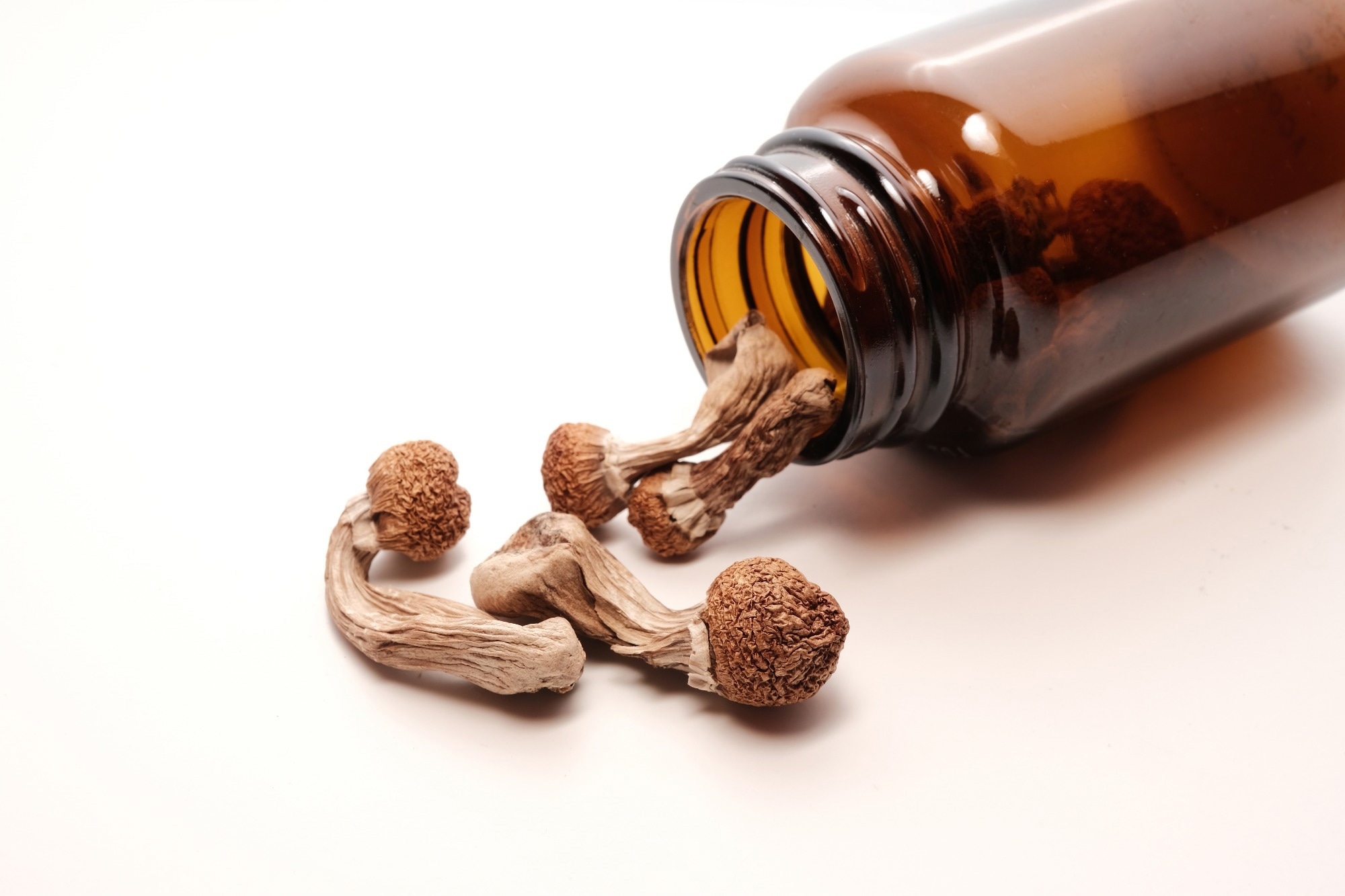
A field with no approved pharmacological treatments has acquired a credible new candidate. Research published in Communications Biology presents the first experimental evidence that psilocybin may exert therapeutic effects following repetitive mild traumatic brain injury (rmTBI), a condition affecting millions annually and currently beyond the reach of any licensed intervention. The thesis the data support is straightforward: psilocybin acts on multiple neurobiological pathways simultaneously, and that breadth of action may be precisely what a complex injury mechanism demands.
A Condition Without a Treatment
The scale of the problem is not trivial. The US Centers for Disease Control and Prevention estimates that approximately 2.9 million Americans sustain a traumatic brain injury each year, of which 70 to 90 per cent are classified as mild. The clinical difficulty is that isolated concussions, while disruptive, tend to resolve; it is the repetitive variety — sustained by contact-sport athletes and military personnel — that produces lasting neuroinflammation, microvascular damage, and impaired fluid clearance. No drug has yet been approved specifically for this injury class.
The study addressed that gap directly. Researchers at an institution partly funded by Ekam Imaging Inc. — two authors hold partnership interests in the company, and a third consulted for BetterLife Pharma — used adult female Wistar rats aged nine months as their primary model. Three cohorts were established: uninjured controls receiving saline, injured rats receiving saline, and injured rats receiving psilocybin at 3.0 mg/kg via intraperitoneal injection within thirty minutes of each impact. A custom pneumatic apparatus delivered repeated head impacts over three consecutive days, replicating the biomechanics of sports-related concussion.
What the Imaging and Molecular Data Show
The acute neuroimaging results are among the most striking. Diffusion-weighted imaging revealed that repeated impacts triggered a whole-brain surge in the apparent diffusion coefficient, a pattern consistent with vasogenic oedema. Psilocybin treatment substantially reduced these ADC elevations across the prefrontal cortex, hippocampus, and basal ganglia, returning values toward those of uninjured controls in several regions. The authors appropriately noted that isoflurane anaesthesia may have influenced the magnitude and spatial distribution of these acute changes — a caveat worth preserving in any honest appraisal.
Three weeks post-injury, awake functional MRI told a different story about connectivity. Untreated injured rats showed a mean whole-brain degree of 9.1, below the sham control figure of 14.7. Psilocybin-treated rats reached 35.5 — a level that exceeds sham controls and indicates hyperconnectivity rather than simple restoration. Whether this represents a transient compensatory state or a durable reorganisation of neural networks remains an open question, and one the authors acknowledge requires further investigation.
At the molecular level, the phosphorylated tau findings carry particular clinical significance. Untreated injury produced a marked increase in soluble phosphorylated tau; psilocybin treatment reduced it to levels near those of uninjured controls. This matters because soluble phosphorylated tau is implicated in both chronic traumatic encephalopathy and Alzheimer’s disease. The authors are careful to frame this as evidence of mechanistic relevance rather than proof of reduced long-term disease risk — a distinction that responsible interpretation demands. Reductions in aggregated insoluble tau between the two injured groups did not reach statistical significance.
The molecular picture was rounded out by elevated BDNF and TrkB protein levels in psilocybin-treated animals, increases in glial markers GFAP and CD11b that the researchers interpreted as potentially protective rather than inflammatory, and a striking lipidomic shift: injury was associated with four significant decreases in circulating signalling lipids, while psilocybin treatment produced eighteen significant increases. In an exploratory cohort of aged rats, psilocybin was also associated with roughly a two-fold increase in myelination in the corpus callosum and sensorimotor cortex relative to injured, untreated animals.
What the Evidence Does and Does Not Establish
Behavioural outcomes were more muted. Head-impacted rats showed reduced mobility regardless of treatment, and measures of learning, memory, and motor function produced results that were largely non-significant or trended without reaching conventional thresholds. The absence of behavioural rescue does not invalidate the neuroimaging and molecular findings, but it does counsel against premature optimism about functional recovery.
The study’s value lies in its multi-target profile. Psilocybin simultaneously reduced vasogenic oedema markers, modulated phosphorylated tau, elevated neurotrophic signalling, and altered lipid dynamics — a range of effects that no single-mechanism drug has achieved in this injury class. That breadth is scientifically interesting precisely because rmTBI is itself a multi-mechanism condition. The logical implication is that further preclinical work should focus on establishing the durability of these effects and clarifying which pathways are primary drivers, before any serious consideration of human trials.
For policymakers and research funders, the message is measured but clear: this is a credible preclinical signal in a therapeutic area with genuine unmet need, produced by a rigorous experimental design with appropriate methodological caveats. It warrants investment in confirmatory studies. It does not warrant the regulatory or clinical shortcuts that enthusiasm for psychedelic therapeutics has occasionally encouraged elsewhere.