
A Popular Attraction With a Hidden Danger
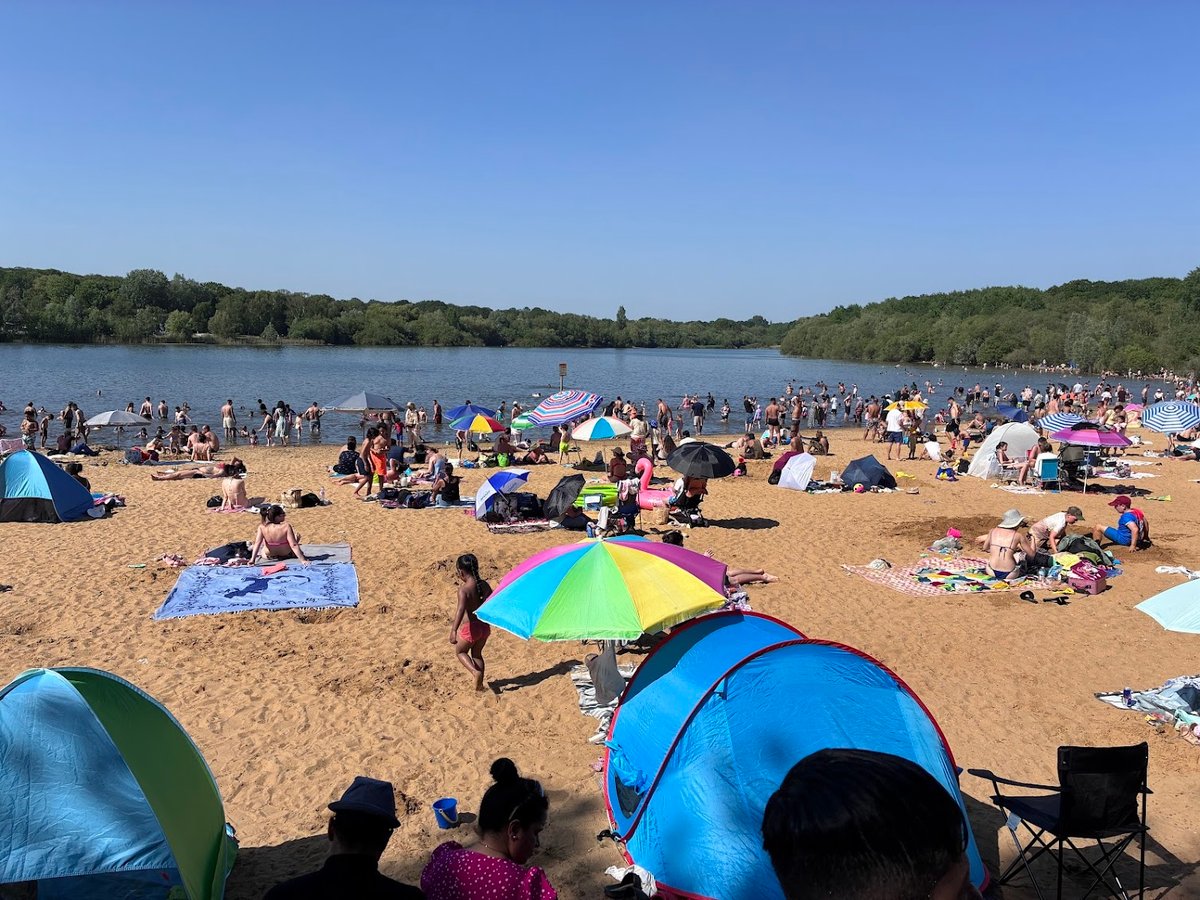
Ruislip Lido draws thousands of Londoners every summer, marketed by Hillingdon Council as a “secret beach” complete with a pirate ship playground. The branding works. On hot days, crowds descend on the West London site in search of something approximating a seaside experience. What many do not realise — and what the council has done little to communicate clearly — is that swimming in the lido is prohibited, and has been for good reason.
The water carries blue-green algae, which can prove toxic to both people and animals. Cold water shock poses a genuine drowning risk. The depth is unpredictable, underwater hazards are invisible to the naked eye, and a parasitic skin condition known colloquially as “swimmer’s itch” is a documented risk. A handful of small signs advise against entering the water, but they are routinely missed or simply ignored. The council’s own promotional language actively undermines whatever cautionary messaging exists.
The result is a site that draws the crowds of a managed leisure facility while operating with the oversight of neither.
A Single Access Road and No Emergency Plan
The lido is accessible only via one cul-de-sac serving approximately 35 residential properties. On a hot afternoon, hundreds of vehicles converge on this single route, reducing a journey that ordinarily takes one minute to a forty-five-minute ordeal. Cars spill onto the residential street itself, blocking private driveways and, critically, obstructing the passage of emergency vehicles.
Carolyn Towner, who has lived on the street for twenty-five years, has become the most vocal critic of the council’s approach. She told the Local Democracy Reporting Service: “It’s astonishing — they basically have been playing Russian roulette with the lives of both the residents and the visitors because there’s nothing in place to manage the place safely when it’s busy.” Her concern extends beyond inconvenience. She and her neighbours fear that in a genuine emergency — a cardiac arrest, a fire, or a mass-casualty incident — no ambulance or fire engine could reach them in time.
The scenario she raises is not far-fetched. A site accommodating hundreds of people, with a single narrow exit and no crowd management infrastructure, presents a textbook crowd-safety risk. “What would happen if there was an incident?” she asked. “If there’s a mass panic and you’ve got no stewards, no staff, no marshalling, everybody’s trying to get out through one narrow path.”
Staffing Levels That Raise Serious Questions
According to Towner, the lido typically operates with a single manager working standard office hours — nine to five — supported by a small team of litter pickers. There is no lifeguard on duty. During a heatwave, when visitor numbers surge and the prohibition on swimming is most frequently flouted, the site is functionally unmonitored for large portions of the day and entirely unsupervised after hours.
Visitors have reportedly taken full advantage of this vacuum. Sound systems and barbecues appear on the beach late into the evening; residents describe being woken at three in the morning. Anti-social behaviour is a recurring feature of the summer months, not an occasional aberration. When Towner raised the question of night security, the council’s reported response was that it could not afford it — a position that sits awkwardly alongside the revenue generated by peak-time parking fees of £16.90 per vehicle.
Those fees, it should be noted, are widely avoided. Visitors park illegally across private driveways, and some have reportedly become abusive when asked to move. The council collects the income from those who pay; it absorbs none of the cost of managing those who do not.
The Role of Social Media and Council Promotion
Viral social media posts have amplified the lido’s profile considerably in recent years, drawing visitors from across the capital who arrive with expectations shaped by the council’s own marketing. Branding a prohibited swimming site as a “secret beach” is not merely misleading — it actively invites the behaviour that creates risk. When the council frames the lido in the language of seaside leisure, it is difficult to fault visitors for treating it as such.
The LDRS put a series of pointed questions to Hillingdon Council: how it intends to guarantee emergency access and safe evacuation; on what basis it considers current staffing levels adequate; and whether it will revise its promotional approach and launch a public safety campaign discouraging swimming. The council declined to answer, citing a forthcoming response at Full Council on Thursday, 9 July. That response, when it arrives, will need to be substantially more than procedural reassurance.
The Cost to Residents
For those living on the cul-de-sac, the summer has become a season of attrition. Blocked driveways, sleepless nights, abusive confrontations with strangers, and a persistent anxiety about whether an ambulance could reach their door in time — this is the lived reality of proximity to one of London’s most Instagrammed leisure spots. Towner’s summary is blunt: “We feel like prisoners in our own homes.”
The underlying failure here is institutional. A local authority has created and sustained a public attraction without conducting — or at least without publishing — a site-specific risk assessment, without deploying adequate staffing, and without aligning its promotional activity with its safety obligations. Market logic would suggest that if a venue generates sufficient footfall to produce serious congestion and safety risks, it generates sufficient revenue to fund the management those risks demand. Whether Hillingdon Council has applied that logic is a question its cabinet member will need to answer on Thursday evening.