
A Company Under Siege
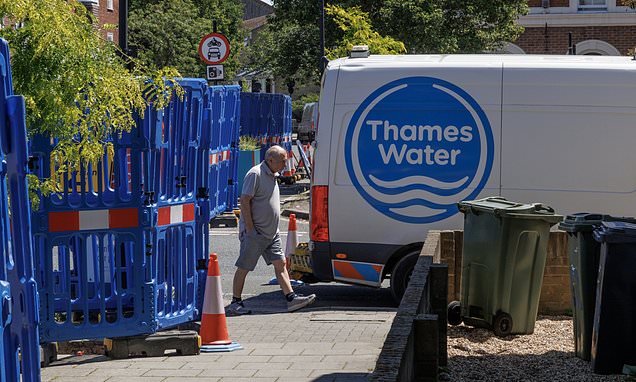
Thames Water, Britain’s largest water utility, finds itself at the centre of an intensifying crisis that combines severe financial distress with mounting regulatory and public outrage over sewage discharges. The company carries an estimated £18–19 billion in debt, has absorbed a record £123 million fine from regulator Ofwat, and has been forced to seek emergency funding while simultaneously pressing for substantial increases to customer bills. Few corporate situations in recent British history have generated quite so visceral a public reaction — and, on the available evidence, few have deserved it quite so readily.
The very mention of Thames Water, as Britain contends with E. coli warnings at seaside resorts and deteriorating river water quality, provokes an immediate and largely justified anger. That anger, however, risks obscuring the harder structural questions about how a regulated utility of this scale arrived at such a precarious position — and what a credible resolution might actually look like.
The Debt Burden and Its Origins
Thames Water’s financial architecture is, by any reasonable measure, a cautionary tale in leveraged infrastructure ownership. The debt load accumulated over successive ownership structures has left the company with limited capacity to invest adequately in ageing infrastructure while servicing obligations to creditors. The result is a utility that has, in effect, been running to stand still — and in some respects failing even to do that. Emergency funding requests and appeals to Ofwat for accelerated bill increases reflect not a sudden shock but the cumulative consequence of years of financial engineering applied to an asset that demands long-term capital commitment.
Ofwat’s £123 million fine represents the regulator’s most forceful intervention to date, signalling that the era of relatively permissive oversight is drawing to a close. Whether the fine, substantial as it is, meaningfully alters the incentive structures at play in a company already under financial stress is a question worth posing seriously. Fines levied against an entity that cannot comfortably service its existing liabilities may function more as a political signal than an effective deterrent.
Sewage Discharges and the Regulatory Response
The sewage discharge controversy has done more than any financial metric to crystallise public hostility towards Thames Water and, by extension, towards the privatised water sector as a whole. Untreated or partially treated effluent entering rivers and coastal waters represents a direct and measurable harm. It is not a matter of competing interpretations. The data on discharge volumes and frequency has been damning, and the company’s efforts to manage the reputational fallout have largely compounded the problem rather than contained it.
Ofwat and the Environment Agency have both intensified scrutiny, and the regulatory framework is under political pressure to deliver more visible consequences. The risk, from a market-stability perspective, is that the regulatory response becomes primarily performative — calibrated to satisfy public anger rather than to produce the investment conditions necessary for genuine infrastructure improvement. Punitive action and long-term capital formation are not always compatible objectives, and policymakers would be wise to keep that tension clearly in view.
The Path Forward: Funding, Bills, and Structural Questions
Thames Water has sought both emergency liquidity and Ofwat approval for significant bill increases, arguing that without additional revenue it cannot fund the capital expenditure the network requires. This is not an implausible argument on its merits. Water infrastructure is capital-intensive, long-lived, and largely immune to the productivity gains that ease cost pressures in other sectors. The question is not whether investment is needed — it plainly is — but whether the current ownership and debt structure is compatible with delivering it at the necessary scale and pace.
Each path carries significant risks and costs. Special administration, in particular, would test the government’s operational capacity and send a complex signal to infrastructure investors more broadly. The credibility of Britain’s regulated utility model — and its attractiveness to the long-term institutional capital that such assets require — depends in part on how this situation is resolved. A disorderly outcome would reverberate well beyond Thames Water’s service area.
A Test of Institutional Competence
What the Thames Water crisis ultimately tests is not simply the resilience of one over-leveraged company but the competence of the broader institutional framework that governs privatised utilities. Ofwat, the Environment Agency, and the government each bear a share of responsibility for allowing the situation to reach its current state. Regulatory frameworks that permitted excessive leverage, enforcement that moved too slowly against discharge violations, and political reluctance to confront difficult trade-offs between bills, investment, and returns have all contributed. The crisis is real. The response must be proportionate, empirically grounded, and oriented towards durable solutions — not merely towards the management of headlines.