
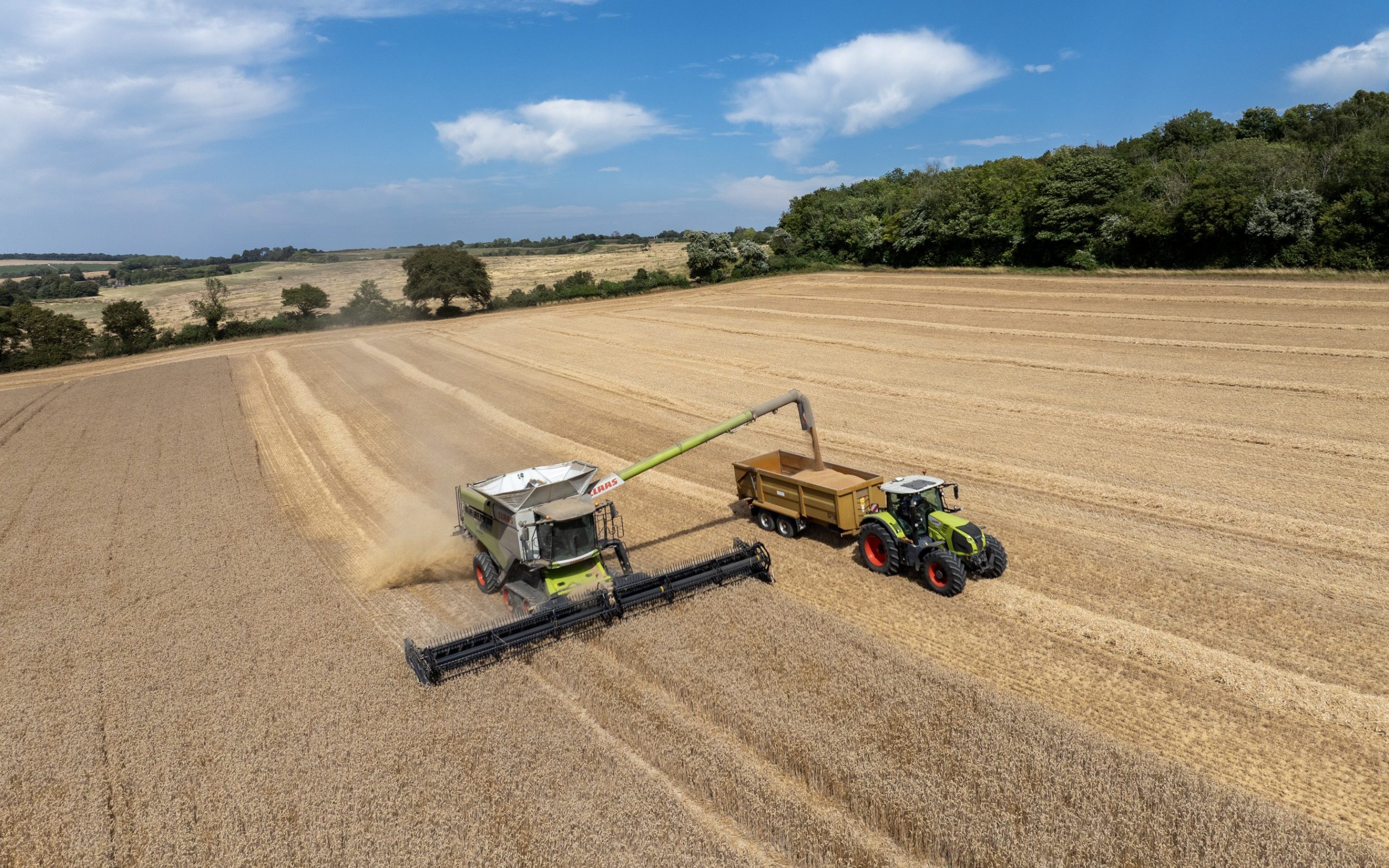
British farmers are facing a £550m financial hit this year as successive heatwaves and prolonged drought combine to produce the worst harvest since detailed records began in 1984. The scale of the damage has exceeded earlier projections, and the revised figures now paint a considerably grimmer picture than analysts had anticipated even a few months ago.
Data from the Agriculture and Horticulture Development Board (AHDB) show that key crop yields will reach only 18.5 million tonnes this year, down from a previous estimate of 19.5 million tonnes. The Energy and Climate Intelligence Unit (ECIU), which conducted the analysis, calculates that this shortfall pushes the financial blow to the sector from an already painful £390m to £550m.
The numbers are stark. Farmers will earn approximately £3.6bn from cereals and oilseeds — roughly one third less than the inflation-adjusted average recorded between 2014 and 2023. With the harvest now 85 per cent complete, output is running around 1.4 million tonnes below the previous low set in 2020, itself a notably poor year.
Four of the five worst harvests on record have now occurred within this decade.
The proximate cause is well-documented. Britain experienced negligible rainfall in April, followed by heatwaves in May, June, July and August that placed crops under sustained physiological stress. Forecasters had entered the season with cautious optimism, projecting yields at or above the ten-year average; those expectations have been comprehensively overturned.
Chris Jaccarini, a food economist at the ECIU, described the compounding pressure on the sector: “In just three years, farmers have faced the wettest winter on record, the hottest summer on record, and now what’s on track to be an even hotter summer. These extremes are making it harder to grow food, reducing yields and leaving farmers with less to sell while many of their costs remain unchanged.” The observation points to a structural problem rather than a one-off misfortune — cost bases built around predictable seasons are increasingly mismatched with the conditions farmers actually face.
Adaptation is underway. Farmers are investing in measures such as planting trees to shade livestock and adjusting cropping strategies, though Jaccarini cautioned that “there are limits to adaptation.” The honest implication is that beyond a certain threshold, on-farm responses cannot substitute for broader structural adjustment in how British agriculture is financed, insured and supported by policy.
The consequences extend beyond the farm gate. Disruption to domestic cereal and oilseed production has implications for food supply chains, input costs for the livestock sector, and ultimately consumer prices — though the precise pass-through depends on import availability and global commodity markets. Britain’s exposure to weather-driven supply shocks is a reminder that food security is not merely an abstract concern for developing economies.
Separately, Office for National Statistics data released this week show that 59 per cent of Britons identified climate change as an important issue in July — the highest proportion since December 2024. Whether that public sentiment translates into durable policy commitments, rather than cyclical attention driven by a hot summer, remains the more consequential question.